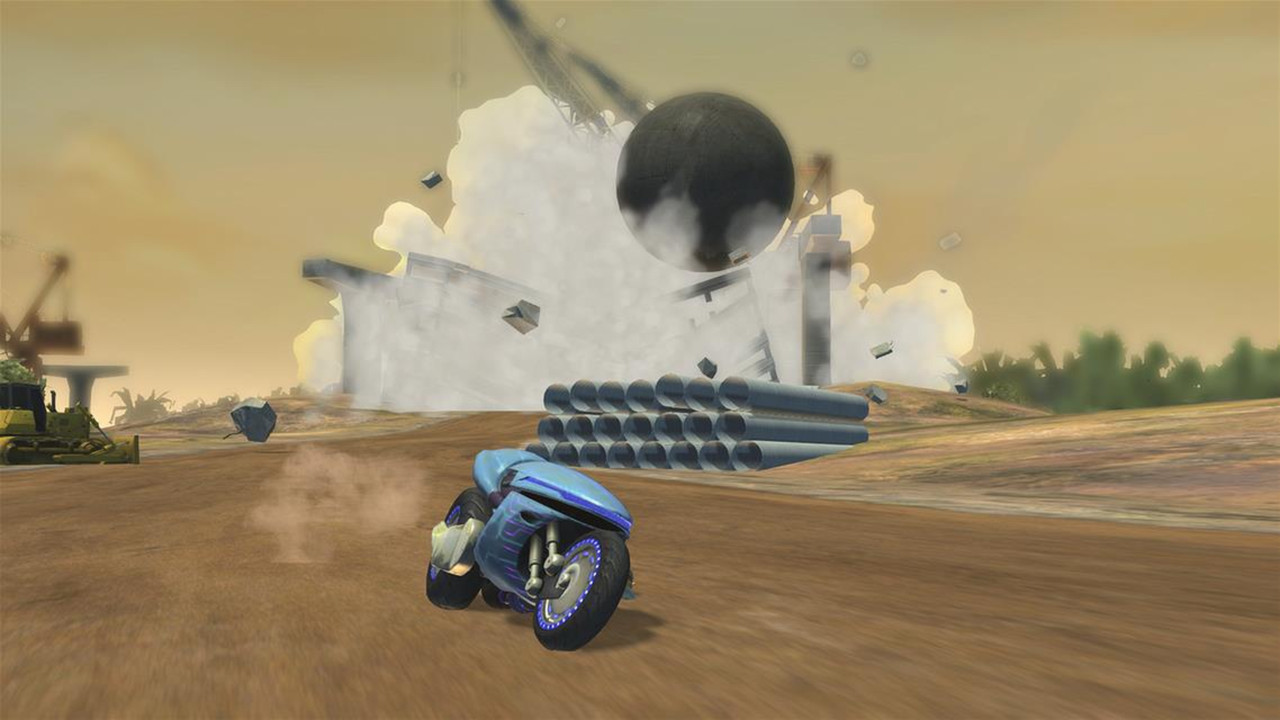
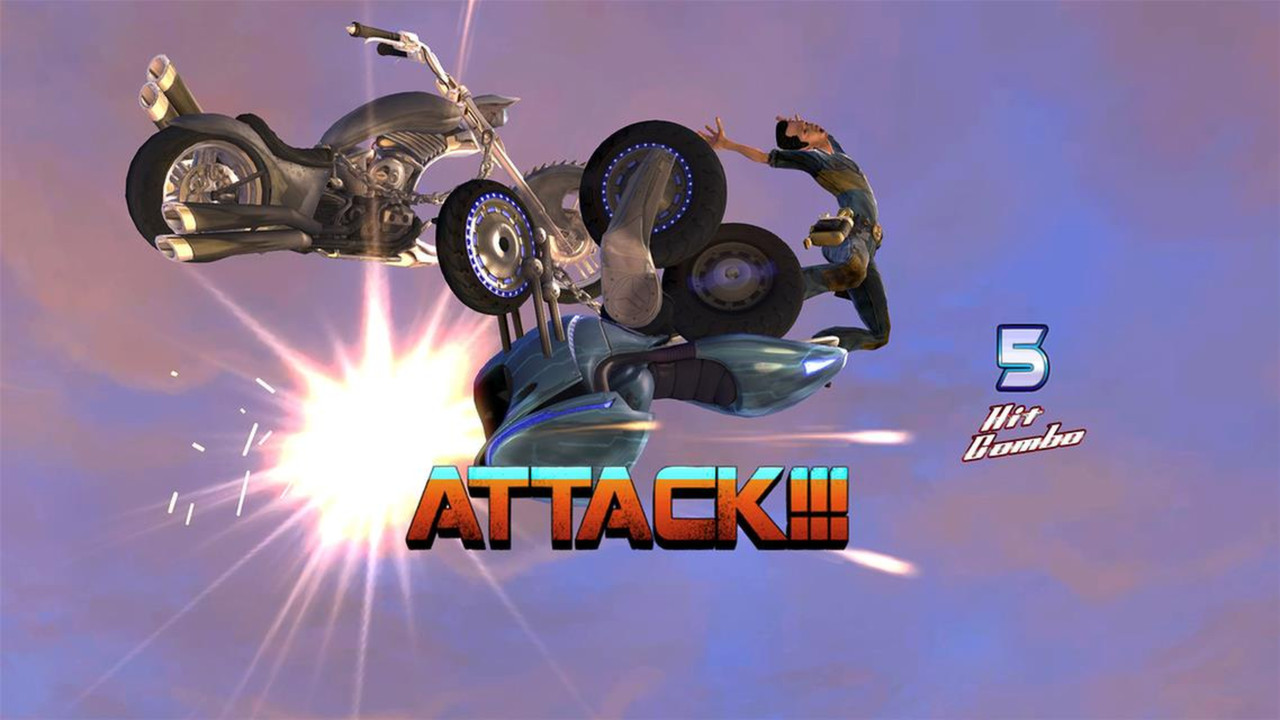
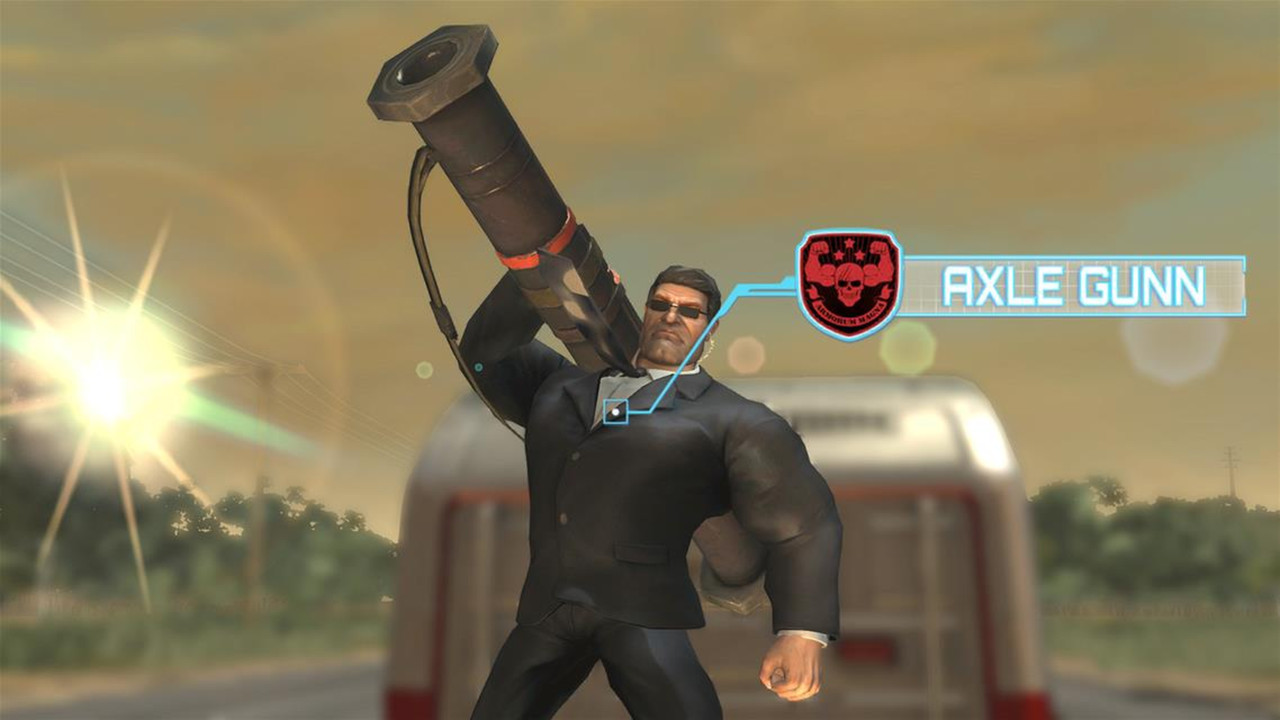
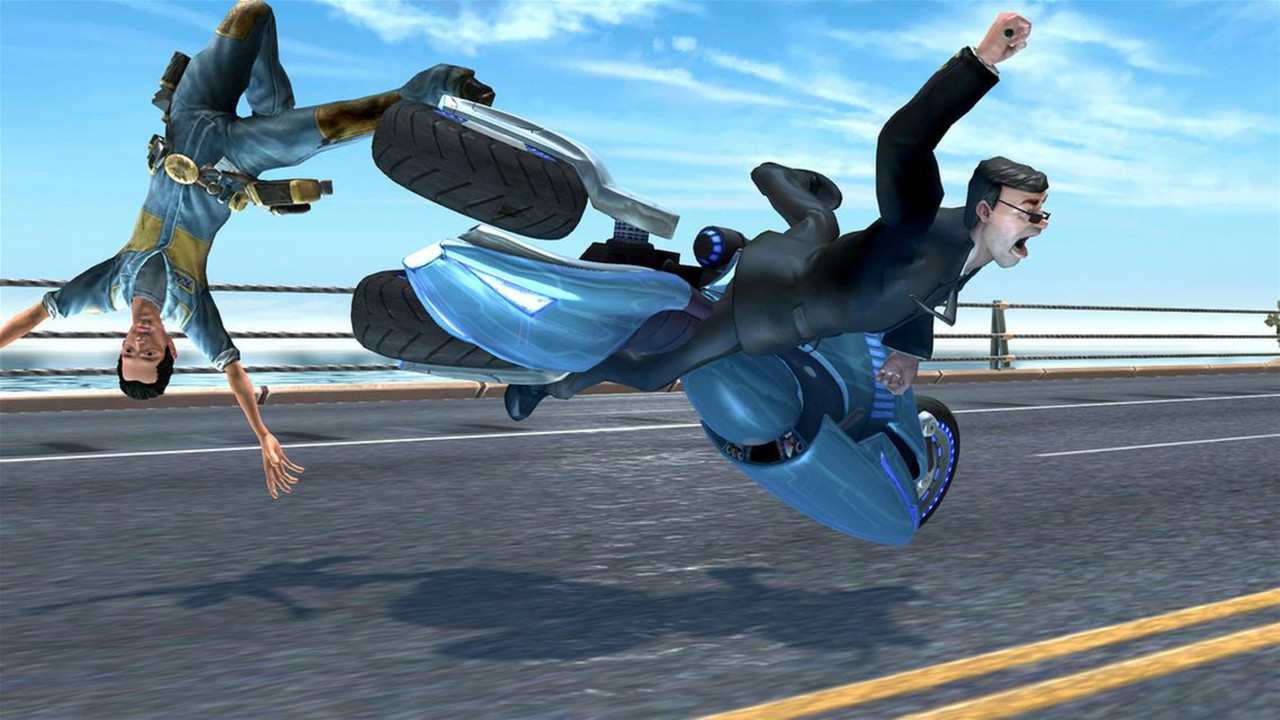
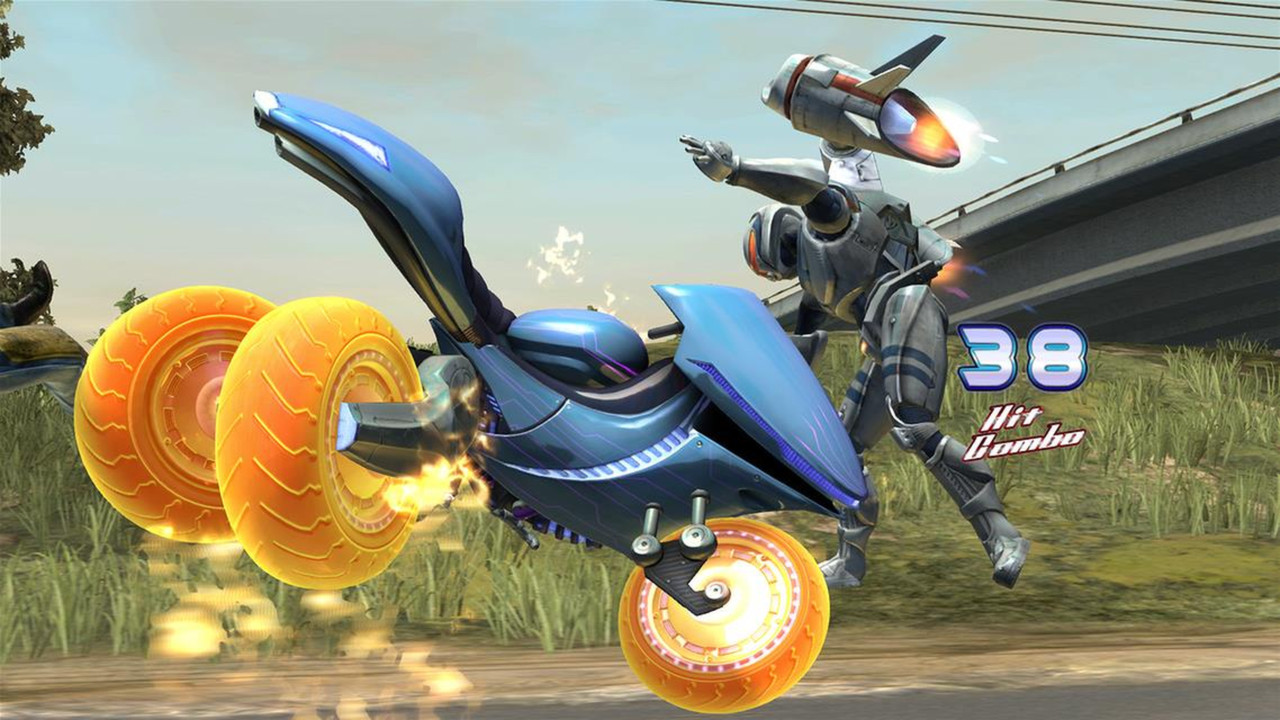
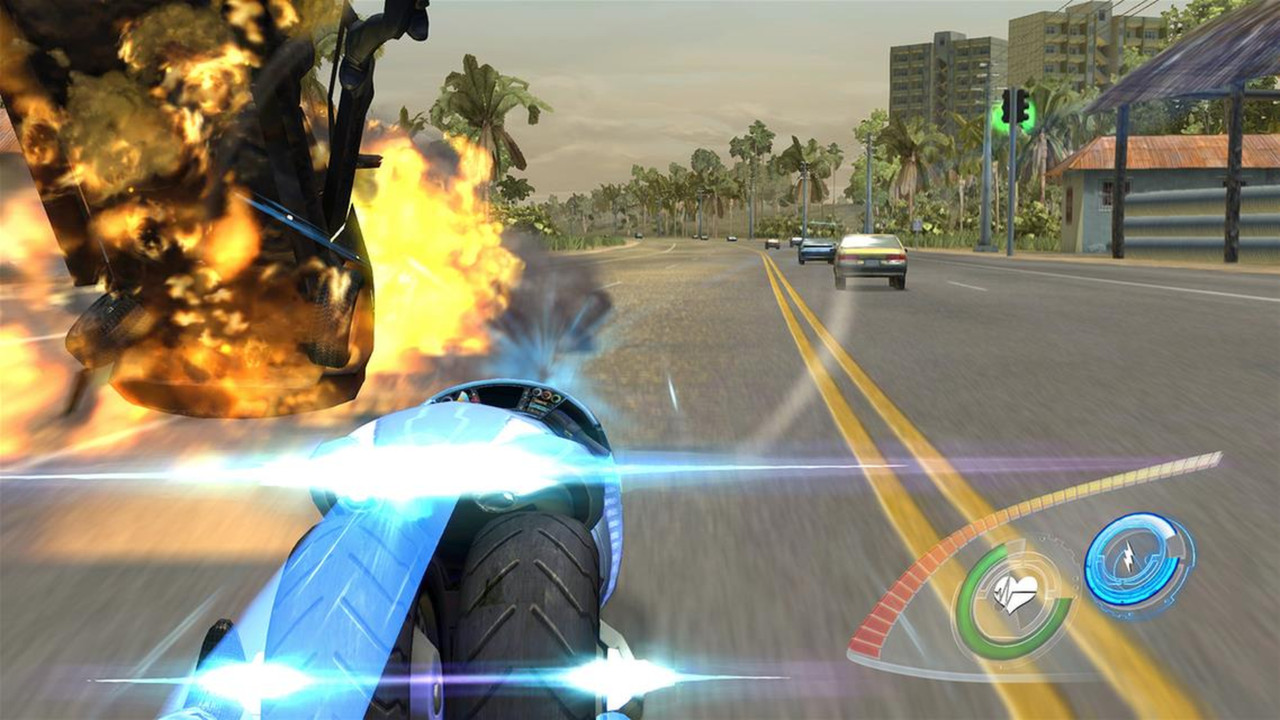
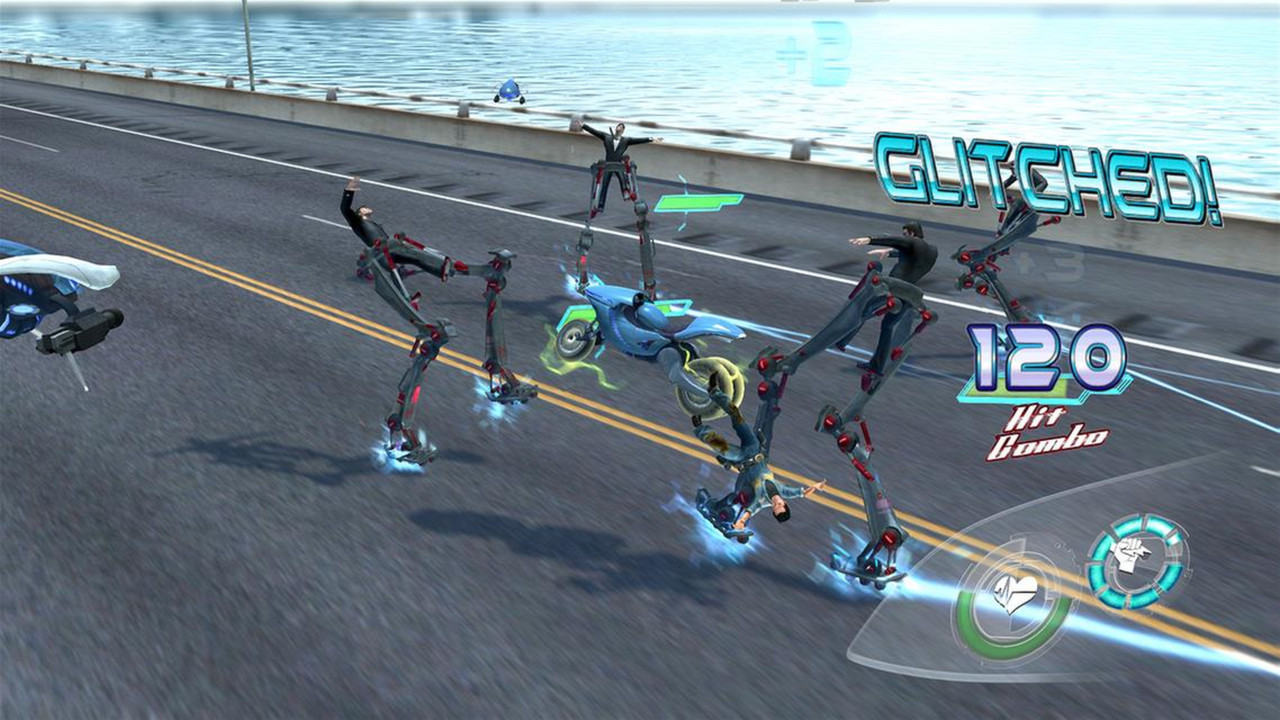
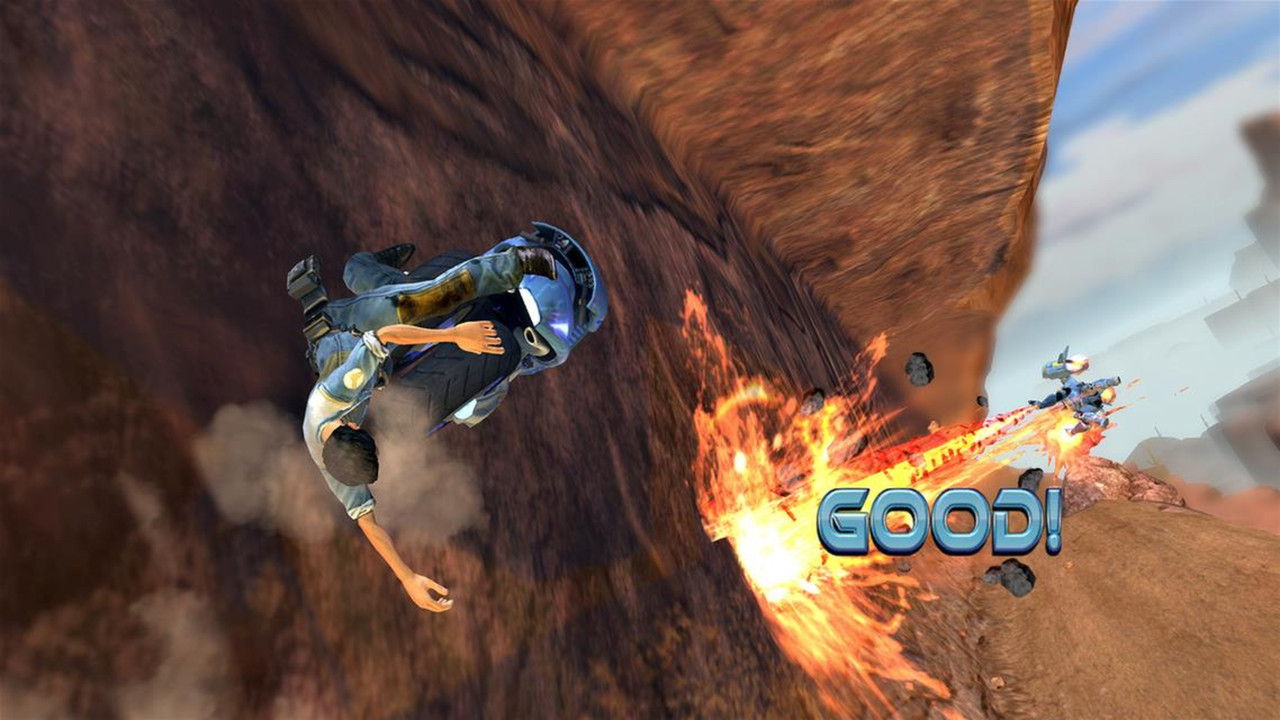
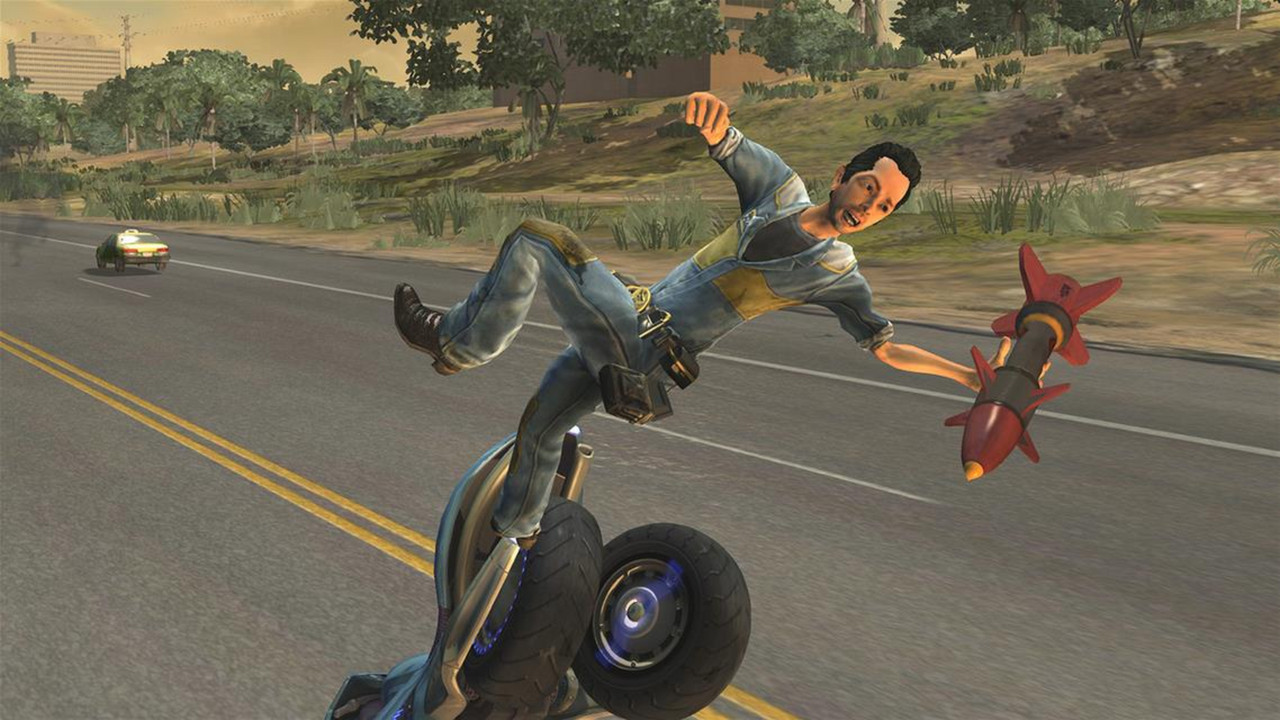
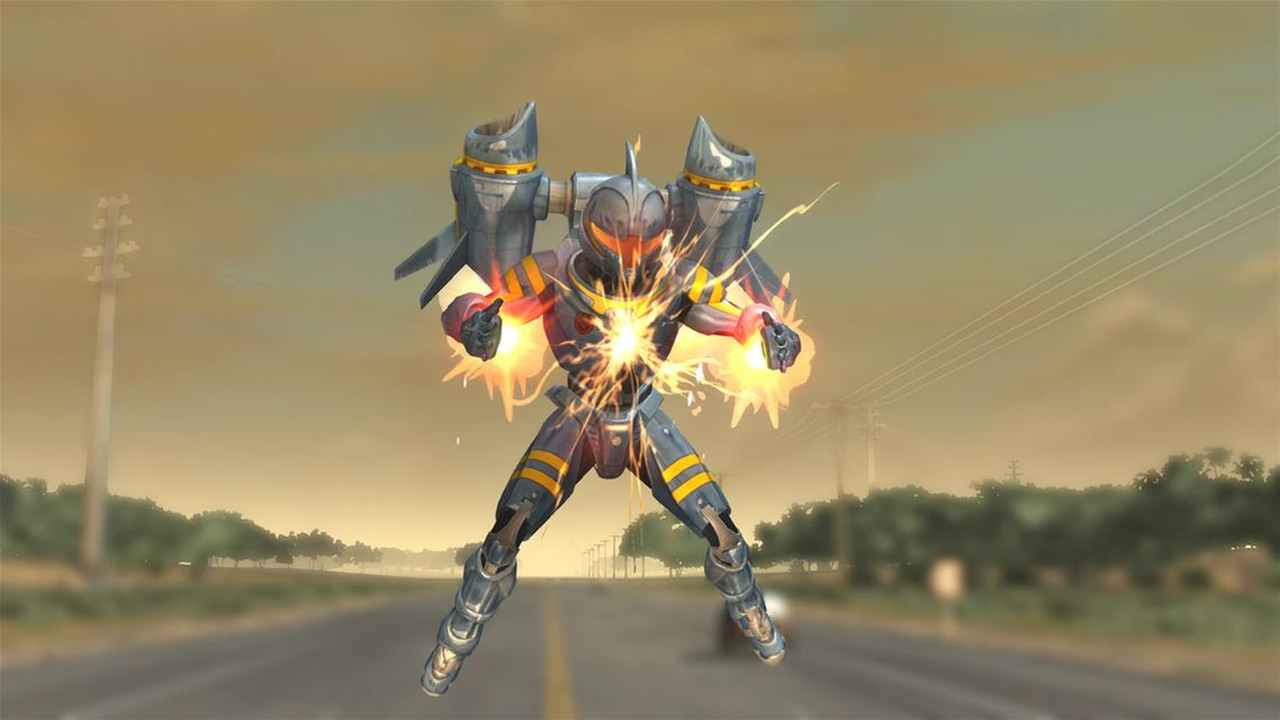
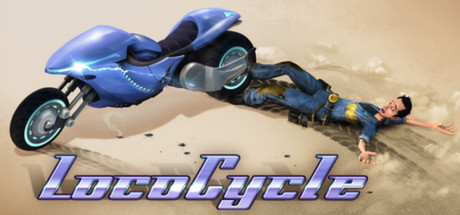
LocoCycle, developed by Twisted Pixel Games and published by Xbox Game Studios, is a peculiar and unapologetically eccentric hybrid of racing, brawling, and absurd comedy. It’s the kind of game that defies easy categorization—part vehicular combat, part arcade driving, and part self-aware parody. You play as IRIS, a sentient combat motorcycle who gains consciousness after a freak lightning strike and embarks on a chaotic journey to attend a freedom rally, dragging her hapless mechanic, Pablo, by the leg for the entire ride. What unfolds is a bizarre, comedic road trip that embraces camp and exaggeration in a way few modern games dare to, weaving its ridiculous premise into a series of escalating, physics-defying set pieces. From the very start, LocoCycle makes its tone clear. It opens with a live-action cutscene reminiscent of mid-2000s direct-to-DVD sci-fi films—overacted, absurd, and brimming with self-parody. Twisted Pixel’s use of live-action sequences is both a bold stylistic choice and a statement of intent: this game doesn’t take itself seriously for a second. The humor is relentless, filled with exaggerated dialogue, slapstick interactions, and tongue-in-cheek references to action-movie clichés. IRIS, voiced with deliberate robotic charm, misinterprets human idioms while Pablo—voiced mostly through panicked shouting in Spanish—provides the emotional anchor to the madness. Their dynamic carries much of the game’s personality, offering both comic relief and a surprising hint of empathy amidst the chaos. Gameplay in LocoCycle is an eclectic mix of genres that constantly shifts gears. The majority of the experience is spent racing through highways and deserts at breakneck speed, dodging vehicles, firing weapons, and engaging in melee combat while in motion. It’s as over-the-top as it sounds—IRIS uses martial-arts-style combos on other vehicles while dragging Pablo behind her, smashing through enemies in flurries of metal and fire. Between high-speed chases, the game throws in shooting sections, quick-time events, and even aerial combat sequences that keep the pacing unpredictable. The controls, however, are not always as tight as they need to be. Steering can feel loose during high-speed segments, and some combat mechanics rely heavily on button prompts rather than precision timing. Despite these issues, the constant variety gives the game an energetic, almost chaotic rhythm that fits its overblown tone. Visually, LocoCycle sits somewhere between parody and ambition. The environments are bright and colorful, often featuring long stretches of desert highways, industrial zones, and military installations, though the visual fidelity itself feels dated, even by the standards of its release. The mix of live-action footage and digital gameplay can be jarring, but it contributes to the game’s strange charm. The character designs, particularly the anthropomorphic motorcycles IRIS and her rival SPIKE, are exaggerated to the point of caricature. The action sequences, filled with explosions, debris, and lightning-fast camera pans, are executed with a sense of comic book flair. The soundtrack, filled with pounding guitars and upbeat techno rhythms, perfectly complements the game’s absurdity, maintaining momentum even when the gameplay falters. Where LocoCycle stands out most is in its sense of humor and sheer willingness to commit to absurdity. Twisted Pixel clearly set out to make something distinct from conventional racing or action games. The script constantly mocks its own plot, the characters revel in their own ridiculousness, and the tone never dips into self-seriousness. This commitment makes the experience oddly endearing, even when it stumbles mechanically. The absurd juxtaposition of IRIS’s deadpan commentary and Pablo’s panicked desperation becomes genuinely entertaining, creating a bond between two characters who could easily have been one-note jokes. The game’s humor isn’t for everyone—it’s broad, loud, and occasionally crude—but it’s delivered with enough energy and confidence to keep it engaging. Unfortunately, the game’s ambition often outpaces its execution. The constant genre shifts, while creative, lead to inconsistent pacing and uneven gameplay. Some sections, particularly the combat-heavy sequences, feel repetitive, and the mechanics lack the precision to sustain the longer action scenes. The campaign, lasting around four to six hours, doesn’t overstay its welcome but rarely deepens beyond its initial gimmick. The upgrades system, which allows players to enhance IRIS’s abilities between missions, adds a small degree of progression but doesn’t significantly change the experience. While the game’s chaotic design is part of its appeal, it can also make the experience feel unfocused, as if it’s constantly throwing ideas at the player without refining them. Despite its flaws, LocoCycle remains a memorable and oddly charming title. It embodies a kind of creative fearlessness rarely seen in modern gaming—a willingness to blend genres, experiment with tone, and embrace camp with complete sincerity. Twisted Pixel’s trademark humor and irreverence are on full display, and while the gameplay doesn’t always match the ambition of its ideas, the sheer personality of the game carries it through. It’s more of an experience than a refined piece of design—a tongue-in-cheek roller coaster that delights in its own ridiculousness. In the end, LocoCycle is less about precision and mastery and more about spectacle and style. It’s the kind of game that dares you to laugh at its absurdity while it throws you through flaming wreckage at 200 miles per hour. It’s rough around the edges, inconsistent in its execution, and occasionally grating, but it’s also imaginative, funny, and completely unique. For players who enjoy offbeat humor and don’t mind a bit of mechanical chaos, LocoCycle offers a wild ride unlike anything else on the road—a chaotic, campy, self-aware explosion of creativity that’s as messy as it is unforgettable. Rating: 7/10
Expand the review