Fruit Arranger on Steam - User reviews, Price & Information

Quick menu

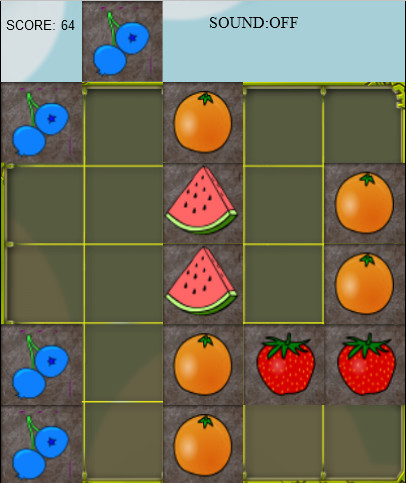
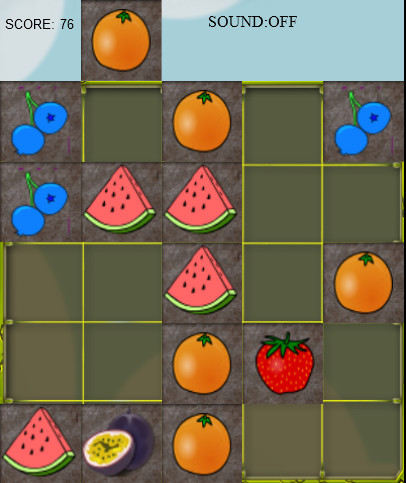
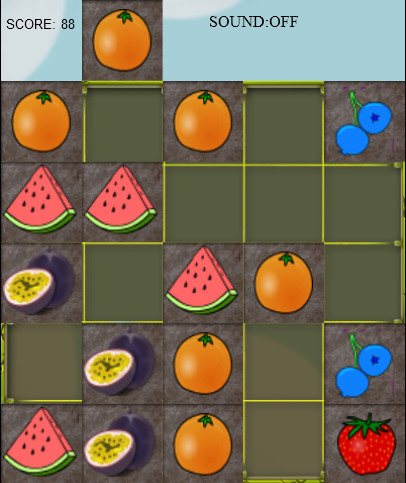
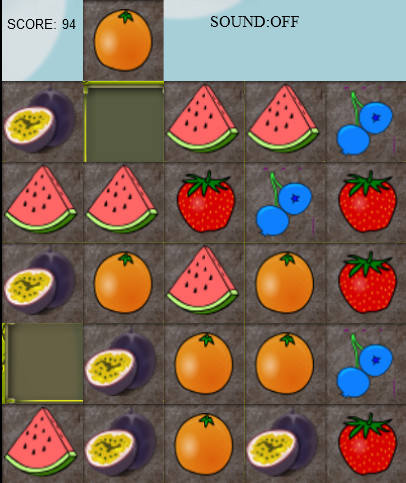
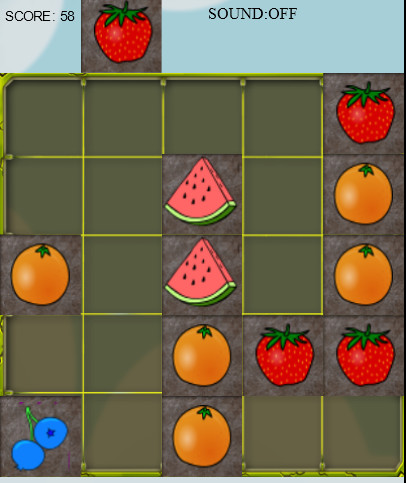
Fruit Arranger is a fun puzzle game where you have to place fruits on a 9x9 table. When you match 3 in a same row or column the last fruit placed will transform into another fruit. Your goal is to place as many fruits as possible without getting stuck.OVER 100 ACHIEVEMENTS to gain

Fruit Arranger is a indie, casual and match 3 game developed and published by Mihai Morosanu.
Released on January 23rd 2017 is available in English only on Windows.

It has received 321 reviews of which 211 were positive and 110 were negative resulting in a rating of 6.3 out of 10. 😐

The game is currently priced at 0.99€ on Steam.


The Steam community has classified Fruit Arranger into these genres:

Media & Screenshots

Get an in-depth look at Fruit Arranger through various videos and screenshots.
System requirements

These are the minimum specifications needed to play the game. For the best experience, we recommend that you verify them.

Windows
  • OS: xp,7,8,8.1 10
  • Processor: 2 Ghz
  • Memory: 1000 MB RAM
  • Graphics: fx 5200 or better
  • Storage: 100 MB available space
  • Sound Card: any

User reviews & Ratings

Explore reviews from Steam users sharing their experiences and what they love about the game.

Feb. 2026
Fruit Arranger is a minimalist puzzle experience developed and published by Mihai Morosanu that embraces simplicity as both its defining strength and its central design philosophy. At first glance, it appears almost disarmingly straightforward: a 9×9 grid, a selection of colorful fruit icons, and the task of placing them in ways that prevent the board from filling up. Yet beneath that modest presentation lies a carefully structured spatial puzzle that rewards foresight, pattern recognition, and long-term planning. Rather than overwhelming players with modes, power-ups, or visual spectacle, the game focuses on a single core mechanic and explores its depth through repetition and incremental mastery. The gameplay revolves around placing fruits one at a time onto the grid. When three identical fruits align in a row or column, the most recently placed fruit evolves into a new type, subtly altering the board’s state and creating opportunities for further combinations. This transformation mechanic is the key twist that distinguishes Fruit Arranger from traditional match-three formulas. Instead of clearing matched pieces from the board, the game evolves them, forcing players to think several moves ahead. Each placement has ripple effects, influencing not just immediate alignment but the broader layout and potential for future transformations. Because the board does not reset or offer frequent clearing mechanics, space management becomes the dominant strategic concern. What makes the design compelling is the constant tension between short-term gain and long-term sustainability. Creating a match might seem beneficial in the moment, but if it results in awkward spacing or isolates certain fruit types, it can limit future options. The 9×9 grid feels spacious enough to encourage experimentation early on, yet it gradually becomes claustrophobic as more fruit types populate the board. The game does not impose time limits or pressure players with countdowns, allowing for deliberate decision-making. This unhurried pacing gives Fruit Arranger a contemplative quality; it feels more like solving a logic puzzle than reacting to a reflex challenge. Visually, the presentation is clean and utilitarian. The fruit sprites are bright and easily distinguishable, and the grid is clearly defined, prioritizing clarity over decorative flourishes. There are no elaborate animations or visual effects accompanying matches, and the interface remains straightforward throughout. While some players might find the aesthetic overly plain, this restraint aligns with the game’s mechanical focus. By stripping away excess embellishment, the design ensures that attention remains squarely on spatial reasoning and board management. The simplicity also contributes to accessibility, making it easy to understand the game’s rules without extensive tutorials. The open-ended nature of Fruit Arranger means there is no conventional win state. Sessions continue until the board fills to the point where no more placements are possible. This structure transforms the experience into a test of endurance and optimization rather than progression through discrete levels. Personal best scores and achievement milestones become the primary motivators. For players who enjoy self-improvement loops and incremental performance gains, this format can be surprisingly addictive. The sense of accomplishment comes from extending a run further than before or discovering more efficient arrangements. One notable aspect of the game is its extensive achievement list, which adds a meta-layer of objectives beyond pure survival. These achievements encourage experimentation with different placement strategies and reward persistence. They serve as external markers of progress in an otherwise sandbox-like structure. While achievements alone do not fundamentally change the gameplay, they provide additional incentives for players who enjoy completionist goals. However, the game’s focused scope also means that variety is limited. Without multiple modes, dynamic events, or evolving mechanics introduced over time, the core loop remains consistent from start to finish. For some players, this consistency fosters a soothing and meditative experience. For others, it may lead to repetition, particularly during longer sessions. The enjoyment of Fruit Arranger largely depends on one’s tolerance for minimalist design and appreciation for incremental strategic refinement. In essence, Fruit Arranger stands as a thoughtfully constructed indie puzzle that demonstrates how much depth can be extracted from a simple concept. It avoids spectacle in favor of clarity, avoids complexity in favor of elegance, and relies on player ingenuity rather than scripted progression. While it may not compete with larger puzzle franchises in terms of content breadth or production value, it succeeds in delivering a focused and intellectually engaging experience. For players who value methodical gameplay, spatial reasoning, and a calm yet challenging environment, Fruit Arranger offers a satisfying and quietly absorbing puzzle journey. Rating: 6/10
Expand the review
Jan. 2026
It's an OK match three game. It's not the game of the year, but for .49, who can complain?
Expand the review
Nov. 2025
This is a cheerful little puzzle game with bright visuals and a satisfying rhythm of sorting, stacking, and clearing. It’s easy to learn and pleasantly calming, offering quick-hit challenges that feel good to solve. A sweet, low-pressure puzzler that’s great in short bursts.
Expand the review
Oct. 2025
This game changed my life. The Hours I've Spent Arranging Fruit For Them To Combine Into New Extremely Awesome Fruit. The Animation And Story Telling Is Awesome.
Expand the review
May 2025
This Game Will Haunt You Forever..........................
Expand the review

Frequently Asked Questions

Fruit Arranger is currently priced at 0.99€ on Steam.

Fruit Arranger is currently not on sale. You can purchase it for 0.99€ on Steam.

Fruit Arranger received 211 positive votes out of a total of 321 achieving a rating of 6.30.
😐

Fruit Arranger was developed and published by Mihai Morosanu.

Fruit Arranger is playable and fully supported on Windows.

Fruit Arranger is not playable on MacOS.

Fruit Arranger is not playable on Linux.

Fruit Arranger is a single-player game.

Fruit Arranger does not currently offer any DLC.

Fruit Arranger does not support mods via Steam Workshop.

Fruit Arranger does not support Steam Remote Play.

Fruit Arranger is enabled for Steam Family Sharing. This means you can share the game with authorized users from your Steam Library, allowing them to play it on their own accounts. For more details on how the feature works, you can read the original Steam Family Sharing announcement or visit the Steam Family Sharing user guide and FAQ page.

You can find solutions or submit a support ticket by visiting the Steam Support page for Fruit Arranger.

Data sources

The information presented on this page is sourced from reliable APIs to ensure accuracy and relevance. We utilize the Steam API to gather data on game details, including titles, descriptions, prices, and user reviews. This allows us to provide you with the most up-to-date information directly from the Steam platform.

Additionally, we incorporate data from the SteamSpy API, which offers insights into game sales and player statistics. This helps us present a comprehensive view of each game's popularity and performance within the gaming community.

Last Updates
Steam data 28 February 2026 08:16
SteamSpy data 08 March 2026 21:04
Steam price 10 March 2026 04:41
Steam reviews 08 March 2026 22:04

If you'd like to dive deeper into the details about Fruit Arranger, we invite you to check out a few dedicated websites that offer extensive information and insights. These platforms provide valuable data, analysis, and user-generated reports to enhance your understanding of the game and its performance.

  • SteamDB - A comprehensive database of everything on Steam about Fruit Arranger
  • SteamCharts - Analysis of Fruit Arranger concurrent players on Steam
  • ProtonDB - Crowdsourced reports on Linux and Steam Deck Fruit Arranger compatibility
Fruit Arranger
Rating
6.3
211
110
Game modes
Features
Online players
0
Developer
Mihai Morosanu
Publisher
Mihai Morosanu
Release 23 Jan 2017
Platforms