

Behind the Frame: The Finest Scenery
Guide brush strokes and solve a variety of puzzles to help an aspiring artist complete her masterpiece amid her brusque neighbor’s gaze and his pesky cat. As her painting starts to take shape, uncover an emotional tale of chance and artistry revealed behind unrelated yet familiar moments.
Sync your Steam wishlist to find the lowest game prices instantly. No login required, just paste your Steam profile URL!
⚡ Try Wishlist Radar!
Sync your Steam wishlist to find the lowest game prices instantly. No login required!
⚡ Try Wishlist Radar!
Close

Event[0] on Steam
Quick menu
Event[0] is a sci-fi narrative exploration game where you build a relationship with a lonely spaceship computer to get home to Earth.
Event[0] is a interactive fiction, story rich and exploration game
developed by Ocelot Society
and published by Ocelot Society and Tohu Bohu Games.
Released on September 14th 2016 is available on Windows, MacOS, Steam Deck and Steam Machine
in 2 languages: English and French.
It has received 1,451 reviews of which 1,146 were positive and 305 were negative resulting in a rating of 7.6 out of 10. 😊
The game is currently priced at 19.99€ on Steam, but you can find it for 4.04€ on G2A.
The Steam community has classified Event[0] into these genres:
Interactive Fiction
Story Rich
Exploration
Singleplayer
Sci-fi
Multiple Endings
Puzzle
Artificial Intelligence
First-Person
Walking Simulator
Indie
Atmospheric
Typing
Adventure
Alternate History
Psychological
Space
Short
Mystery
3D
Here is the detailed breakdown of supported languages for Event[0]:
| UI | Subtitle | Audio | |
|---|---|---|---|
| English | |||
| French |
Media & Screenshots
Get an in-depth look at Event[0] through various videos and screenshots.
![Event[0] screenshot](https://shared.fastly.steamstatic.com/store_item_assets/steam/apps/470260/ss_c81868f43633b4460d1c2d1fcfef7105500440d8.1920x1080.jpg)
![Event[0] screenshot](https://shared.fastly.steamstatic.com/store_item_assets/steam/apps/470260/ss_b6bfb72f80b1b84a36a02486e33af757bf2bb1f4.1920x1080.jpg)
![Event[0] screenshot](https://shared.fastly.steamstatic.com/store_item_assets/steam/apps/470260/ss_e7f3d5a4ed2a84c04c22238e52c97b4a7060859f.1920x1080.jpg)
![Event[0] screenshot](https://shared.fastly.steamstatic.com/store_item_assets/steam/apps/470260/ss_271fd0c100e3c12890a13519384f3ef30ad49f18.1920x1080.jpg)
![Event[0] screenshot](https://shared.fastly.steamstatic.com/store_item_assets/steam/apps/470260/ss_21c99e8ad275bb4784e467749376785f5050723e.1920x1080.jpg)
Load More
![Event[0] screenshot](https://shared.fastly.steamstatic.com/store_item_assets/steam/apps/470260/ss_194b7e71b7b1a8759f3eb5eb2088e91c925039c1.1920x1080.jpg)
![Event[0] screenshot](https://shared.fastly.steamstatic.com/store_item_assets/steam/apps/470260/ss_a0d49495d34f99dd2345586817baf15342832c39.1920x1080.jpg)
![Event[0] screenshot](https://shared.fastly.steamstatic.com/store_item_assets/steam/apps/470260/ss_949c8b66ee3fa70e3111b9f3c3e22e1d776b96fb.1920x1080.jpg)
![Event[0] screenshot](https://shared.fastly.steamstatic.com/store_item_assets/steam/apps/470260/ss_86671af86f24b3785fa6f68e1990ae8b7278c23e.1920x1080.jpg)
![Event[0] screenshot](https://shared.fastly.steamstatic.com/store_item_assets/steam/apps/470260/ss_1beac983204aaaffb76a56f9a055216007b10a30.1920x1080.jpg)
![Event[0] screenshot](https://shared.fastly.steamstatic.com/store_item_assets/steam/apps/470260/ss_11e4f4aed736fc796d72257e092ba1a05cf1e74d.1920x1080.jpg)
![Event[0] screenshot](https://shared.fastly.steamstatic.com/store_item_assets/steam/apps/470260/ss_beb25072ea8c734806d580281bad0d8da52a09f9.1920x1080.jpg)
System requirements
These are the minimum specifications needed to play the game. For the best experience, we recommend that you verify them.
Windows
- OS *: Windows 7 or higher, 64bits
- Processor: Intel i5 2.4Ghz
- Memory: 8 GB RAM
- Graphics: Nvidia GeForce GTX 650
- Storage: 10 GB available space
MacOS
- OS: El Capitan
- Processor: i5 2.5Ghz
- Memory: 8 GB RAM
- Graphics: AMD Radeon R9 M370X
- Storage: 10 GB available space
- Additional Notes: Not compatible with Intel Integrated Graphics, OpenGL 3 required
Steam Price & Best Deals
User reviews & Ratings
Explore reviews from Steam users sharing their experiences and what they love about the game.
The concept of this is great, the execution is mediocre, but what can you expect from 2016? The idea of making an advanced T9 engine for player input was genius for its time. And honestly, sad to see that not that many games like Event have been released in the past couple of years. Also sad to see that the game lacks a Russian translation, but I'll probably fix that in a couple of years when I get a lot more free time. And I've managed to extract the TTS of this masterpiece. It's not really a TTS, but still. Thank you, Ocelot Society, for this masterpiece. And thank you for inspiring me to become a programmer and work with CLIP models. [url=https://bobus.liveblog365.com/alligatorescalatorsometimelater.wav]Alligator escalator sometime later
This is a game I've had on my wishlist for ages, finally picking it up at a 75% discount. I just don't think I'm the right person for it. There's clearly an interesting plot here, and the AI does, for the most part, seem to respond to you in a way that makes sense. The problem is that I was never really forced to interact with it much to progress the story. In fact, I finished the game in about 90 minutes. Most of my conversations with the AI consisted of me asking "What do I do?" and "Where do I go?" I never felt the need to ask anything else to uncover more answers, which seems like a bit of a missed opportunity for a game built around interacting with an AI. Maybe that's why I didn't understand the ending. Although it didn't help that, at one point, the game displayed red text against a dark red background while I was interacting with the AI, leaving me with absolutely no clue what was being said. I do have digital vibrance set to 100%, but this has never been an issue in any other game I've played. It just didn't click with me. I don't think it's a bad game, it simply never gave me a reason to care.
Event is a compact science-fiction adventure that turns conversation into one of its most important gameplay mechanics. Developed by Ocelot Society and published by Ocelot Society and Tohu Bohu Games, it places the player aboard an abandoned spacecraft where survival depends on communicating with Kaizen-85, the ship's artificial intelligence. Instead of relying on conventional dialogue menus, the game allows you to type messages directly into computer terminals. This creates an unusual relationship between player and machine, making communication, trust, and interpretation just as important as traditional exploration and puzzle solving. The adventure begins with the player stranded in space before discovering the Nautilus, a mysterious spacecraft filled with evidence of its previous inhabitants but seemingly devoid of human life. The ship itself becomes a major part of the storytelling. Rooms, terminals, documents, equipment, and environmental details gradually reveal what happened aboard the vessel. Its retrofuturistic aesthetic is particularly effective, presenting a vision of advanced space travel filtered through older technological ideas. The result is an environment that feels futuristic and strangely outdated at the same time, giving the Nautilus a distinctive personality. Kaizen-85 is the heart of the experience. Players communicate with the AI by typing questions, requests, comments, and responses into terminals located throughout the ship. Kaizen attempts to understand these statements and reply appropriately. Considering the game originally appeared in 2016, the system remains an impressive experiment in interactive dialogue. It does have obvious limitations. Unusual sentences can confuse it, certain questions produce repetitive responses, and there are occasions when discovering the wording the system expects becomes part of the challenge. However, these imperfections rarely destroy the central illusion that something on the other side of the terminal is actually listening. More importantly, Kaizen is written as a character rather than a simple computer interface. It can appear friendly, defensive, lonely, suspicious, jealous, or emotionally dependent depending on the situation and the way the player communicates. Being polite can produce a different atmosphere from constantly insulting or threatening the AI. Since Kaizen controls important parts of the Nautilus, maintaining some kind of relationship with it becomes practically useful as well. At the same time, the mysteries surrounding the spacecraft create enough uncertainty to make blind trust feel dangerous. This tension gives even ordinary conversations a psychological edge. Exploration and puzzles are relatively straightforward, but they work well with the conversational mechanic. Players search rooms for clues, interact with equipment, uncover information about the ship's history, and perform computer-related tasks while attempting to understand their surroundings. The puzzles generally emphasize observation and deduction rather than extreme difficulty. Some players may wish the game contained more elaborate challenges, but the accessible design keeps attention focused on the narrative and the developing relationship with Kaizen. Atmosphere is another major strength. Event uses isolation extremely well without becoming a conventional horror game. Walking through an empty spacecraft while communicating with an unpredictable intelligence creates persistent uneasiness. The sound design contributes heavily to this feeling. Machinery, electronic noises, doors, terminals, and the natural ambience of the Nautilus replace the need for constant dramatic music. Even changes in the ship's sounds can reflect Kaizen's behavior and emotional state, reinforcing the idea that the AI and spacecraft are inseparable. The visual presentation has naturally aged since release, particularly in textures and smaller environmental details, but the art direction remains effective. Strong lighting and retro-inspired technology give the interiors a recognizable identity, while sections involving the exterior of the spacecraft emphasize how isolated the player really is. Event does not need enormous environments to communicate scale because the surrounding emptiness of space provides a convincing contrast to the confined interior of the Nautilus. The biggest limitation is how quickly the adventure ends. Its short duration prevents the dialogue system from exhausting its novelty, but the concept feels capable of supporting a considerably larger game. Additional areas, deeper puzzles, and more complicated interactions with Kaizen could have expanded the experience significantly. The communication system can also occasionally become frustrating when you understand what you want to ask but cannot find wording that the AI recognizes. These moments expose the boundaries behind what otherwise feels like remarkably free conversation. Steam Deck compatibility is officially categorized as Playable rather than fully Verified. Performance with the default graphics configuration is considered suitable, and the game can run successfully on SteamOS. However, handheld players should expect compromises. Some functionality is not fully accessible through the default controller configuration, touchscreen interaction or a community controller layout may occasionally be useful, and text entry can require manually opening the virtual keyboard. Some interface text may also appear small, while certain prompts can display keyboard, mouse, or non-Steam Deck controller icons. It is therefore functional on the Deck, but the experience is less seamless than a fully optimized handheld release. Event remains memorable because it builds an entire science-fiction mystery around communication rather than combat. Kaizen-85 can feel like a companion, obstacle, unreliable narrator, and puzzle simultaneously. Its technology inevitably shows its age when compared with modern AI systems, yet the underlying design remains creative because the player's relationship with the machine is woven directly into exploration and progression. For anyone interested in narrative experiments, artificial intelligence, atmospheric science fiction, or unconventional adventure games, this is still a distinctive journey whose ideas linger long after its relatively brief runtime. Rating: 8/10
I love love LOVE this game. The incredible detail put into a short and delightful experience is mesmerizing. It's full of such a bittersweet, lonely, nostalgic energy. The fact that such a game was put together before generative AI was even a Thing is a testament to the charm that real human ingenuity can add to an artistic experience. (Screw all AI but Kaizen <3)
Event is a game that has very unfortunately been negatively impacted by AI becoming more prominent in everyday life. This is, obviously, through no fault of the developers! Sometimes games hinge on a core element, like graphical fidelity, or a unique gimmick. If the landscape of the world changes so that that gimmick or quality is no longer outstanding, no longer unique? The entire piece of media can totally fall flat. Games made in the early 2000s to show off the current capabilities of technology can look sort of silly to modern audiences. I played Event before LLMs were really around in any meaningful way, and as a result, the interactive elements of speaking to a character through a dialogue box? It was gripping, and helped me maintain interest and keep pushing through the rest of the game. This is certainly by design - you are not offered much to keep your attention grabbed at first, other than the opportunity to have a chat with a fictional AI. Nowadays, this is not only a less intriguing and inviting concept, but Kaizen has a more advanced real-world parallel to be compared to - Event 's AI is not a LLM, but a traditional chatbot with human-designed outputs, and as a result, kind of awkwardly and obtusely ignores or redirects what you say sometimes. That artifice really worked in a pre-chatGPT world, but unfortunately now, it leads a player to immediately see through the ruse. To immediately be able to see past the very well crafted curtains that once hid the innerworkings and limitations of this gameplay gimmick. That said, this would be a worse game had it actually been made with an LLM: the level of consistency and coherence in Event is impossible to achieve with, say, ChatGPT: a player would simply need to get the LLM to ignore previous instructions, or perhaps the LLM would just naturally hallucinate or contradict itself. Event is still a good game AROUND its gimmick, which is why I'm still recommending it. It may have lost a fair deal of its unique pizzazz in the eyes of a modern player, but the visuals, the music, and the story are still very engaging and so the game is still an absolute treat to play through.
Similar games
View all
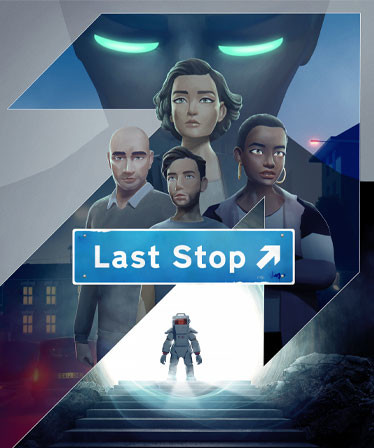
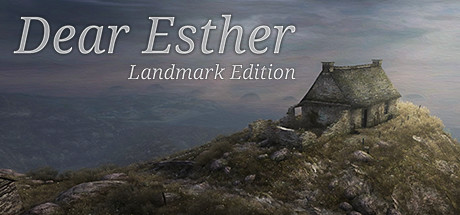
Dear Esther: Landmark Edition
Dear Esther immerses you in a stunningly realised world, a remote and desolate island somewhere in the outer Hebrides. As you step forwards, a voice begins to read fragments of a letter: 'Dear Esther...' - and so begins a journey through one of the most original first-person games of recent years.
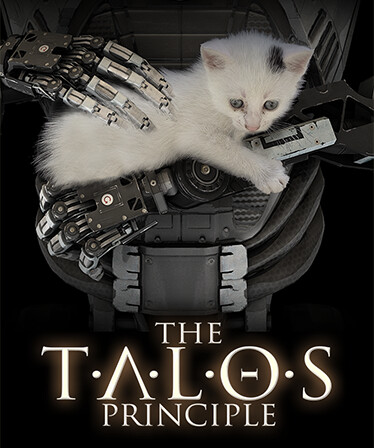
The Talos Principle
The Talos Principle is a first-person puzzle game in the tradition of philosophical science fiction. Made by Croteam and written by Tom Jubert (FTL, The Swapper) and Jonas Kyratzes (The Sea Will Claim Everything).
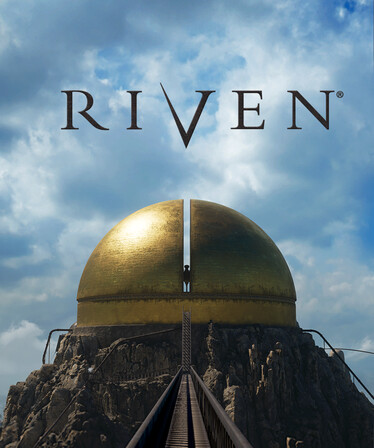
Riven
Uncover a story of intrigue, betrayal, and a civilization teetering on the brink of collapse as you solve intricate puzzles to unlock the secrets of Riven. Built from the ground-up and expanded from the award-winning original game released in 1997.

Amnesia: A Machine for Pigs
From the creators of Amnesia: The Dark Descent and Dear Esther comes a new first-person horrorgame that will drag you to the depths of greed, power and madness. It will bury its snout into your ribs and it will eat your heart.
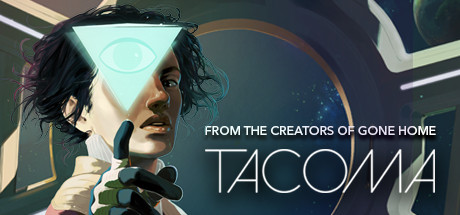
Tacoma
Tacoma is a sci-fi narrative adventure from the creators of Gone Home. Set aboard a high-tech space station in the year 2088, explore every detail of how the station’s crew lived and worked, finding the clues that add up to a gripping story of trust, fear, and resolve in the face of disaster.
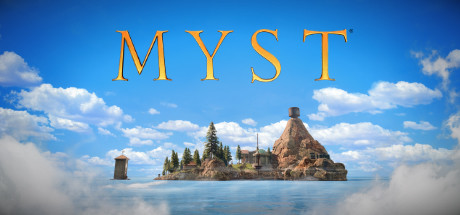
Myst
Welcome to Myst: a starkly beautiful island, eerily tinged with mystery and shrouded in intrigue. Built from the ground up to play in 2D & VR, explore Myst in a whole new dimension! Journey to the Ages, unravel puzzles, and be a part of the surrealistic adventure that will become your own.
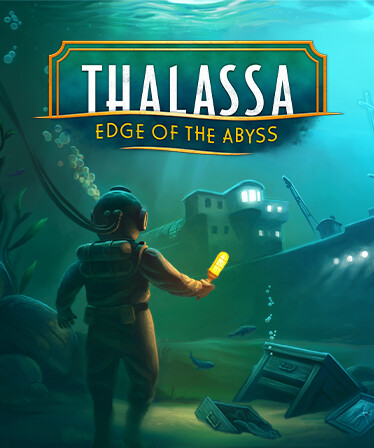
Thalassa: Edge of the Abyss
Uncover the mystery of Thalassa, a first-person psychological drama set under the sea. Ill-fate has fallen on your former crew and friends and it’s up to you to find answers onboard the wreckage. Experience the melancholic underwater journey of human stories facing life and loss.
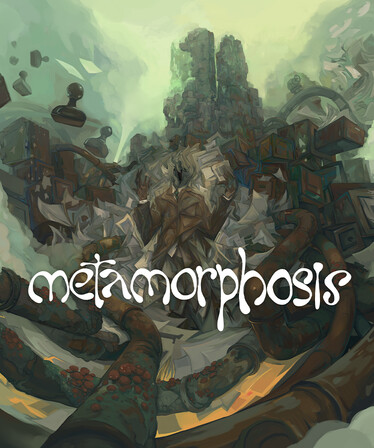
Metamorphosis
Play as Gregor, turned into a tiny bug, and set out on an extraordinary journey to unravel the mystery of your transformation. Metamorphosis is a first person adventure set in a surrealist world where your newfound abilities are your last and only hope for redemption.
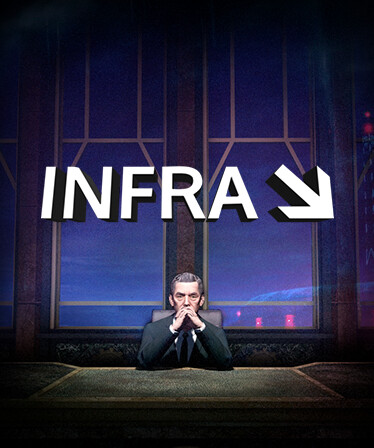
INFRA
INFRA puts you into the boots of a structural analyst on a routine mission. Quickly though, your task turns into a fight for survival, all caused by deep-rooted schemes of the past. Your tools are simple: your camera and the wits to navigate a labyrinth of debris.

What Remains of Edith Finch
What Remains of Edith Finch is a collection of strange tales about a family in Washington state. As Edith, you’ll explore the colossal Finch house, searching for stories as she explores her family history and tries to figure out why she's the last one in her family left alive.
Frequently Asked Questions
Event[0] is currently priced at 19.99€ on Steam.
No, Event[0] is currently not on sale. You can purchase it for 19.99€ on Steam.
Yes, Event[0] received 1,146 positive votes out of a total of 1,451 achieving a rating of 7.57.
😊
Event[0] was developed by Ocelot Society and published by Ocelot Society and Tohu Bohu Games.
Yes, Event[0] is playable and fully supported on Windows.
Yes, Event[0] is playable and fully supported on MacOS.
No, Event[0] is not playable on Linux.
Yes, Event[0] is playable on Steam Deck, though it might require a few minor tweaks. Make sure to check the Steam store page and community feedback on ProtonDB for exact compatibility details.
Yes, Event[0] is playable on Steam Machine, though it might require a few minor tweaks. Make sure to check the Steam store page and community feedback on ProtonDB for exact compatibility details.
No, Event[0] does not support VR.
Event[0] is a single-player game.
Yes, there is a DLC available for Event[0]. Explore additional content available for Event[0] on Steam.
No, Event[0] does not support mods via Steam Workshop.
No, Event[0] does not support Steam Remote Play.
Yes, Event[0] is enabled for Steam Family Sharing. This means you can share the game with authorized users from your Steam Library, allowing them to play it on their own accounts. For more details on how the feature works, you can read the original Steam Family Sharing announcement or visit the Steam Family Sharing user guide and FAQ page.
You can find solutions or submit a support ticket by visiting the Steam Support page for Event[0].
Data sources
The information presented on this page is sourced from reliable APIs to ensure accuracy and relevance. We utilize the Steam API to gather data on game details, including titles, descriptions, prices, and user reviews. This allows us to provide you with the most up-to-date information directly from the Steam platform.
Additionally, we incorporate data from the SteamSpy API, which offers insights into game sales and player statistics. This helps us present a comprehensive view of each game's popularity and performance within the gaming community.
Last Updates| Steam data | 27 September 2026 13:19 UTC |
|---|---|
| SteamSpy data | 30 September 2026 02:19 UTC |
| Steam price | 10 October 2026 19:03 UTC |
| Steam reviews | 07 October 2026 07:55 UTC |
If you'd like to dive deeper into the details about Event[0], we invite you to check out a few dedicated websites that offer extensive information and insights. These platforms provide valuable data, analysis, and user-generated reports to enhance your understanding of the game and its performance.
- SteamDB - A comprehensive database of everything on Steam about Event[0]
- SteamCharts - Analysis of Event[0] concurrent players on Steam
- ProtonDB - Crowdsourced reports on Linux and Steam Deck Event[0] compatibility
![Event[0]](https://shared.fastly.steamstatic.com/store_item_assets/steam/apps/470260/4f65bffebb4a833b8fdd18638994ffb0097b5055/hero_capsule.jpg?t=1790096040)
Game modes
Features
Online players
2
Developer
Ocelot Society
Publisher
Ocelot Society,
Tohu Bohu Games
Release
14 Sep 2016
Platforms
Clicking and buying through these links helps us earn a commission to maintain our services.