


Victoria 3
Paradox Development Studio invites you to build your ideal society in the tumult of the exciting and transformative 19th century. Balance the competing interests in your society and earn your place in the sun in Victoria 3, one of the most anticipated games in Paradox’s history.
Sync your Steam wishlist to find the lowest game prices instantly. No login required, just paste your Steam profile URL!
⚡ Try Wishlist Radar!
Sync your Steam wishlist to find the lowest game prices instantly. No login required!
⚡ Try Wishlist Radar!
Close

Computer Tycoon on Steam
Quick menu
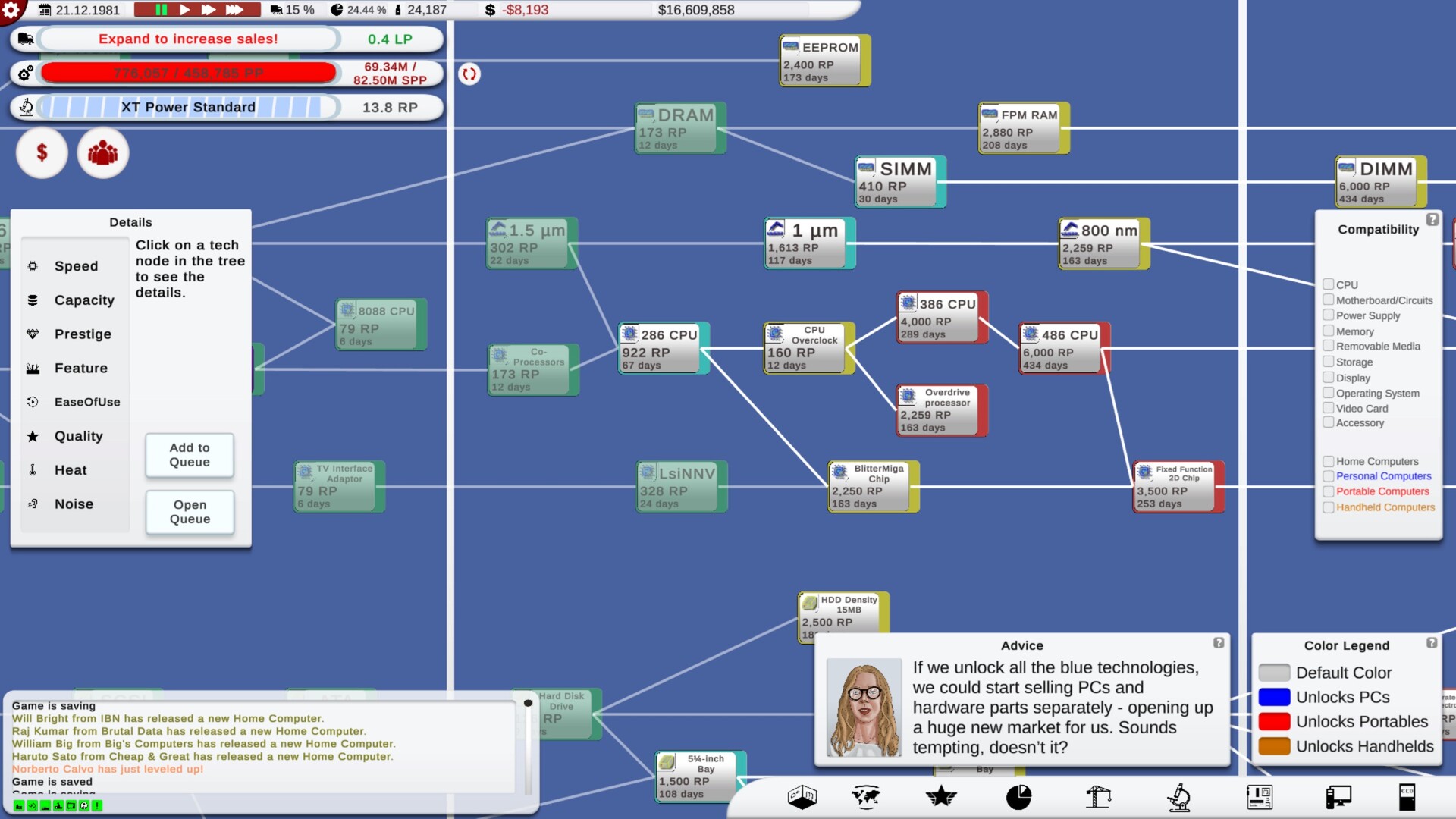
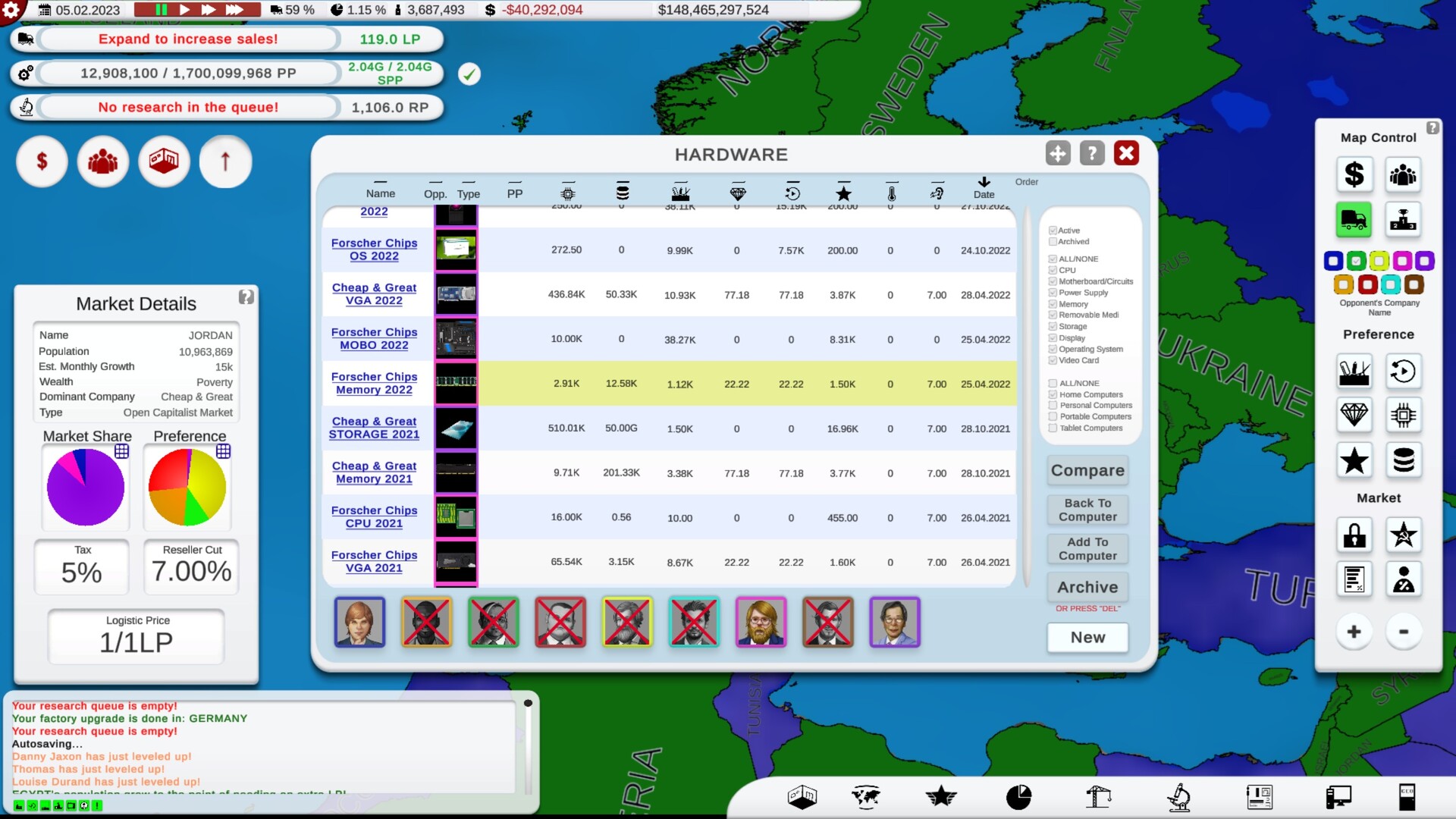
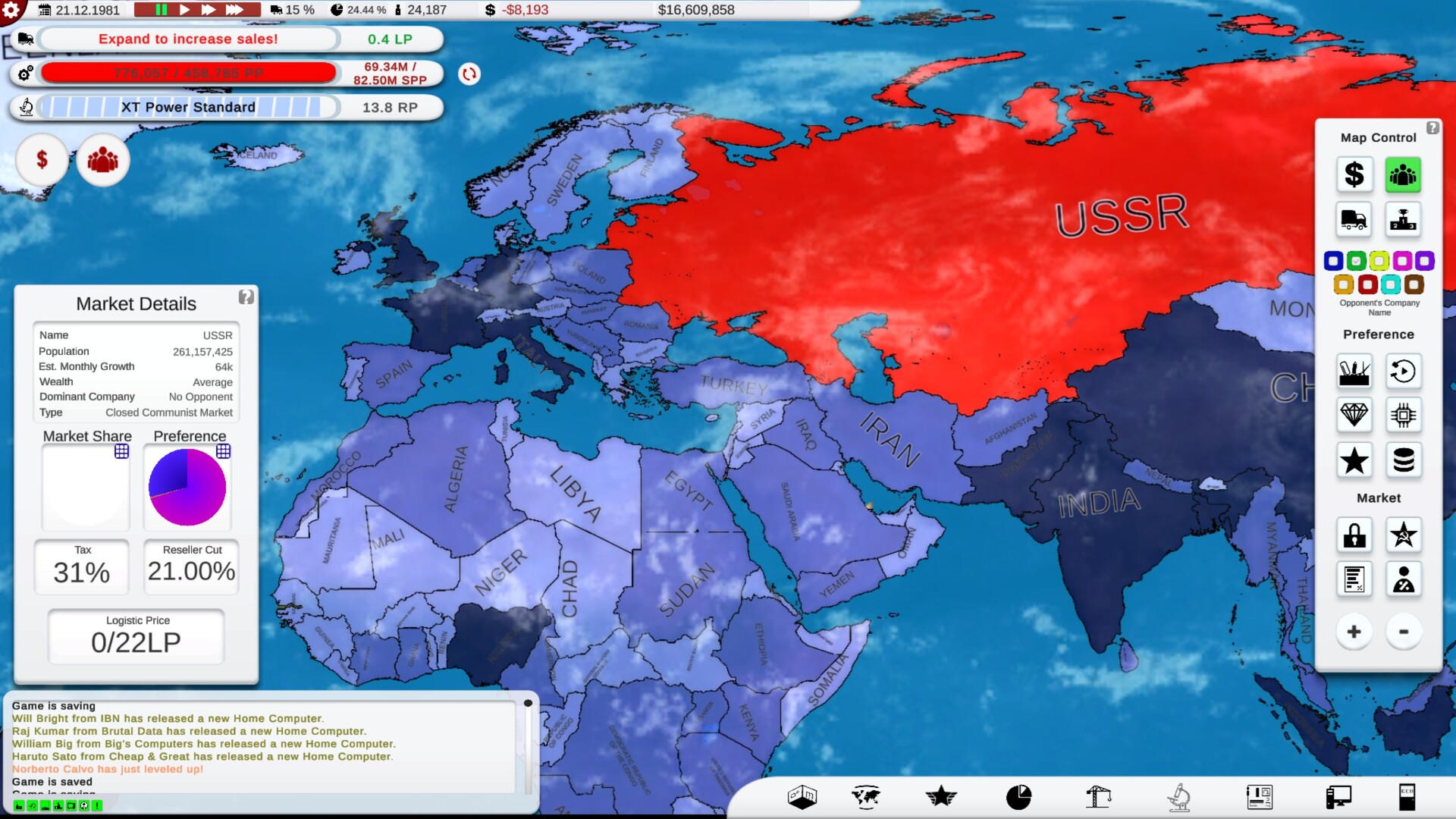
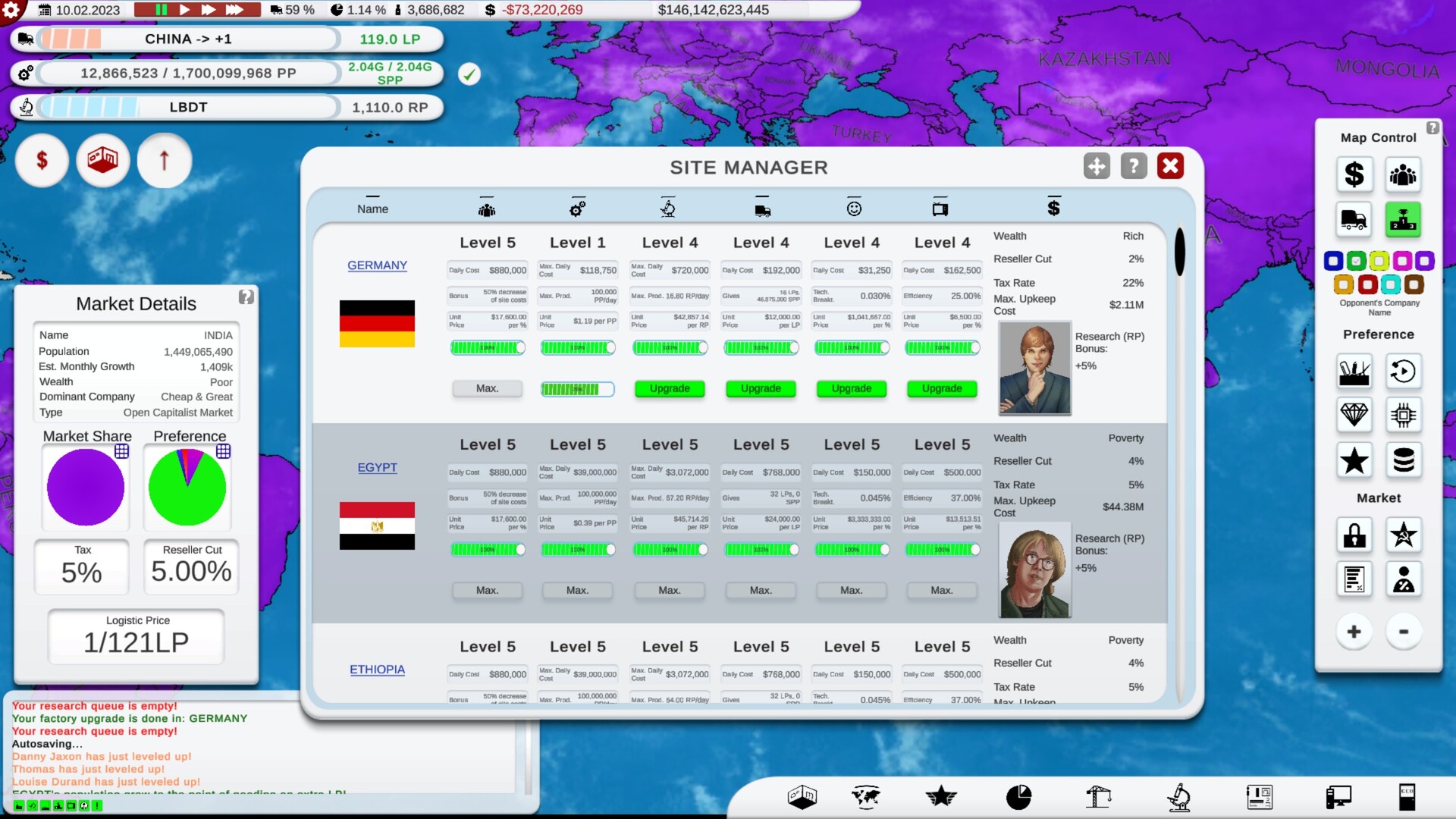
Computer Tycoon is a highly complex Business Grand Strategy game about Computer Evolution. Start in the 70s, invent until 2034, create the best computer systems, upgrade your infrastructure, lead a team, and alter computer history! It is time to "Think Different"
Computer Tycoon is a hardware, software and grand strategy game
developed and published by Progorion.
Released on October 12th 2017 is available on Windows, MacOS, Steam Deck and Steam Machine.
It has received 969 reviews of which 827 were positive and 142 were negative resulting in a rating of 8.1 out of 10. 😎
The game is currently priced at 11.75€ on Steam with a 30% discount.
The Steam community has classified Computer Tycoon into these genres:
Media & Screenshots
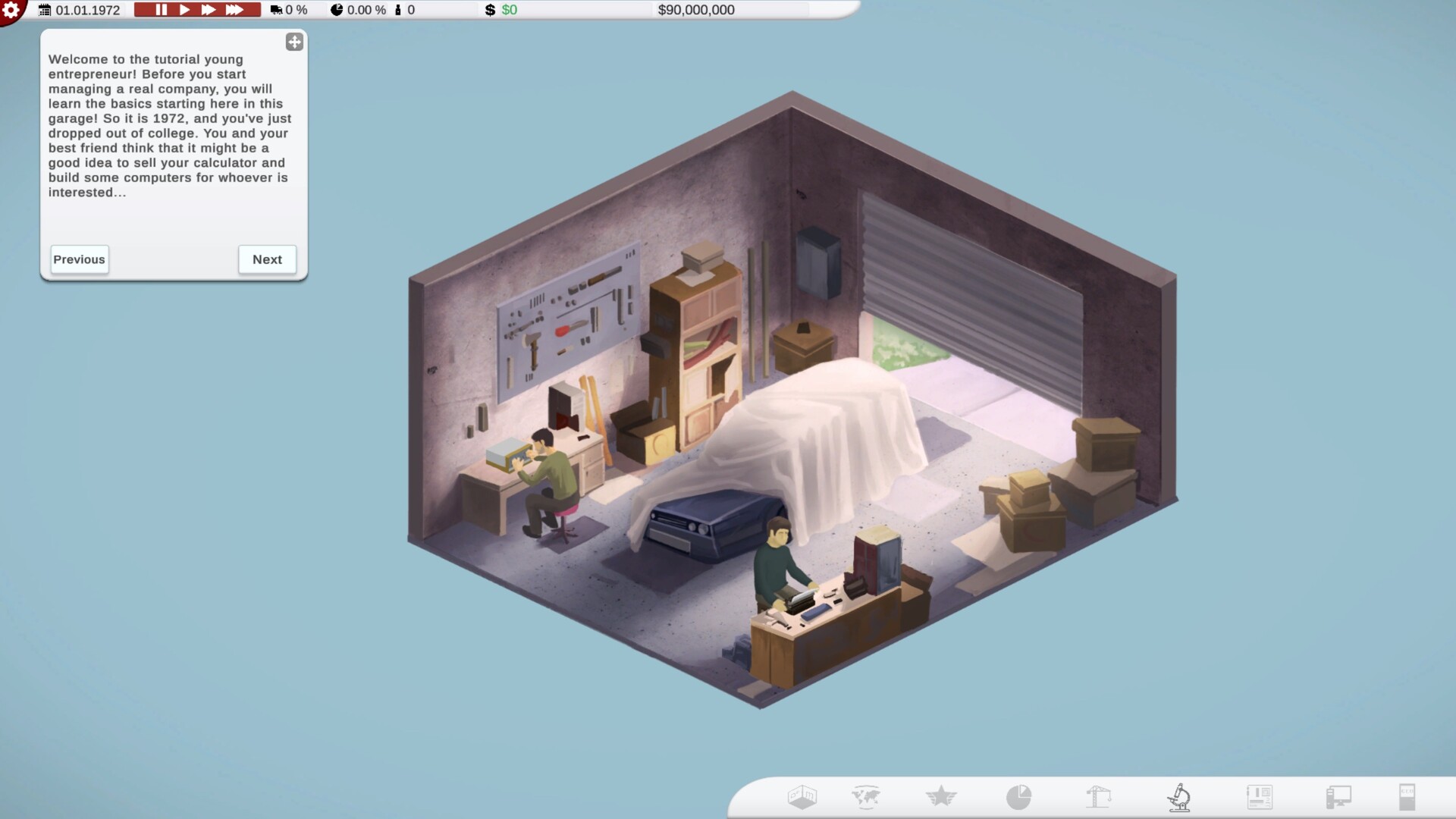
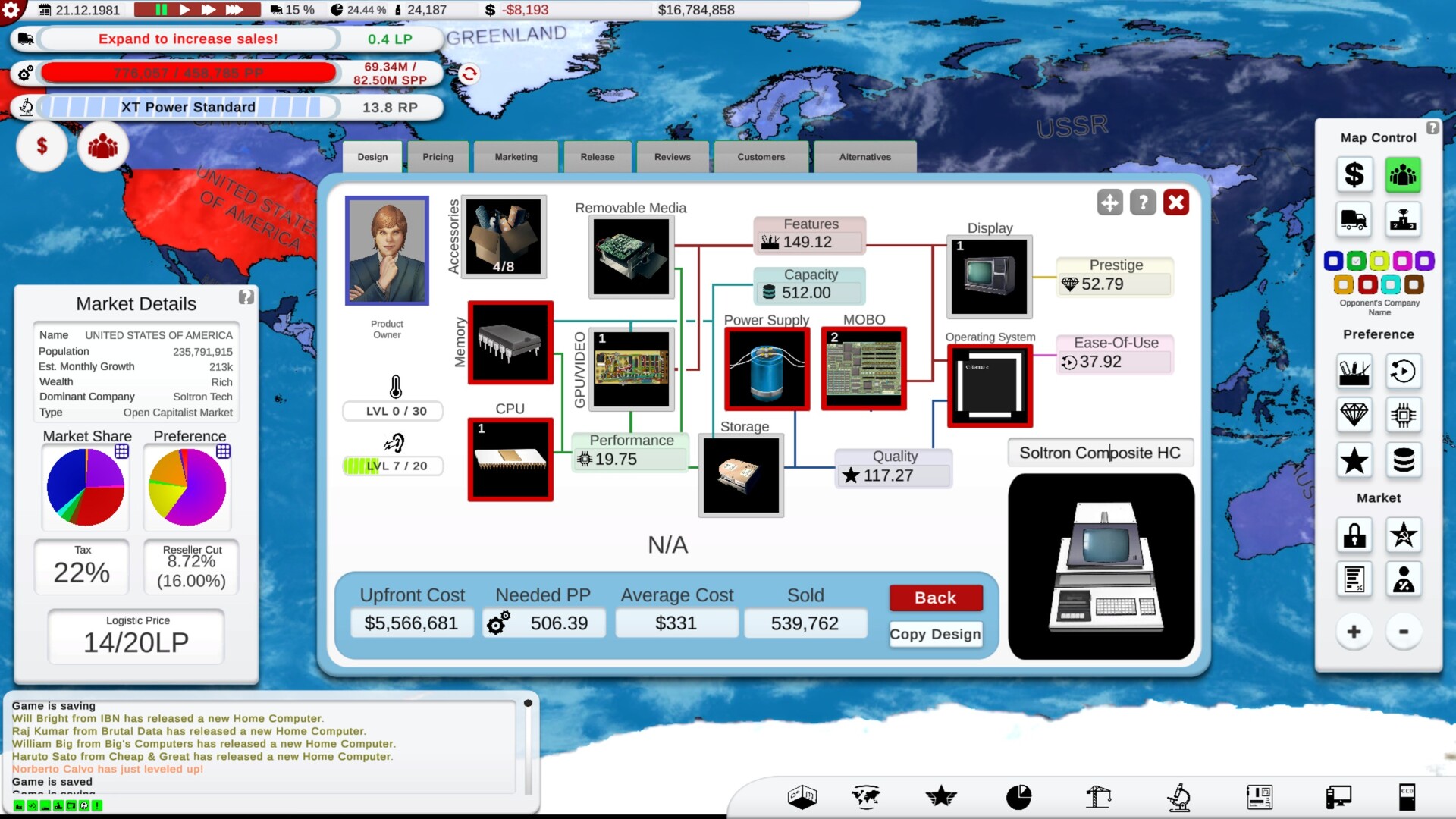
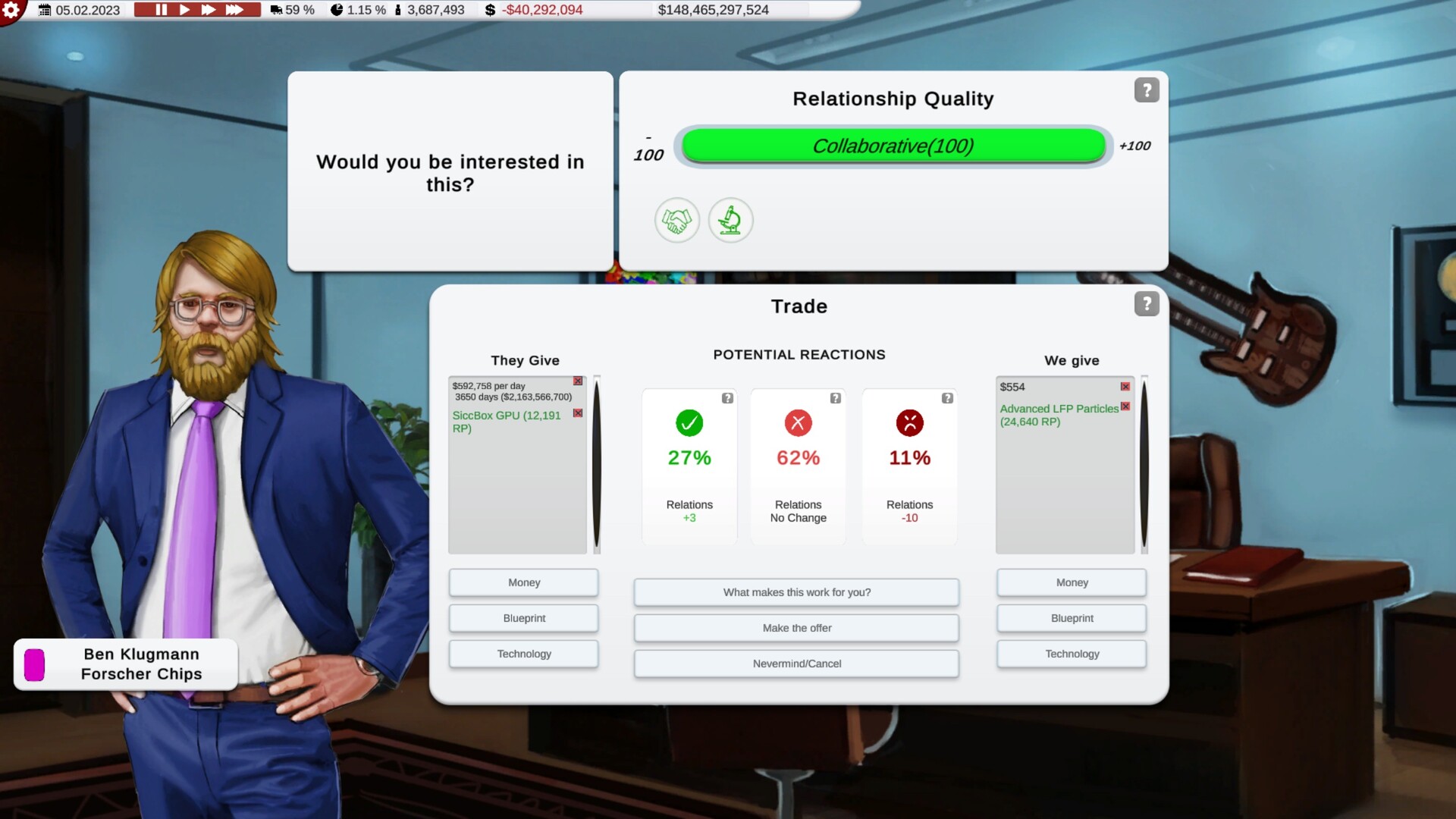
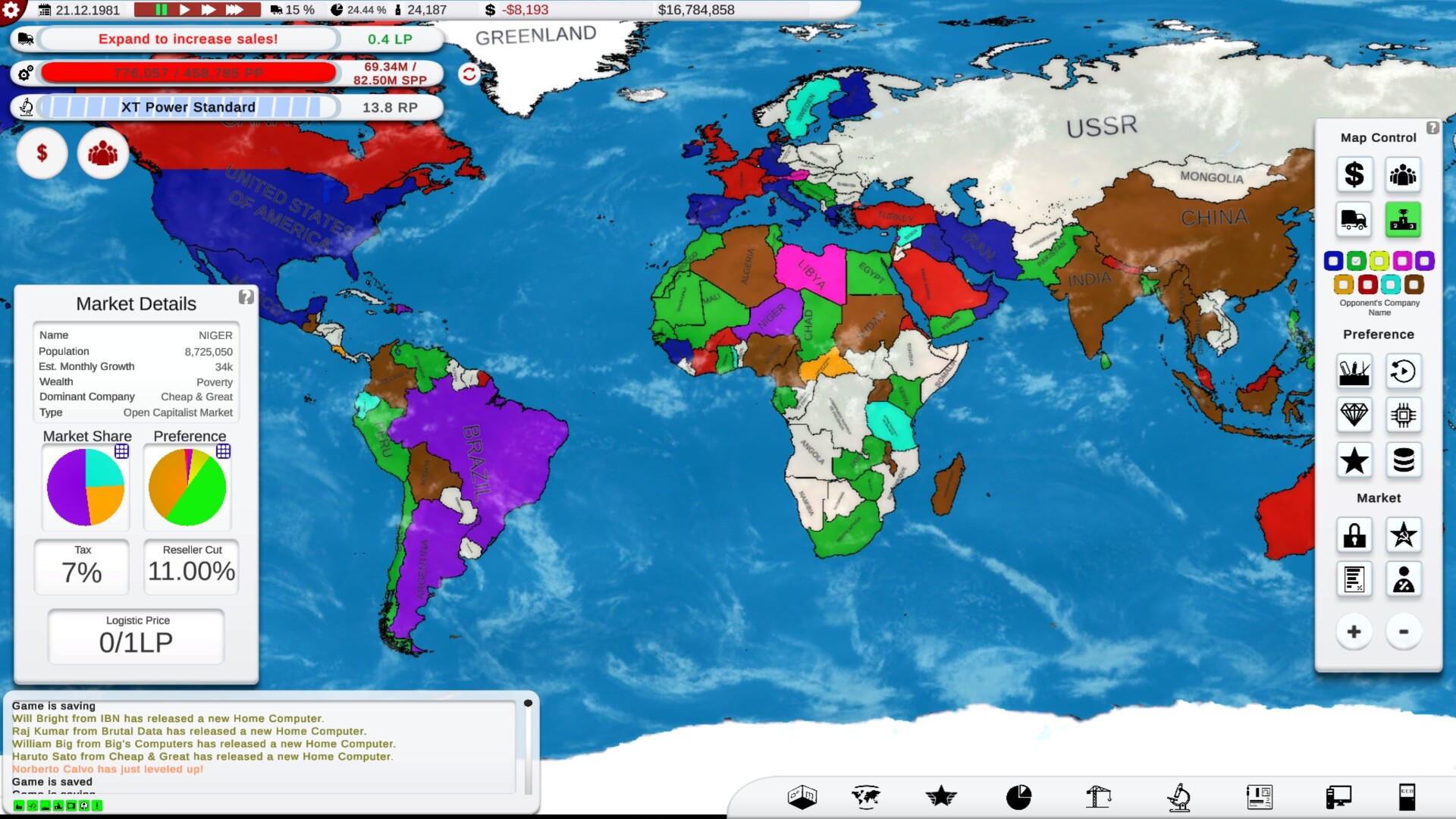
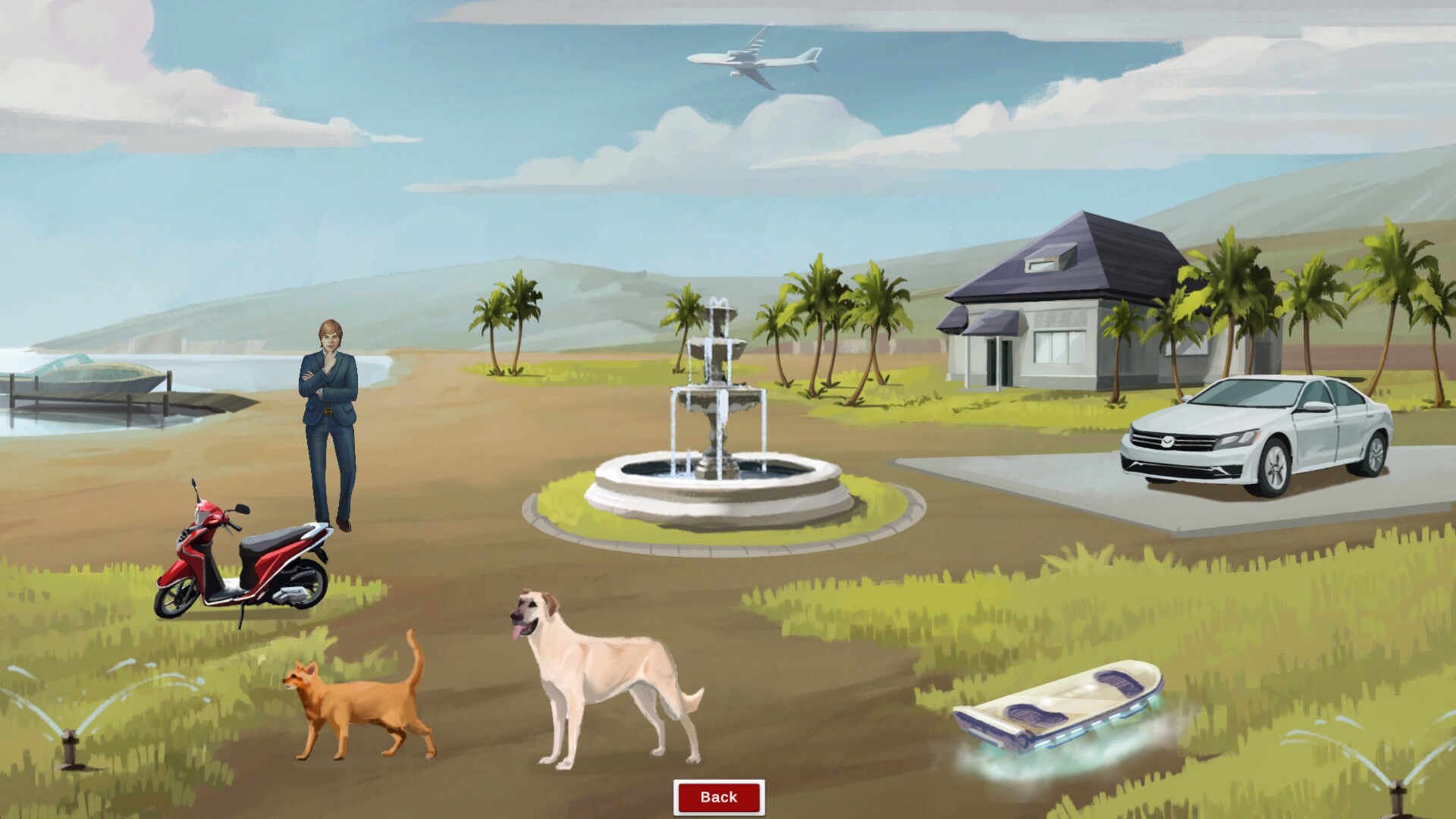
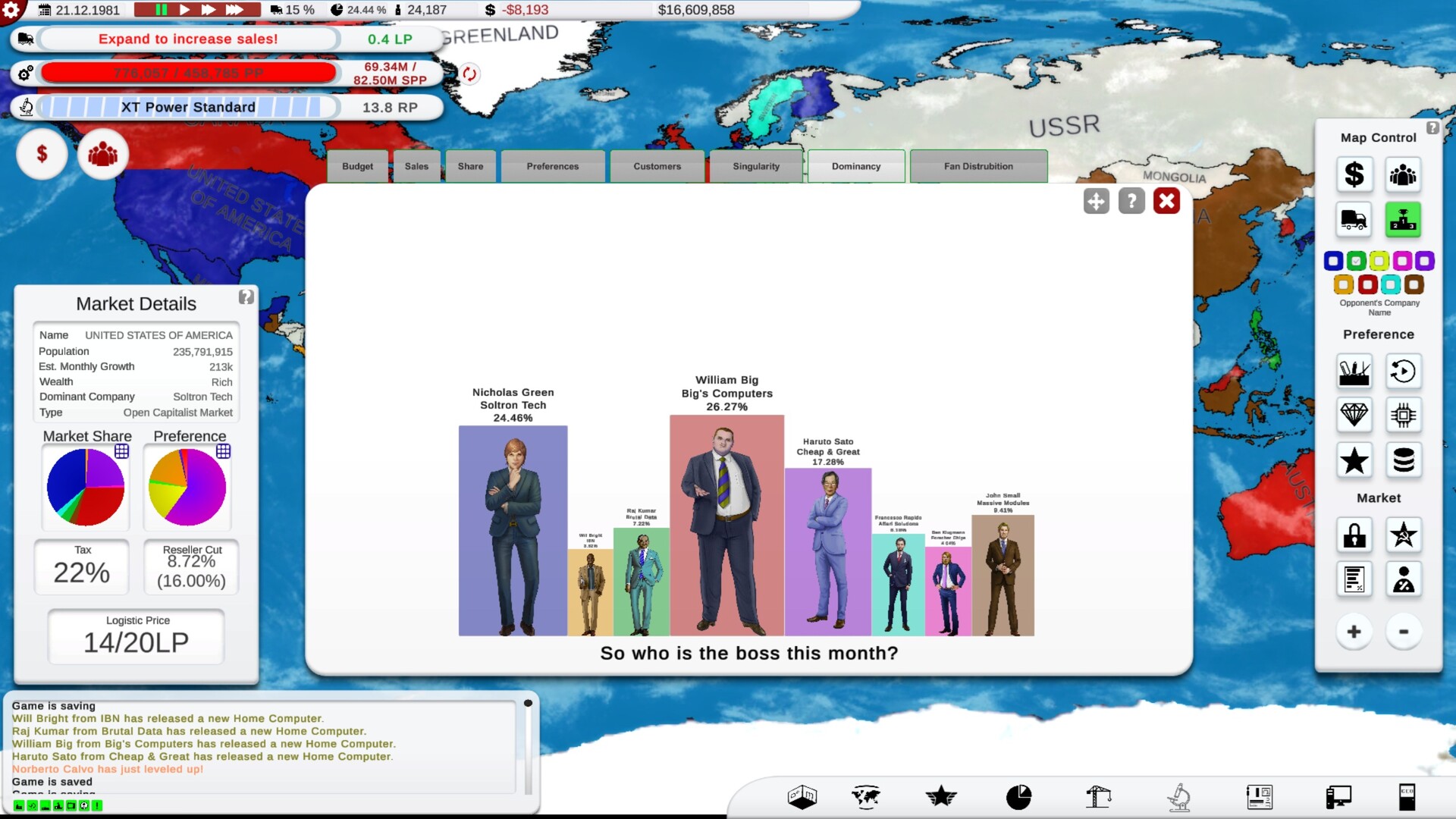
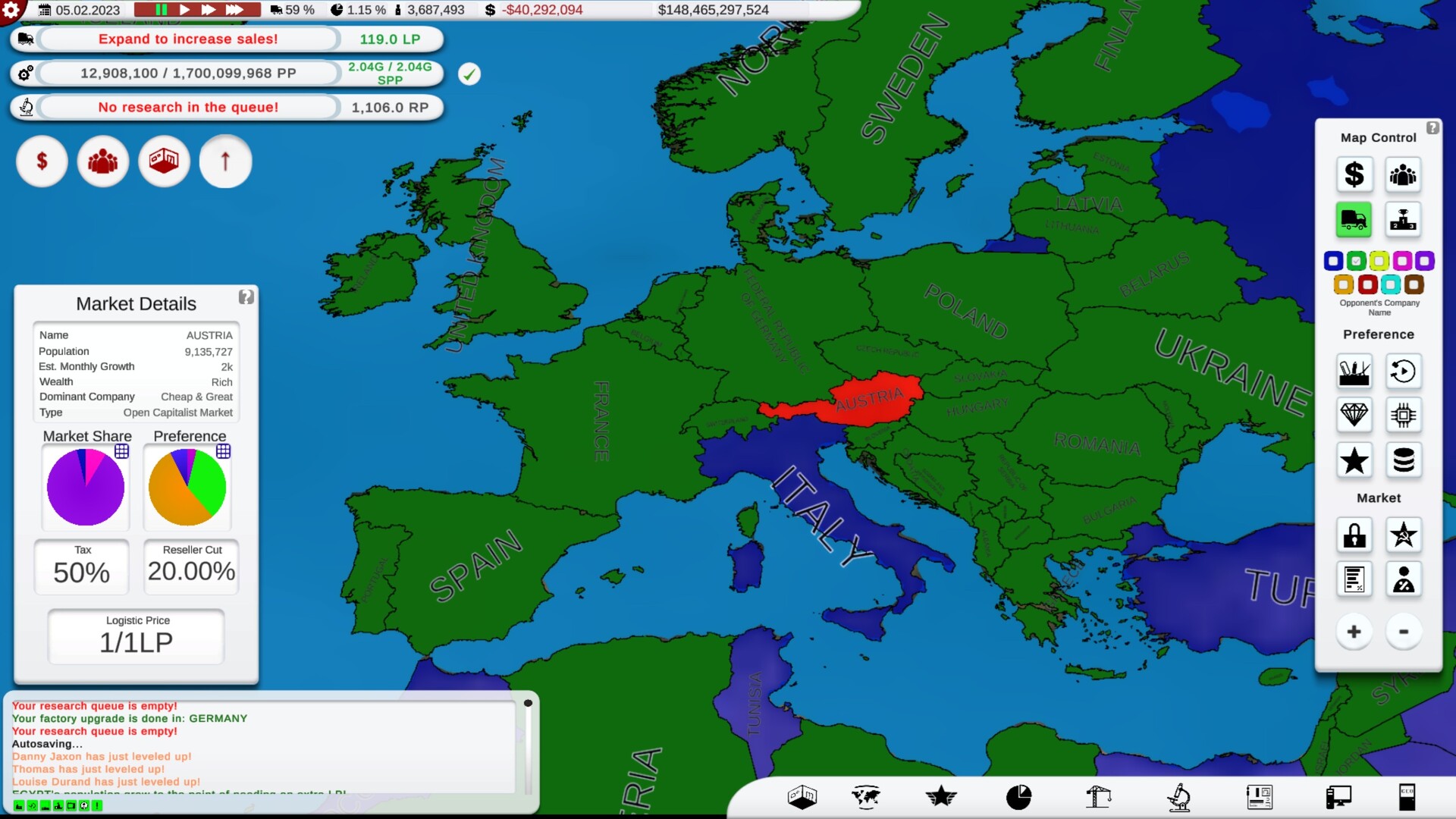
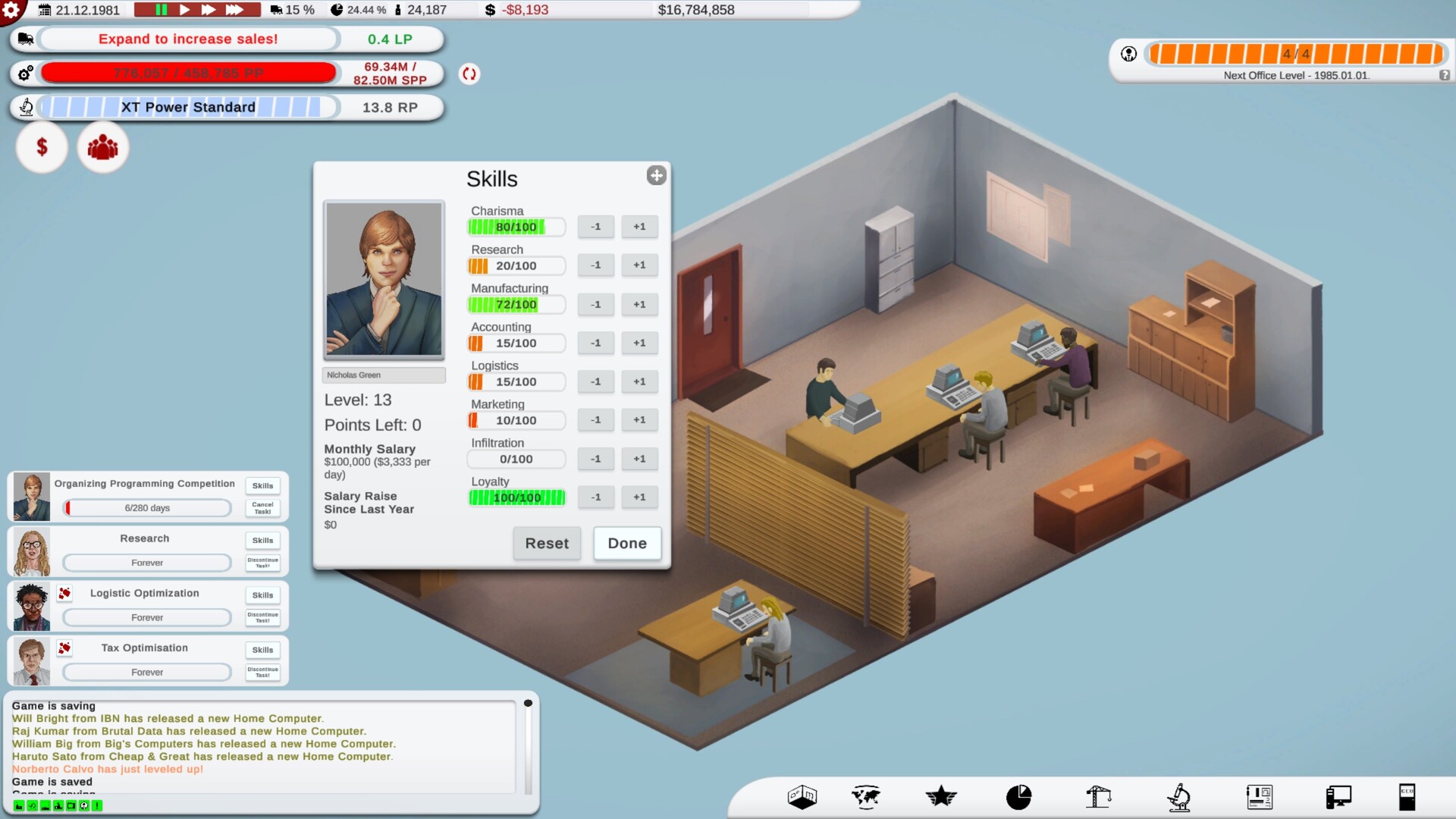
Get an in-depth look at Computer Tycoon through various videos and screenshots.
Load More

System requirements
These are the minimum specifications needed to play the game. For the best experience, we recommend that you verify them.
Windows
- OS *: Windows 7 or newer
- Processor: Dual Core
- Memory: 4 GB RAM
- Graphics: Radeon HD 6850 or similar
- Storage: 3 GB available space
MacOS
- OS: 10.12.x or newer
- Processor: Dual Core
- Memory: 4 GB RAM
- Graphics: Unfortunately testing is under progress. On a 5 years old or newer desktop computer you will be probably okay. But this doesn't apply to MacBooks.
- Storage: 1 GB available space
- Additional Notes: The game doesn't work on 10.11.x - if you still have problems with a newer version, please update to the latest one
Steam Price & Best Deals
User reviews & Ratings
Explore reviews from Steam users sharing their experiences and what they love about the game.
just a good game and i have not found a game this good for the price and quality and some ♥♥♥♥. only a complain is that aftewr one long game it cna feel the same after awhile and the new logistics system is ewcxtremely slow making nieghe impossible to develope your strategy and leave unprofitable countries.
Computer Tycoon is not only a great showcase of the history of computer but it really draws you in as you think of ways you can outcompete the other companies in the game and in what ways you can improve different metrics. I've had a lot of fun with it and it really deserves more love.
This is the best computer history game I have ever seen, even if it is one of the only ones. I have only been truly playing it about 4 days now and have gotten 15 hours in in that time. I highly recommend this game to anyone who loves computer history or sandbox economic sims, as this game does both really well.
Every time I come back to this over the last six years, it has been improved - and is still improving. It is now an extremely solid sim, and the learning curve is good, especially for those savvy with the genre. This developer is also extremely active with their community - they have driven much of the development of what was going to be a one to two year project now heading toward seven. I promised a review six years ago - life happened in volumes. Here I am.
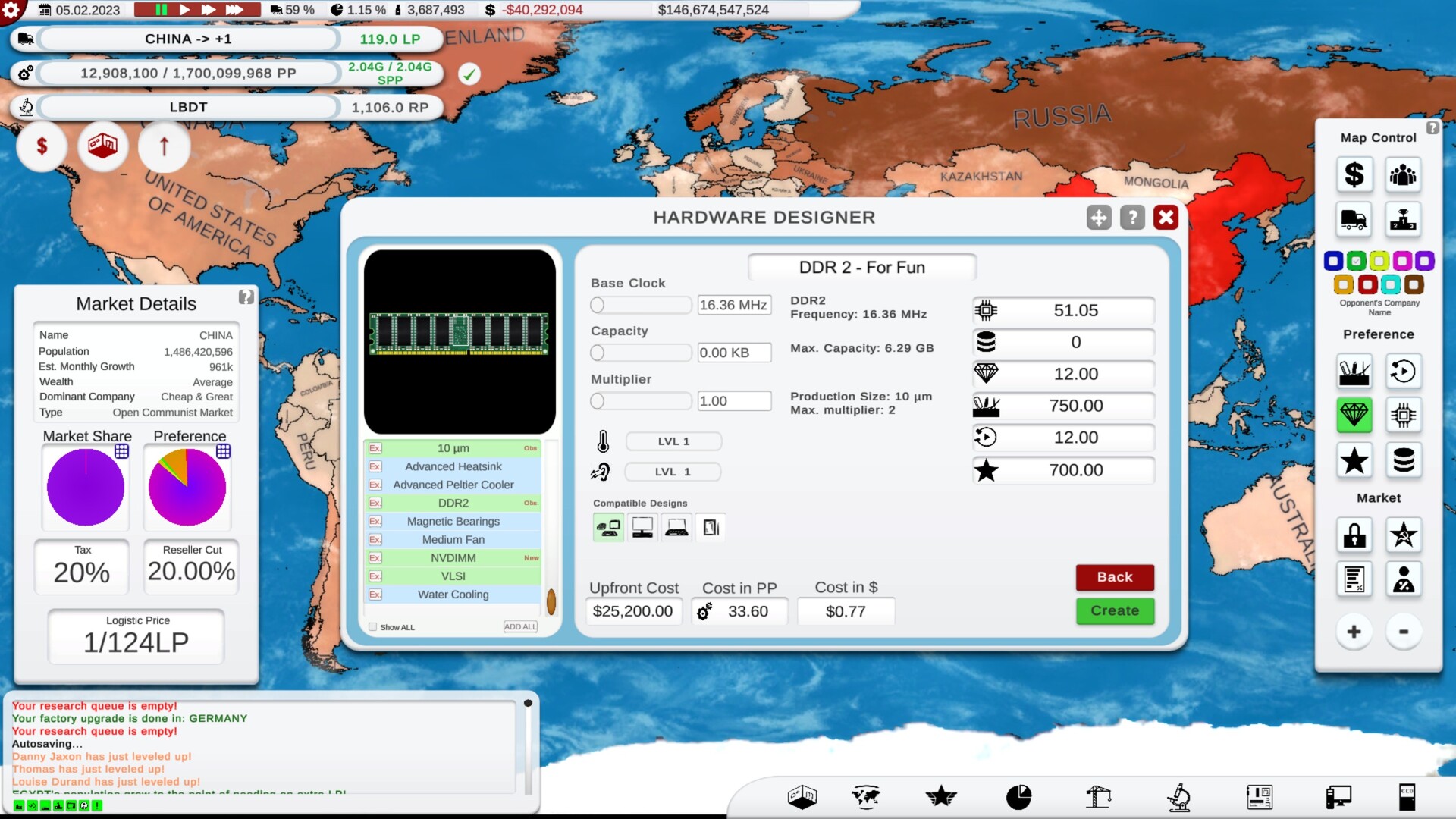
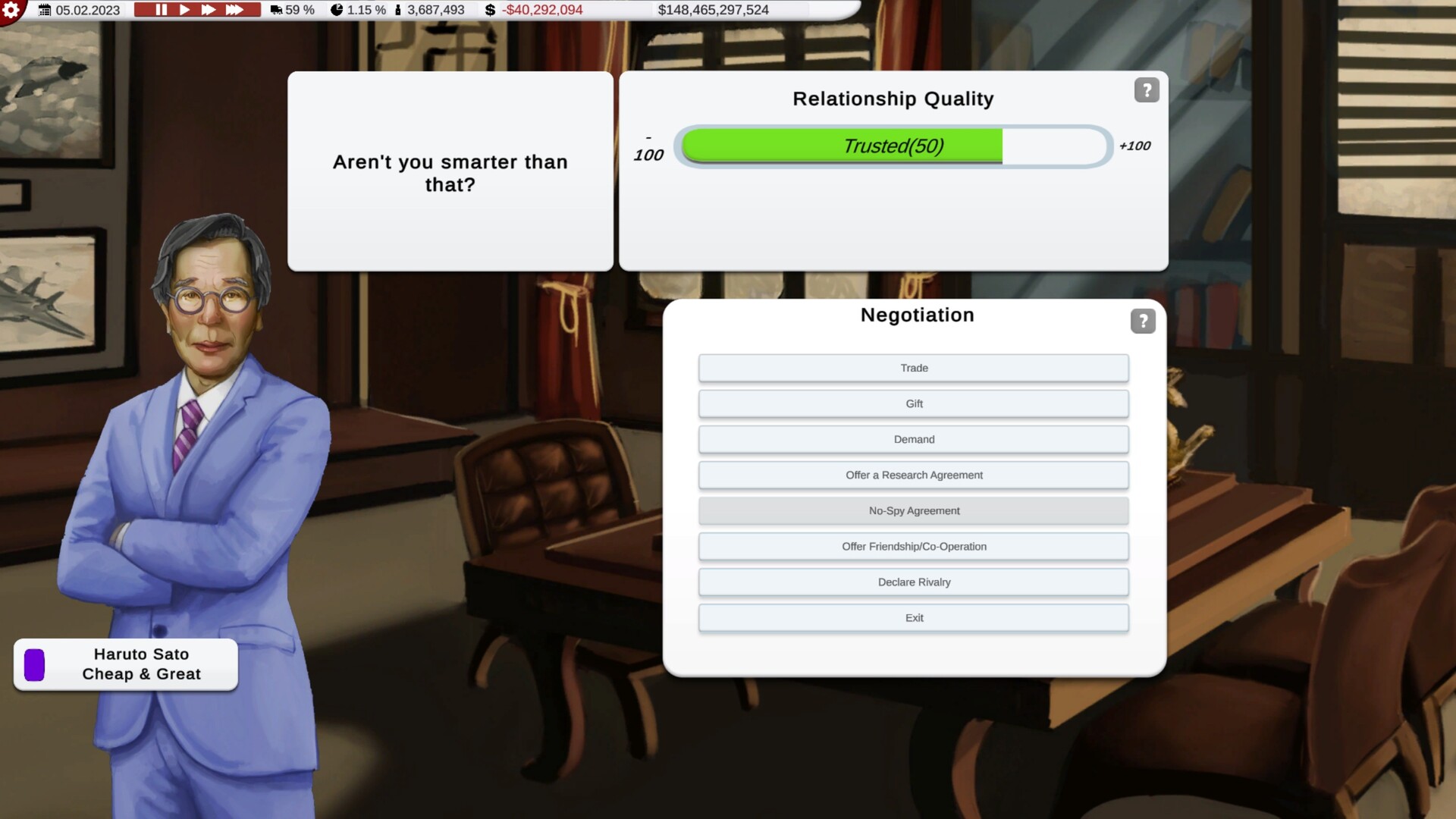
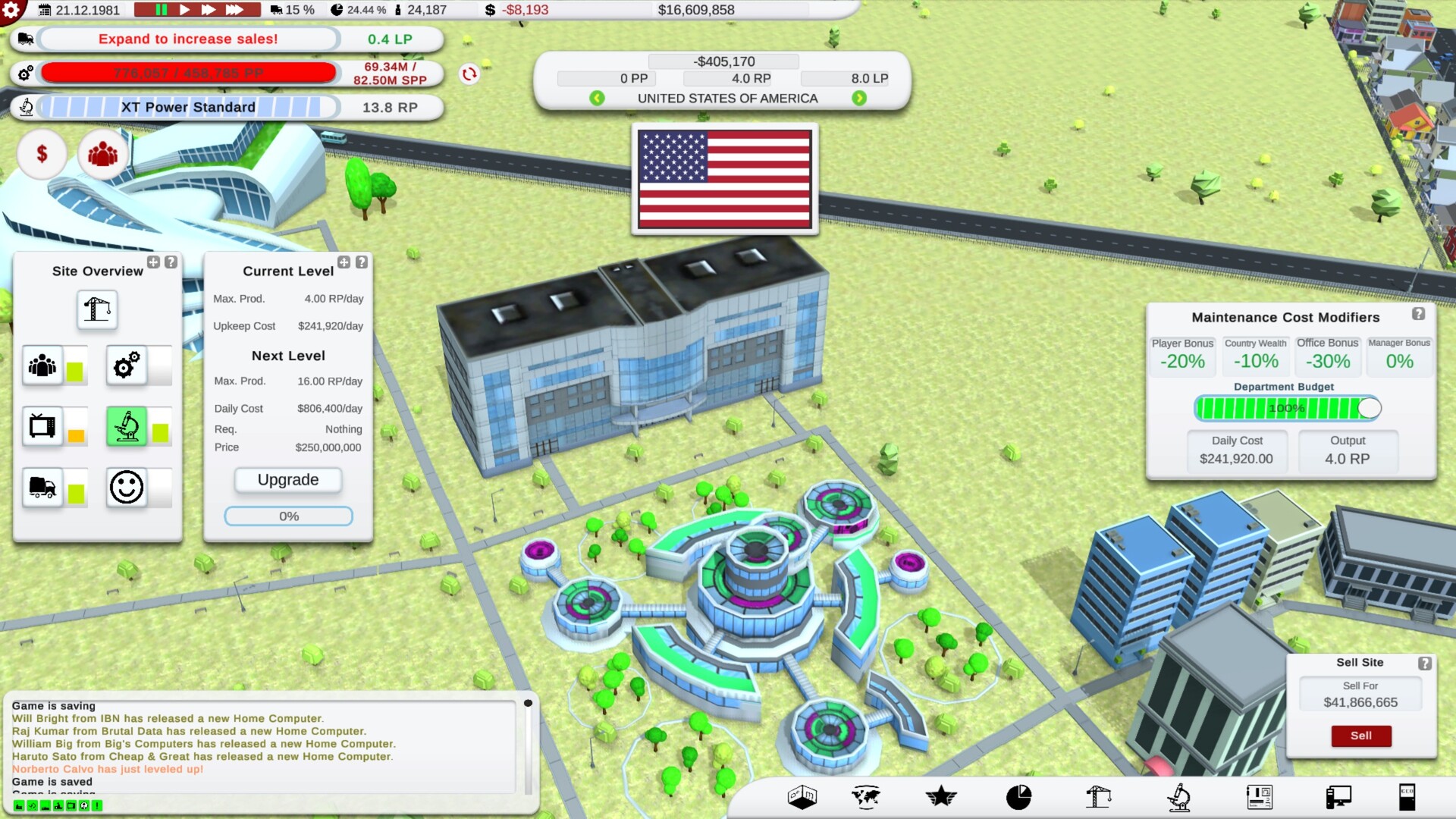
Computer Tycoon is a detailed business simulation developed and published by Progorion that places players in control of a technology startup during the formative years of the computer industry. Beginning in the 1970s and extending well into the future, the game allows players to build a company from the ground up and guide it through decades of technological progress, market competition, and corporate expansion. Rather than focusing on a single aspect of business management, it attempts to simulate nearly every major component involved in running a successful technology enterprise, creating an experience that feels both ambitious and remarkably comprehensive. The core appeal lies in the freedom to shape the direction of an entire corporation. Players are not limited to manufacturing computers alone. They can design processors, create operating systems, develop software, invest in research, establish factories, and expand operations across multiple countries. Every decision contributes to the long-term identity of the company. Some players may focus on becoming hardware innovators, while others pursue software dominance or seek to create balanced technology ecosystems capable of controlling multiple markets simultaneously. One of the game's strongest features is its historical progression system. Starting in an era when computers were still emerging technologies gives every breakthrough a sense of significance. As years pass, new innovations become available, consumer expectations evolve, and entirely new markets emerge. This constant technological advancement keeps gameplay fresh and provides a strong feeling of growth. Watching a company evolve from a small startup into a multinational corporation spanning several decades is one of the most satisfying aspects of the experience. Research and development play a central role throughout the campaign. Success depends on staying ahead of competitors through innovation rather than simply producing products at lower costs. Players must decide which technologies deserve investment and which projects carry too much risk. Balancing short-term profitability with long-term innovation creates meaningful strategic choices that influence the future of the company. Every major technological breakthrough feels earned because it is the result of careful planning and sustained investment. Product design is handled with impressive depth. Developing new hardware requires players to consider specifications, production costs, market demand, and future trends. Creating a successful product involves much more than maximizing every statistic. Expensive cutting-edge technology may appeal to enthusiasts, while affordable systems can attract larger customer bases. Understanding how different market segments respond to products becomes essential for long-term success and adds significant strategic depth to the development process. Software development introduces another important layer of management. Operating systems and applications can become major sources of revenue while also strengthening the appeal of hardware products. Building a successful software ecosystem often proves just as important as designing powerful computers. The interaction between software and hardware systems creates opportunities for diverse strategies and mirrors many of the challenges faced by real-world technology companies. The global expansion mechanics contribute significantly to the game's scale. Players can establish operations in different regions around the world, taking advantage of varying economic conditions, labor costs, and market opportunities. Expanding internationally creates new possibilities but also introduces additional complexity. Choosing where to locate research centers, manufacturing facilities, and corporate offices becomes a critical part of maximizing efficiency and profitability. Competition remains a constant presence throughout the experience. Rival companies actively develop products, conduct research, and fight for market share. These competitors help create a dynamic industry where dominance is never guaranteed. A successful product launch can dramatically improve a company's position, while a poorly received release can allow rivals to gain ground. This competitive environment encourages continuous adaptation and prevents the game from becoming predictable. Financial management is equally important. Research projects, marketing campaigns, manufacturing facilities, and employee salaries all require significant investment. Players must carefully balance spending and income to maintain stability while pursuing growth. Aggressive expansion can lead to enormous rewards, but poor financial decisions may quickly place the company in a vulnerable position. This constant balancing act adds tension and ensures that every major decision carries consequences. The game's greatest strength is its depth. Nearly every aspect of operating a technology company is represented in some form, creating a rich and rewarding management experience. However, this complexity can also be intimidating. New players may find the amount of information overwhelming, and mastering all systems requires patience and dedication. The interface occasionally feels dense due to the sheer volume of data available, but those willing to learn its mechanics will discover an exceptionally detailed simulation. Replay value is another major advantage. Different strategies can produce dramatically different outcomes, allowing players to experiment with various business models and approaches. One campaign may focus on hardware innovation, while another emphasizes software ecosystems or global manufacturing dominance. The flexibility offered by the game's systems ensures that each playthrough can unfold in unique ways. Computer Tycoon succeeds because it captures both the excitement and challenges of technological entrepreneurship. It transforms the history of computing into an engaging strategic sandbox where innovation, competition, and long-term planning determine success. Although its complexity may not appeal to everyone, players who enjoy deep management simulations will find an impressive amount of content and strategic freedom. It stands as one of the most ambitious technology-business simulators available, offering a rewarding journey through decades of industry evolution. Rating: 8/10
Similar games
View all

Power & Revolution 2020 Edition
The new version of Geopolitical Simulator 4, the ultrarealistic simulator of today's world where you play as the head of state or as the opposition! Stop the spread of the Covid-19 pandemic and restart the economy, participate in the US elections or engage in lightning wars with new 2020 scenarios.
Terra Invicta
An alien invasion has fractured humanity into seven ideological factions each with a unique vision for the future. Lead your chosen faction to take control of Earth’s nations, expand across the Solar System, and battle enemy fleets in tactical combat.
Democracy 4
Democracy 4 lets you take the role of President / Prime minister, govern the country (choosing its policies, laws and other actions), and both transform the country as you see fit, while trying to retain enough popularity to get re-elected...

Europa Universalis IV
Rule your land and dominate the world with unparalleled freedom, depth and historical accuracy. Write a new history of the world and build an empire for the ages.

Arsenal of Democracy: A Hearts of Iron Game
Taking place from 1936-64, Arsenal of Democracy lets you play as any nation during the era of WW2, complete with detailed models for economics, diplomacy, research, and intelligence. Warfare is also fully represented with all three branches of operations: land, sea, and air.
Victoria II
Carefully guide your nation from the era of absolute monarchies in the early 19th century, through expansion and colonization, to finally become a truly great power by the dawn of the 20th century. Victoria II is a grand strategy game played during the colonial era of the 19th century, where the player takes control of a country, guiding...

Evil Bank Manager
What could be better than having a million dollars, a billion? This will not make you all powerful in the world, your goal will not only be to make lots of money, but to print money and become a Federal reserve system
Hearts of Iron 2 Complete
Includes Hearts of Iron II plus the two expansions, Doomsday and Armageddon When Germany is defeated in 1945, the Allies and the new Soviet alliance fight for supremacy. World War III is drawing closer. Play as the ruler of one of 175 countries through World Wars II and III.
Frequently Asked Questions
Computer Tycoon is currently priced at 11.75€ on Steam.
Yes, Computer Tycoon is currently available at a 30% discount. You can purchase it for 11.75€ on Steam.
Yes, Computer Tycoon received 827 positive votes out of a total of 969 achieving a rating of 8.09.
😎
Computer Tycoon was developed and published by Progorion.
Yes, Computer Tycoon is playable and fully supported on Windows.
Yes, Computer Tycoon is playable and fully supported on MacOS.
No, Computer Tycoon is not playable on Linux.
Yes, Computer Tycoon is playable on Steam Deck, though it might require a few minor tweaks. Make sure to check the Steam store page and community feedback on ProtonDB for exact compatibility details.
Yes, Computer Tycoon is playable on Steam Machine, though it might require a few minor tweaks. Make sure to check the Steam store page and community feedback on ProtonDB for exact compatibility details.
No, Computer Tycoon does not support VR.
Computer Tycoon is a single-player game.
No, Computer Tycoon does not currently offer any DLC.
No, Computer Tycoon does not support mods via Steam Workshop.
No, Computer Tycoon does not support Steam Remote Play.
Yes, Computer Tycoon is enabled for Steam Family Sharing. This means you can share the game with authorized users from your Steam Library, allowing them to play it on their own accounts. For more details on how the feature works, you can read the original Steam Family Sharing announcement or visit the Steam Family Sharing user guide and FAQ page.
You can find solutions or submit a support ticket by visiting the Steam Support page for Computer Tycoon.
Data sources
The information presented on this page is sourced from reliable APIs to ensure accuracy and relevance. We utilize the Steam API to gather data on game details, including titles, descriptions, prices, and user reviews. This allows us to provide you with the most up-to-date information directly from the Steam platform.
Additionally, we incorporate data from the SteamSpy API, which offers insights into game sales and player statistics. This helps us present a comprehensive view of each game's popularity and performance within the gaming community.
Last Updates| Steam data | 17 September 2026 21:06 UTC |
|---|---|
| SteamSpy data | 08 October 2026 14:07 UTC |
| Steam price | 17 October 2026 02:55 UTC |
| Steam reviews | 15 October 2026 09:58 UTC |
If you'd like to dive deeper into the details about Computer Tycoon, we invite you to check out a few dedicated websites that offer extensive information and insights. These platforms provide valuable data, analysis, and user-generated reports to enhance your understanding of the game and its performance.
- SteamDB - A comprehensive database of everything on Steam about Computer Tycoon
- SteamCharts - Analysis of Computer Tycoon concurrent players on Steam
- ProtonDB - Crowdsourced reports on Linux and Steam Deck Computer Tycoon compatibility
Game modes
Features
Online players
4
Developer
Progorion
Publisher
Progorion
Release
12 Oct 2017
Platforms
Clicking and buying through these links helps us earn a commission to maintain our services.