
The Age of Decadence
The Age of Decadence is a turn-based, hardcore role-playing game set in a low magic fantasy world. The game features a detailed skill-based character system, multiple skill-based ways to handle quests, choices & consequences, and extensive dialogue trees.
Sync your Steam wishlist to find the lowest game prices instantly. No login required, just paste your Steam profile URL!
⚡ Try Wishlist Radar!
Sync your Steam wishlist to find the lowest game prices instantly. No login required!
⚡ Try Wishlist Radar!
Close

Colony Ship: A Post-Earth Role Playing Game on Steam
Quick menu
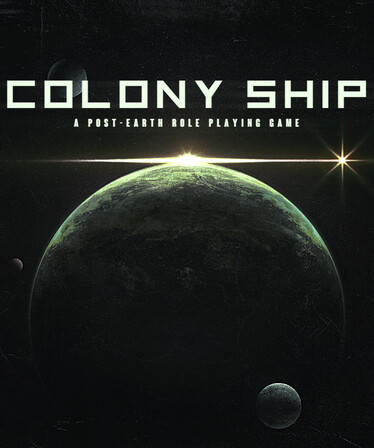
Colony Ship is a turn-based, party-based role-playing game set aboard a generation ship launched to Proxima Centauri. The game features a detailed skill-based character system, multiple ways to handle quests, choices & consequences, and branching dialogue trees.
Colony Ship: A Post-Earth Role Playing Game is a turn-based, choices matter and crpg game
developed and published by Iron Tower Studio.
Released on November 09th 2023 is available on Windows, Steam Deck and Steam Machine
in 7 languages: English, Italian, German, Czech, Russian, Simplified Chinese and Ukrainian.
It has received 4,131 reviews of which 3,594 were positive and 537 were negative resulting in a rating of 8.4 out of 10. 😎
The game is currently priced at 39.99€ on Steam.
The Steam community has classified Colony Ship: A Post-Earth Role Playing Game into these genres:
Turn-Based
Choices Matter
CRPG
Tactical RPG
Party-Based RPG
RPG
Turn-Based Tactics
Isometric
Cyberpunk
Turn-Based Strategy
Lore-Rich
Multiple Endings
Dialogue Heavy
Nonlinear
Story Rich
Sci-fi
Turn-Based Combat
Dystopian
Space
Tactical
Here is the detailed breakdown of supported languages for Colony Ship: A Post-Earth Role Playing Game:
| UI | Subtitle | Audio | |
|---|---|---|---|
| English | |||
| German | |||
| Italian | |||
| Simplified Chinese | |||
| Russian | |||
| Czech | |||
| Ukrainian |
Media & Screenshots
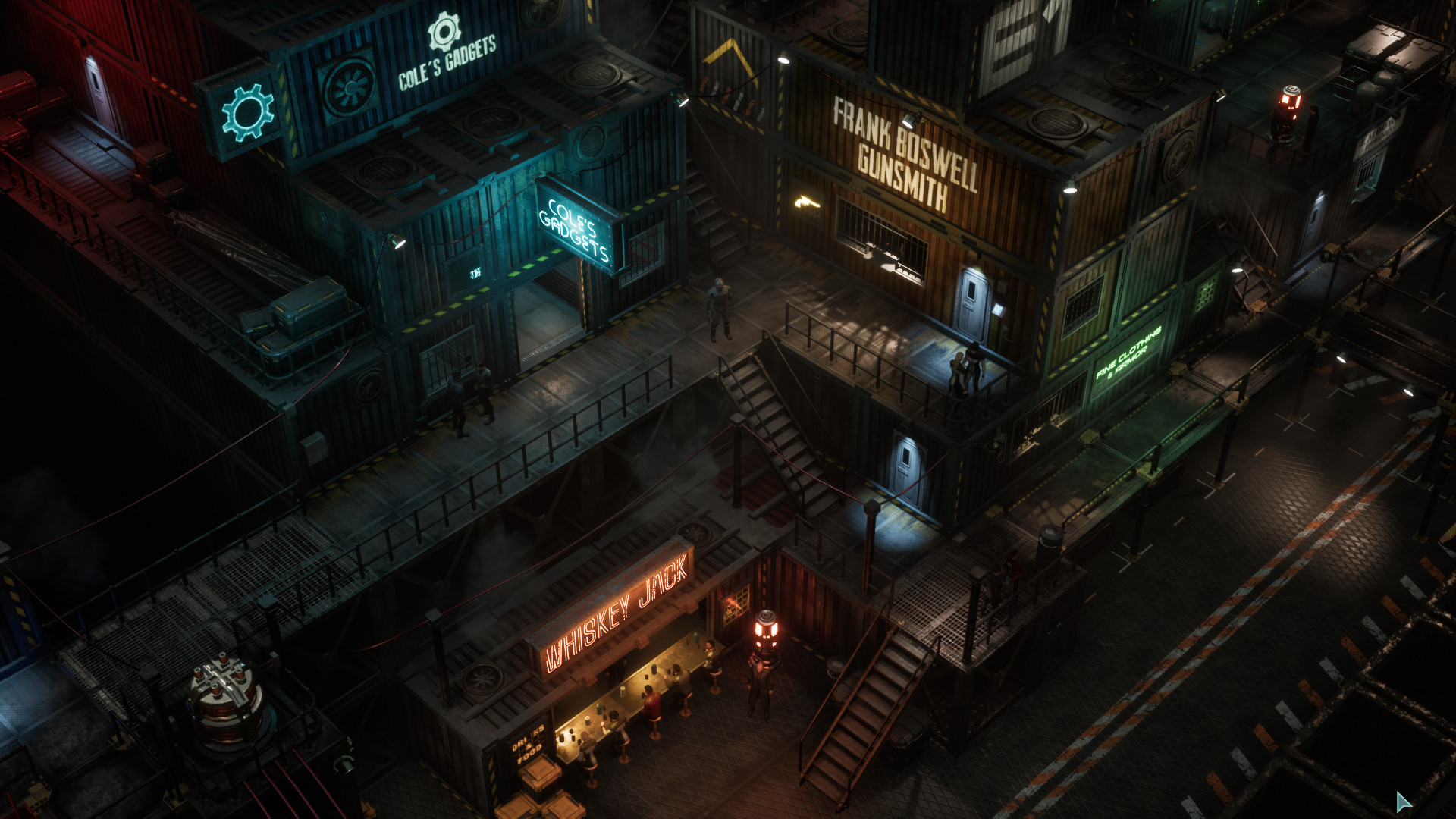
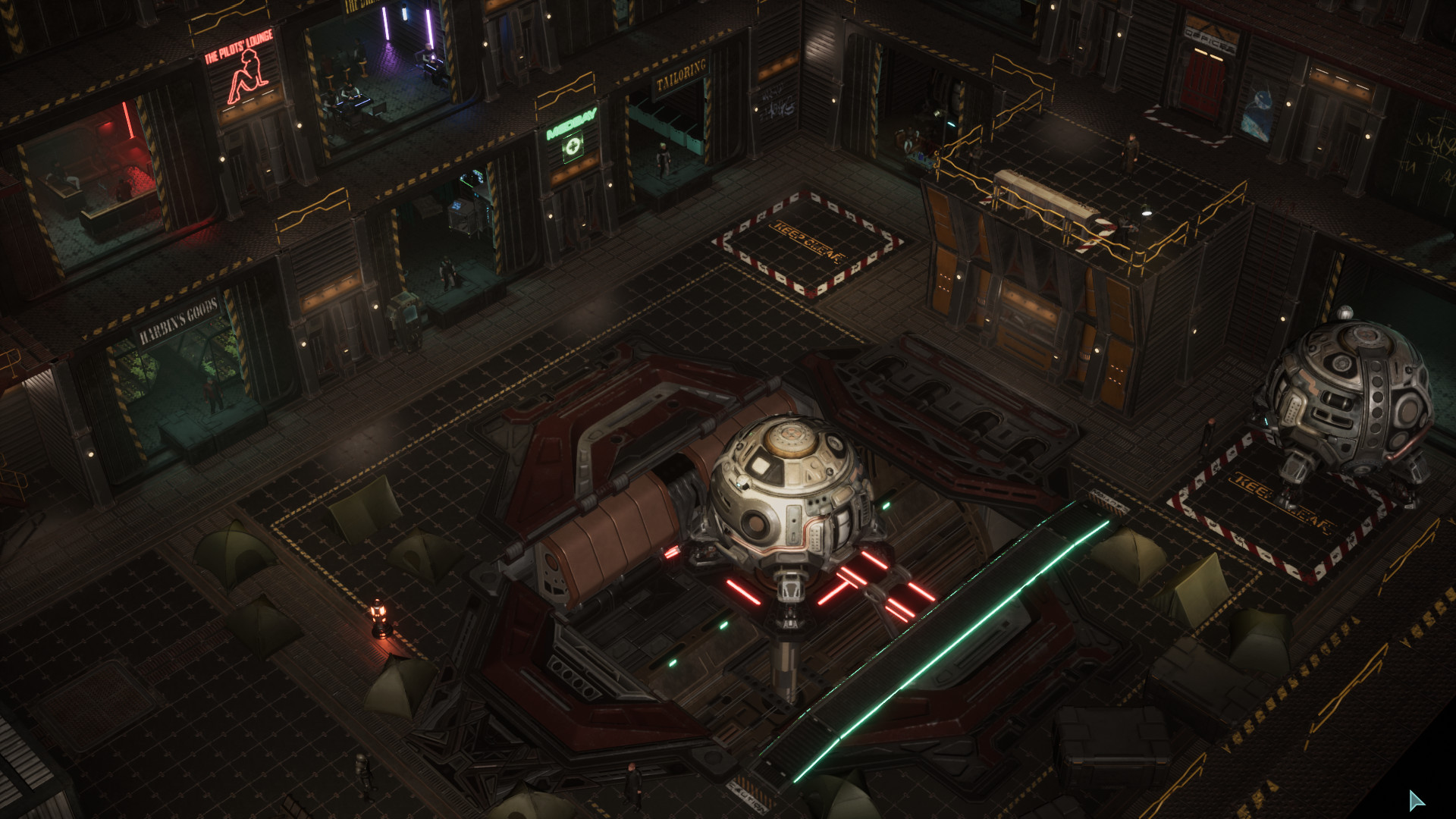
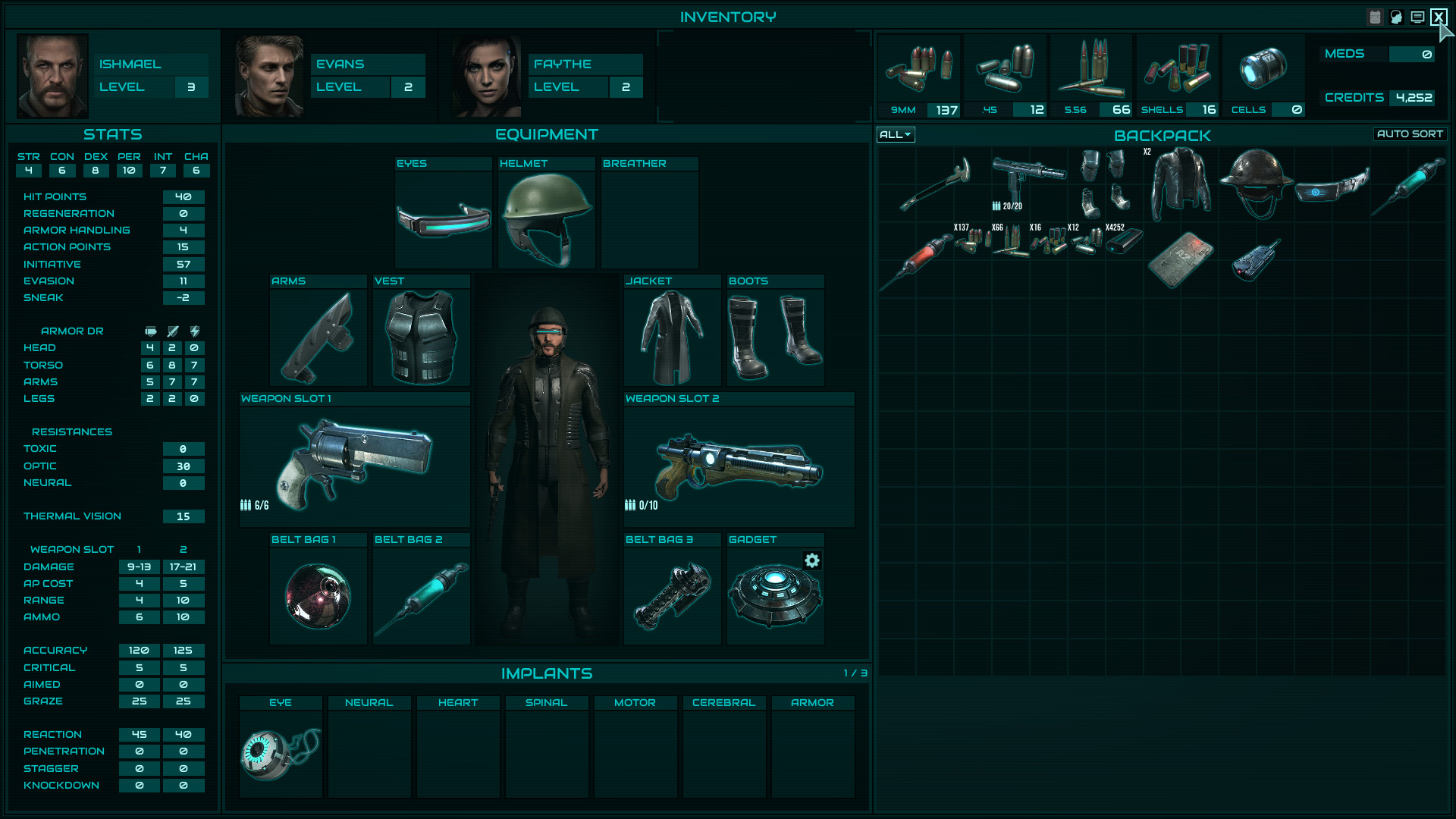
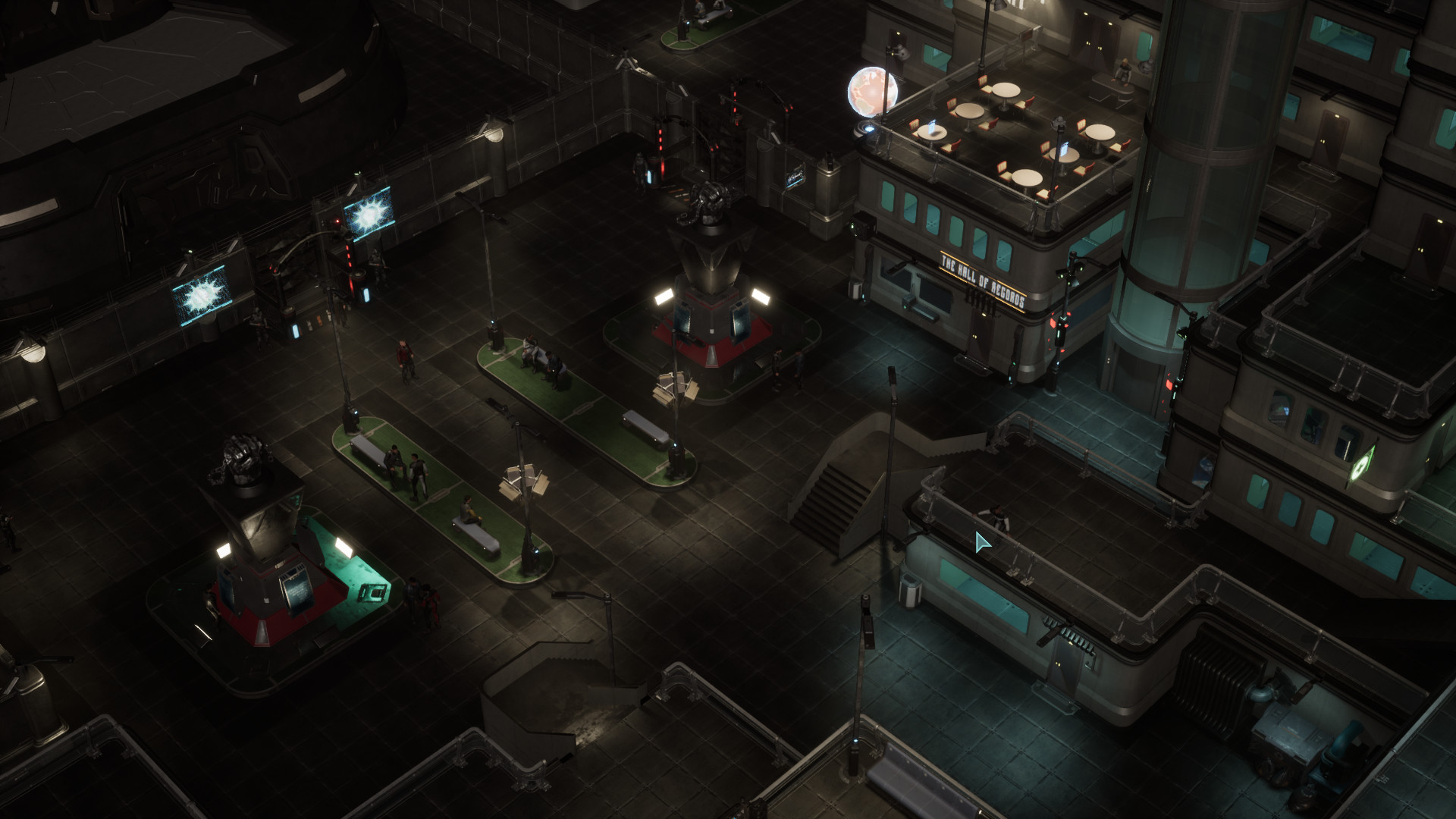
Get an in-depth look at Colony Ship: A Post-Earth Role Playing Game through various videos and screenshots.



Load More





System requirements
These are the minimum specifications needed to play the game. For the best experience, we recommend that you verify them.
Windows
- Requires a 64-bit processor and operating system
- OS *: Windows 7/Windows 8/Windows 10
- Processor: 2 GHz Processor or better
- Memory: 4 GB RAM
- Graphics: Nvidia Geforce GTS 450 / Radeon HD 4870 or better
- DirectX: Version 11
- Storage: 17 GB available space
Steam Price & Best Deals
User reviews & Ratings
Explore reviews from Steam users sharing their experiences and what they love about the game.
This game had two things going for it that I really liked: It was very similar to the 'Shadowrun Returns' series of games and it was about a generation ship (one of my favorite SCI-FI concepts). I completed my playthrough in about thirty hours (a few hours of that was attempting the same combat many times because I did not build my party well for battle). The story was a great exploration of humanity and the tangled web that four hundred years of history living in such close quarters would create. If you're looking for game with min-maxing and lots of combos and strategic depth of combat I would caution you temper those expectations. However, it is entertaining all the way through and I was feeling compelled to try and explore every corner of the ship (of which I know I missed a few).
An amazing experience. For me, it was the best RPG i player since BG 3, but delivered in a much more digestebile 30ish hours. I want to highligt some aspects that made the game great for me, and some that might be not fan favorites. (+) The game, especially on the challenging underdog difficulty setting, felt often like a great puzzle: - How can i win this fight? - Can i win without using too much of my greandes/Stims/Energy etc? - Where can i get a few more points of experiences? - How do i make money? The game was often a nice brain teaser (-) However, this kind of mechanical thinking could distract from a proper roleplay experience, since you will often think more about what you can do on a mechanical level then what would be appropriate for your character or interesting for you as a player. (+) The world building is great. The game has a unique premise and delivers its setting during the whole experience. Every part of the game felt as a part of the ship. (-) The story is not great. Imho, CRPGs seldom have great main stories, but this one felt extremly McGuffinish (is this word?). Also, i found the characters felt a bit samey, most did not stick with me. (+) The QoL Features are great, this is the way fast travel should be handled in every game. (+) For such a small team, they did deliver a nice looking and coherent visual style, as shown on screenshots . The Steam Machine run the game without problems. (+) Again, i cant remember the last time i had more fun thinking about my character build. This is a game that i would strongly suggest to anybody that can enjoy the more mechanical sites of the RPG Genre. People that like to spend 20 minutes picking perks. If RPGs are foremost a narrativ medium for you, i would look elsewhere. I quote the developers website: Iron Tower Studio is a premier destination for all your hardcore RPG needs. Proudly serving 0.003% of the Global Gaming Market since 2015. The remaining 99.997% need not apply. I think this is a great design philosophy. I look forward to there next game, and to AoD.
Played it. Liked it. Hated it. Got frustrated. Uninstalled. Reinstalled. Tried again. Still liked it. Still hated it. It's good, it's fun. I enjoyed myself. But it's frustrating and obtuse in that same breath. It took me a few tries to get into it's... flow. But once I did I absolutely wanted to finish it. And did. If I were to offer suggestions to the dev team; Let me click on names in the quest journal so I see who/where I'm supposed to go/talk to cause my memory and that map didn't work well together, at all; The ending(s) were rather dry about what I and my team were doing after those final choices. Even just a single paragraph on some sort of "You're diplomacy helped navigate ties w/..." or "Your veteran combat skill helped tame the...", Jed got that farm, etc. It would have been a nice sense of closure.
A game worthy of your time and your trust I finished Colony Ship, and for the first time in a long while I felt the desire to write a long review for a game. I will start with the main point. Colony Ship is an amazing game and gives the player everything promised by its trailer and description . What you have before you is a worthy successor to the first Fallout games and Arcanum. So, if you are looking for an exciting and deep RPG that allows you to role-play and make truly meaningful choices; if you want to explore a very unusual and interesting science-fiction world and do all of this in an environment that requires you to use your brain and understand the game’s mechanics, you will definitely enjoy Colony Ship. It is a rare project nowadays, made with great love and attention to allowing the game to be completed in different ways. For me Colony Ship is undoubtedly one of the best role-playing games of recent years. It is an excellent game universe. An excellent RPG that truly allows you to play a role rather than simply complete quests. A game that gives you the opportunity to live part of a life in a strange, alien, and unexplored world. A world that constantly makes you want to learn more about it. But for me personally, the most important thing about this game was something else. Colony Ship is not afraid to ask difficult questions. And it is not afraid to give honest and direct answers to them. Today, this is a surprisingly rare quality not only in games, but in modern culture as a whole. Until almost the very end, I remained tense. I deliberately played the game without reading reviews or walkthroughs, because I wanted to see the story as its authors had intended it. Until the very last moment, I had absolutely no idea how it would end. Moreover, having been taught by the bitter experience of modern games, I was mentally preparing myself for an ending I would find unpleasant. But the final exceeded all my expectations. Above and beyond. Dear Iron Tower Studio. Thank you.
Out of the two 1.0 Codex darling releases of 2015 Underrail will always be my favourite (poor as I am at it). But between the two it is the Age of Decadence that I would set up as the game of the year. Simply because it's proper CRPG with the plot variability of an interactive novel. One has to be mad to make such a game. One doesn't have to be mad in order to make Colony Ship . I took my time poking around it, levelling, progressing, fighting, sneaking, plotting... Then I just sort of… Shuffled it off like this new coat that you can’t really wear with any degree of self-consciousness because it’s just so... Okayish. Original setting? Sure, another modern sci-fi/scrap-Western/post-apocalypse. Just in space (we don't see space). Massive choice variability? Sure, who do I put in charge of this insignificant tiny shitstain of a village there's no reason for me to give two damns about? An uninteresting group of unpleasant armed men #1? Or, perhaps... An uninteresting group of unpleasant armed men #2? Dilemmas, dilemmas... I really have to wonder whether this fixation on factionalism when it comes to 'choices' in RPGs is even valuable. Is it actually a choice? Or a selection - as if from a menu? And how much of it stems from half-dogmatic adherence to the bon-ton traditions of the genre? Writing? Sure, Vince writes well, in an ascetic lean style. But it feels like he writes slight variations of the same person over and over. The characters are grounded, but there's a basic sort of emptiness to the absolute majority of them. They lack tacky features (which is good in this realistic setting), but they also lack texture. They're just different flavors of tired, pissed, pragmatic and fanatical. Perhaps, it would even work if we interacted with any given character for longer than just a couple encounters. Look, I don't want emotional rides, i just want the game to be about... Something. Literally anything. Perhaps, it's not entirely fair on my part, as the game really dwells on the topic of revolution and the desolation of a post-revolutionary world. It is hard-coded in the game's texture and its omnipresence is perhaps the only thing apart from combat I like about the game unconditionally. Combat? Sure, can't deny that one. Each victory you’ve got to pay for in blood, sweat, reloads and synapse mileage. Body part targeting is more important than ever with the shift to mostly-ranged arsenal from mostly-melee in AoD . My only doubt concerns energy shields, I feel like they heavily drop the value of defensive character attributes (and from what I’ve seen, solo builds tend to ignore the latter, relying on shield mostly – but don’t quote me on that). Role-playing system? Sure, no questions there. Well done – every level-up feels massively impactful. A rather unorthodox amalgamation of skill-based progression and level-oriented progression. Unorthodox not it its structure per se, but in how it connects with the game's rather limited world. There is always a finite number of opportunities to improve a given skill - noticeably finite, mind you, not finite that might as well be infinite. Therefore doing so becomes a kind of routing exercise. Personally, I don't much care for it – smells a bit of AoD metagaming, but gives the game an interesting dynamic nonetheless, you really dig your fingers into every point of interest, trying to milk it for passable skill checks. Hard skill checks don’t suit this system well, in my opinion though. Regardless, the aforementioned metagaming problem itself has been remedied. I think you can play Colony Ship fairly safe without prior knowledge of events. I pulled off a beautiful stealth stunt instead of a major battle without having to tailor my skills to pass it. Wouldn’t be possible in AoD Aesthetics? Sure, it's mostly ruins and scraptowns - but not of the interesting kind, there's no true reveling in decay here, which detracts heavily from the experience. Not Fallout , not Disco . Game world? I sure hated what was effectively an adventure game-like structure of AoD world, and this one is no different. Locations are not places, they are a set of interactive points of interest. It is very dry, and didn’t change one bit. In the spaces between the interactions it feels like you’re suspended in a vacuum. Applies both to dungeons and town areas. I mean, most RPGs have a degree of that problem, but here it’s way worse. So much so that, like in AoD , you can fast travel between any shops and point of interest, so unnecessary the intermediate space is. I just don’t know. AoD had a spark of divine madness which is altogether gone from this one. It plain feels like a very well-made, very solid product made by very competent people. And apart from that competence itself I honestly fail to see how that’s much different from the RPG mainstream. I wouldn't mind living in a world where various Vinces, tired and disillusioned but stoic good soldiers of the CRPG genre are heroes of the mainstream. But I don't want to live in the world where they are heroes of the countermainstream. If soild is good enough, then I'll stick with the raw and the weak until the real schizo prophets show up. Because there is plenty of divine madness to go around. Pierre Begue and his combat puzzle sadism of Knights of the Chalice 2 . Mark Lemmert and his feats of Apple II retro software engineering for Nox Archaist . Styg swapping the tried and tested t/b for a roguelike-like simultaneous turn-based for his second installment of Underrail . Whalenought , forever ambitious, forever buggy, forever failing, forever trying again. Clevus Procrastinatus the Neanderthal and his rockstar demeanor. I don’t play indie games for a good experience, I’m doing so for a unique one. Why the positive review then? 1. It’s a good game. Big surprise. - The combat is very taxing in a way that appeals to me greatly, forcing you to eek out a victory - tooth and nail, consistently draining your consumables (which is an achievement I don't think I've seen much of anywhere else in a dedicated RPG). Every fight a puzzle. - The economy is therefore functional (another RPG feat - which even AoD generally failed at) - nothing is cheap and everything is needed. - The character development is deep and varied, all choices are meaningful. - The world is solid. - The writing successfully maintains a particular kind of dry sombre tone of exhausted uncaring desperation. - Searching new areas is mechanically (if not aesthetically) exciting. 2. Because while playing, I was immersed. It felt like an ongoing journey. It had meaning, little of it though there may have been. That's exactly what I've been telling people - when you're in it, you’re in it, it works. The hollowness of it all washed over me post-factum. 3. Out of respect for the old Vince. The one who would walk into the young RPS and tell them they're trying to attract morons. The one who would write a balanced review of Fallout 3 which would piss off both the normies and his fellow elitists. 4. I may not want to live in the world where Vince is a hero of the countermainstream, but better Vince than Mr. Wish-You-Luck-In-Game-Development-Unless-You're-Making-RPGs-And-Are-Therefore-My-Competitor-Anyway-Bye-I'm-Off-To-Work-On-My-Yearly-Remake-Of-A-Remake-Of-My-90s-Shareware-Game Jeff Vogel. 5. I want Iron Tower to evolve, not die off - even if in weird and cheap ways. I'm really curious about what they can do if they create a system where combat is supposed to be the main means of world interaction - which is exactly what they're doing with Heralds of the Third Apocalypse . Age of Decadence worked because it didn’t. Colony Ship doesn’t work because it does.
Similar games
View all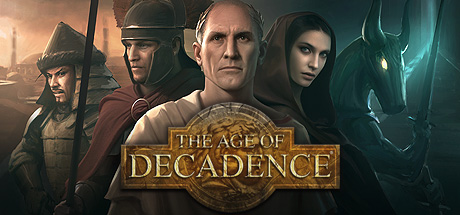

TROUBLESHOOTER: Abandoned Children
TROUBLESHOOTER: Abandoned Children is the first season of a turn-based strategy SRPG that takes place in the world of Troubleshooter.

Noob - The Factionless
Lead a team of adventurers to the highest rank of all guilds!

Black Geyser: Couriers of Darkness
Black Geyser is an isometric, party-based fantasy RPG inspired by genre classics. Recruit characters with unique personalities and explore a land ravaged by civil war and a mysterious curse of greed. Your choices, good or evil, will decide the fate of the Kingdom of Isilmerald.

Stolen Realm
Stolen Realm is a simultaneous turn-based tactical dungeon crawling looter with action RPG elements where you control up to 6 heroes, solo or through online co-op, venturing forth in adventures set in a high-fantasy, low-poly world.
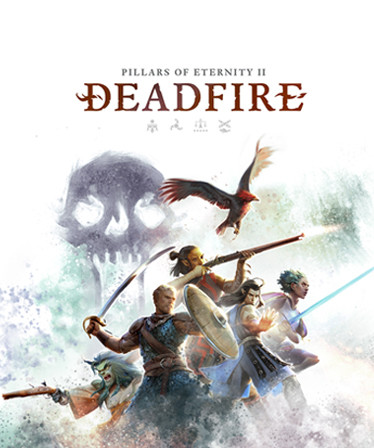
Pillars of Eternity II: Deadfire
Patch 5.0 - Turn-based mode and The Ultimate challenge out now! Pursue a rogue god over land and sea in the sequel to the multi-award-winning RPG Pillars of Eternity. Captain your ship on a dangerous voyage of discovery across the vast unexplored archipelago region of the Deadfire.
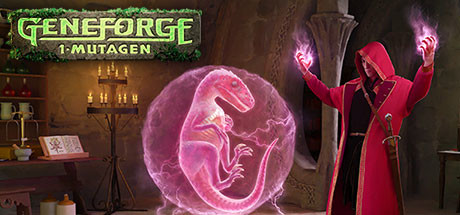
Geneforge 1 - Mutagen
Unique, truly open-ended fantasy adventure in a strange, new world. Use battle or cunning to change the world, served by your own army of custom-made mutant monsters. Over 80 zones to explore and 50+ hours of gameplay. Multitudes of skills, abilities, factions, treasures, and servants to create.

Age of Fear: The Free World
Age of Fear: The Free World is an introduction to a decade-old turn-based strategy series that fuses a tabletop wargame with RPG elements. Choose your faction (Undead Legion, Human Kingdom or Greenskins Horde), build a unique army and embark on exploring the realm!

Dungeon Rats
A turn-based, party-based RPG set in the Age of Decadence world and focused on squad level tactical combat. Fight your way out of prison mine or die trying.

Quest for the Golden Candelabra
Lead a group of childhood friends in a series of difficult encounters played under the rules of PF2E, the second edition of a powerful tabletop OGL ruleset.
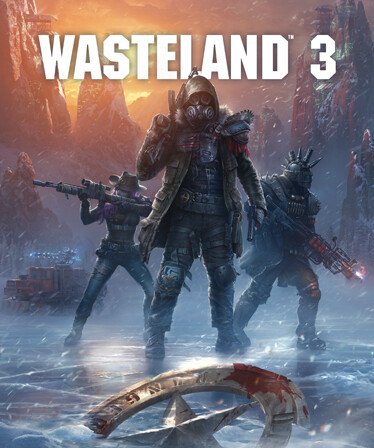
Wasteland 3
Following the critically acclaimed 2014 Game of the Year winner Wasteland 2, the RPG series that pioneered the post-apocalyptic genre in video games returns with Wasteland 3.

Stellar Tactics
A Sci-Fi role-playing game featuring turn-based ground combat, space exploration, deep character customization and a massive living universe with thousands of star systems. Equip your ships with the best equipment you can find, gather a powerful crew of mercenaries and set out into the void!
Frequently Asked Questions
Colony Ship: A Post-Earth Role Playing Game is currently priced at 39.99€ on Steam.
No, Colony Ship: A Post-Earth Role Playing Game is currently not on sale. You can purchase it for 39.99€ on Steam.
Yes, Colony Ship: A Post-Earth Role Playing Game received 3,594 positive votes out of a total of 4,131 achieving a rating of 8.40.
😎
Colony Ship: A Post-Earth Role Playing Game was developed and published by Iron Tower Studio.
Yes, Colony Ship: A Post-Earth Role Playing Game is playable and fully supported on Windows.
No, Colony Ship: A Post-Earth Role Playing Game is not playable on MacOS.
No, Colony Ship: A Post-Earth Role Playing Game is not playable on Linux.
Yes, Colony Ship: A Post-Earth Role Playing Game is playable on Steam Deck, though it might require a few minor tweaks. Make sure to check the Steam store page and community feedback on ProtonDB for exact compatibility details.
Yes, Colony Ship: A Post-Earth Role Playing Game is playable on Steam Machine, though it might require a few minor tweaks. Make sure to check the Steam store page and community feedback on ProtonDB for exact compatibility details.
No, Colony Ship: A Post-Earth Role Playing Game does not support VR.
Colony Ship: A Post-Earth Role Playing Game is a single-player game.
No, Colony Ship: A Post-Earth Role Playing Game does not currently offer any DLC.
No, Colony Ship: A Post-Earth Role Playing Game does not support mods via Steam Workshop.
No, Colony Ship: A Post-Earth Role Playing Game does not support Steam Remote Play.
Yes, Colony Ship: A Post-Earth Role Playing Game is enabled for Steam Family Sharing. This means you can share the game with authorized users from your Steam Library, allowing them to play it on their own accounts. For more details on how the feature works, you can read the original Steam Family Sharing announcement or visit the Steam Family Sharing user guide and FAQ page.
You can find solutions or submit a support ticket by visiting the Steam Support page for Colony Ship: A Post-Earth Role Playing Game.
Data sources
The information presented on this page is sourced from reliable APIs to ensure accuracy and relevance. We utilize the Steam API to gather data on game details, including titles, descriptions, prices, and user reviews. This allows us to provide you with the most up-to-date information directly from the Steam platform.
Additionally, we incorporate data from the SteamSpy API, which offers insights into game sales and player statistics. This helps us present a comprehensive view of each game's popularity and performance within the gaming community.
Last Updates| Steam data | 25 September 2026 12:14 UTC |
|---|---|
| SteamSpy data | 10 October 2026 07:11 UTC |
| Steam price | 23 October 2026 02:59 UTC |
| Steam reviews | 20 October 2026 16:10 UTC |
If you'd like to dive deeper into the details about Colony Ship: A Post-Earth Role Playing Game, we invite you to check out a few dedicated websites that offer extensive information and insights. These platforms provide valuable data, analysis, and user-generated reports to enhance your understanding of the game and its performance.
- SteamDB - A comprehensive database of everything on Steam about Colony Ship: A Post-Earth Role Playing Game
- SteamCharts - Analysis of Colony Ship: A Post-Earth Role Playing Game concurrent players on Steam
- ProtonDB - Crowdsourced reports on Linux and Steam Deck Colony Ship: A Post-Earth Role Playing Game compatibility
Game modes
Features
Online players
28
Developer
Iron Tower Studio
Publisher
Iron Tower Studio
Release
09 Nov 2023
Platforms