


Star Ruler
Take command of a vast interstellar empire and safeguard your species from total extinction in a procedurally generated 3D galaxy (with the option to flatten it) from 1 System to 10,000+! Prove your species' ingenuity through a deep and intricate combat system where anything (from individual components on ships to the stars themselves)...
Sync your Steam wishlist to find the lowest game prices instantly. No login required, just paste your Steam profile URL!
⚡ Try Wishlist Radar!
Sync your Steam wishlist to find the lowest game prices instantly. No login required!
⚡ Try Wishlist Radar!
Close

AI War: Fleet Command on Steam
Quick menu
"You are outgunned. You are massively outnumbered. You must win." These are your orders. Humanity has already fought its war against the machines -- and lost. AI death squads stand watch over every planet and every wormhole, the few remaining human settlements are held captive in orbiting bubbles, and the AIs have turned their...
AI War: Fleet Command is a strategy, rts and space game
developed and published by Arcen Games.
Released on October 21st 2009 is available on Windows, MacOS, Linux, Steam Deck and Steam Machine.
It has received 1,582 reviews of which 1,307 were positive and 275 were negative resulting in a rating of 7.9 out of 10. 😊
The game is currently priced at 9.75€ on Steam, but you can find it for 0.52€ on Eneba.
The Steam community has classified AI War: Fleet Command into these genres:
Media & Screenshots
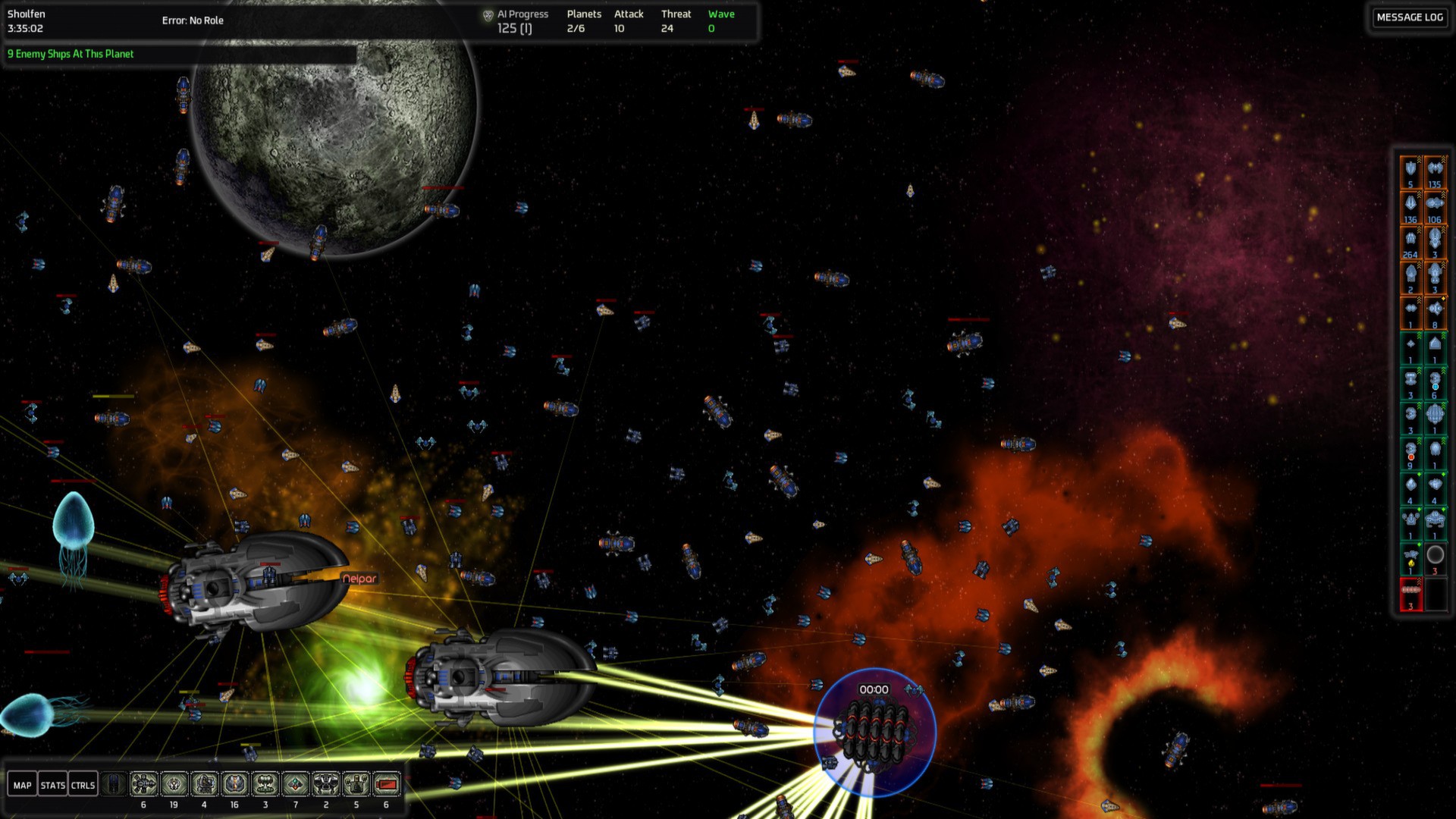
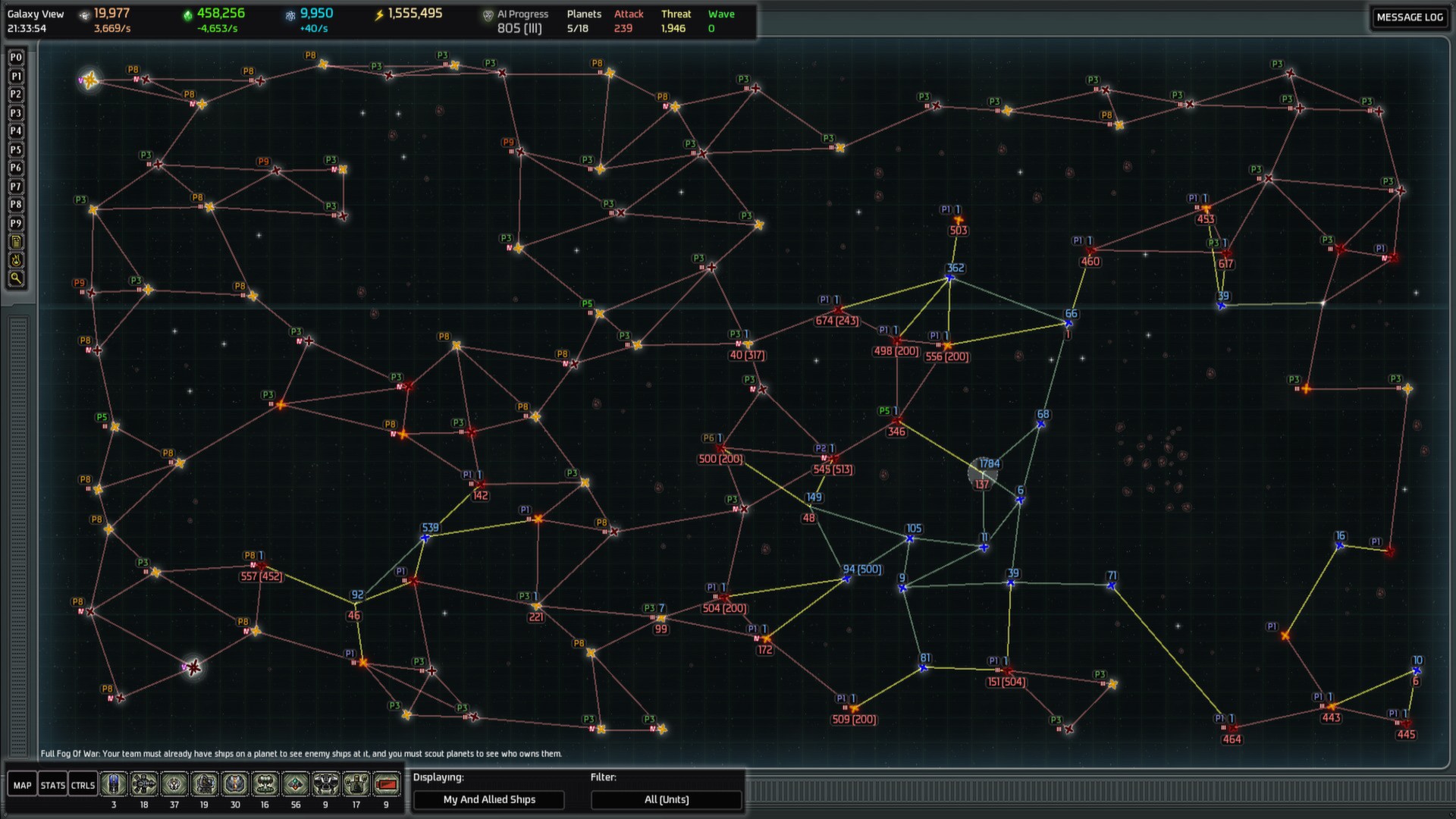
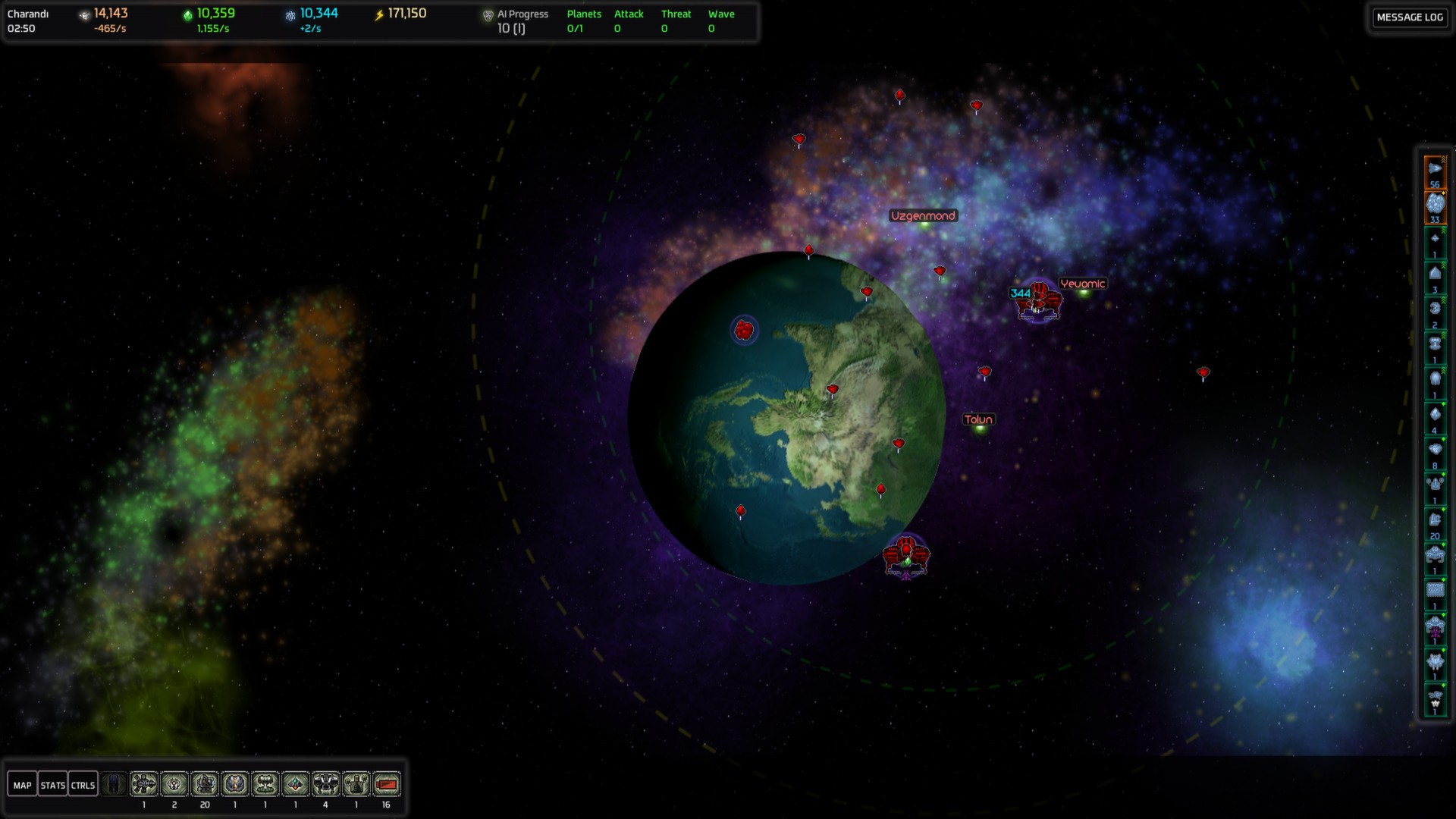
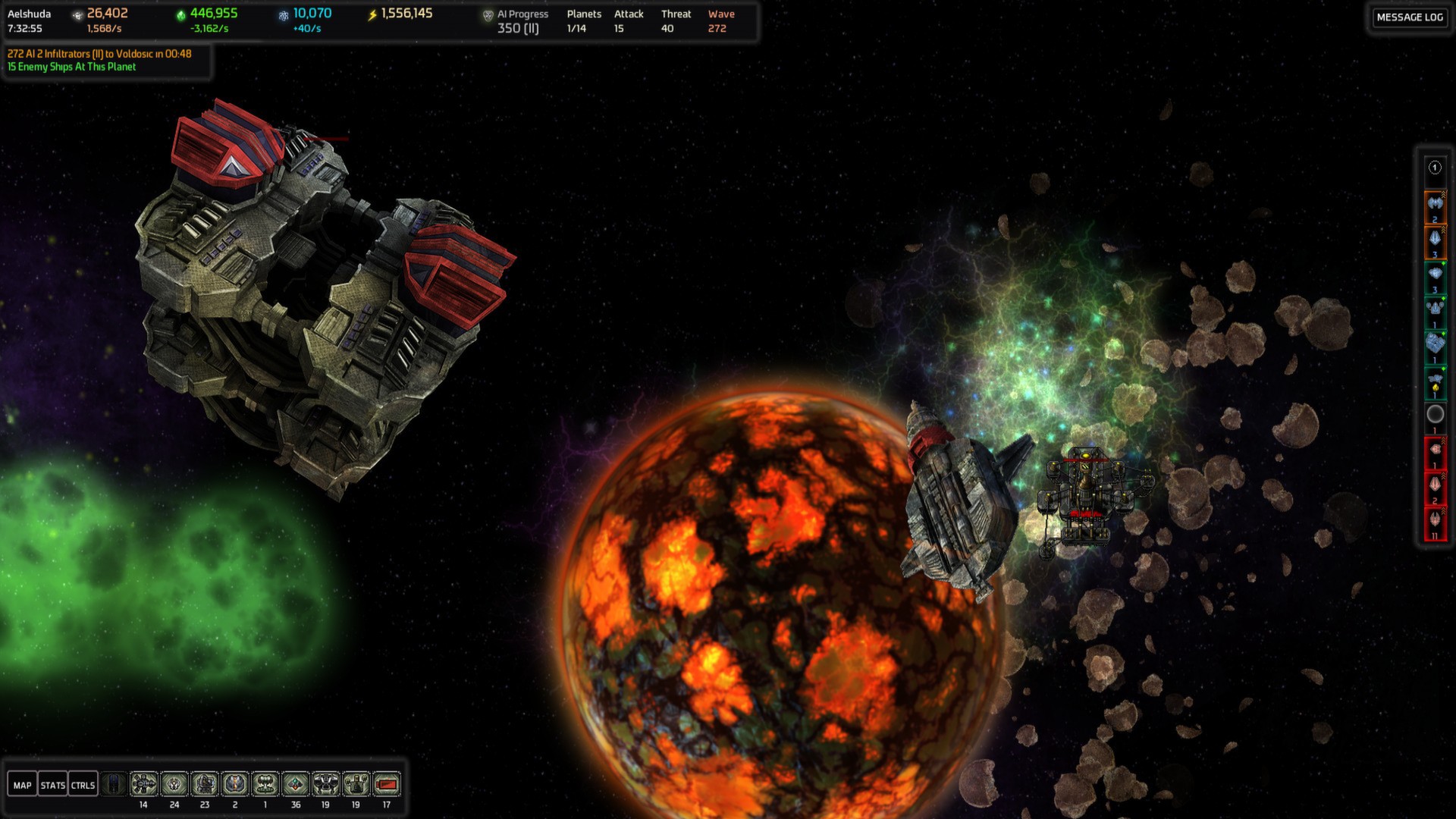
Get an in-depth look at AI War: Fleet Command through various videos and screenshots.
Load More
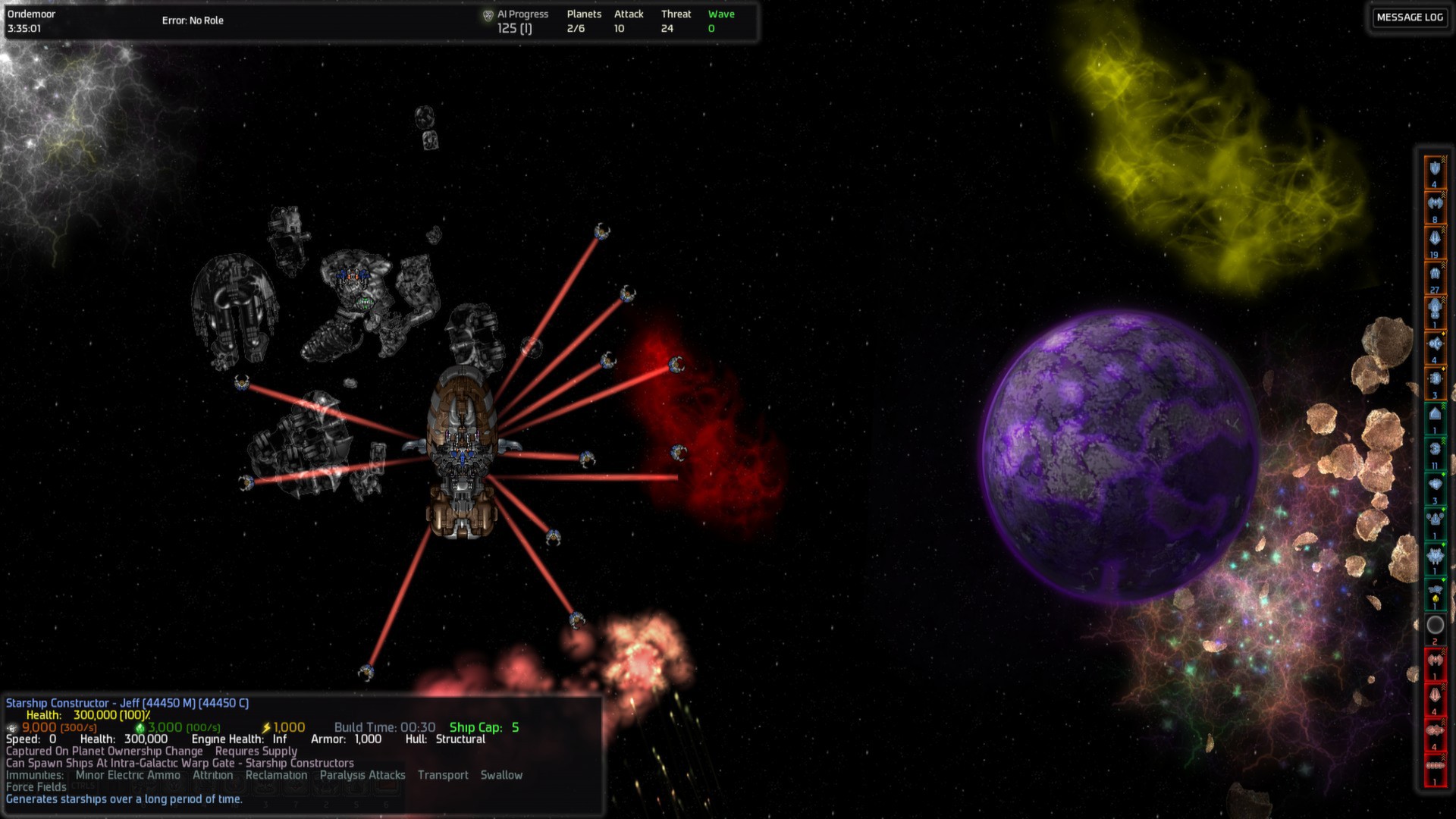
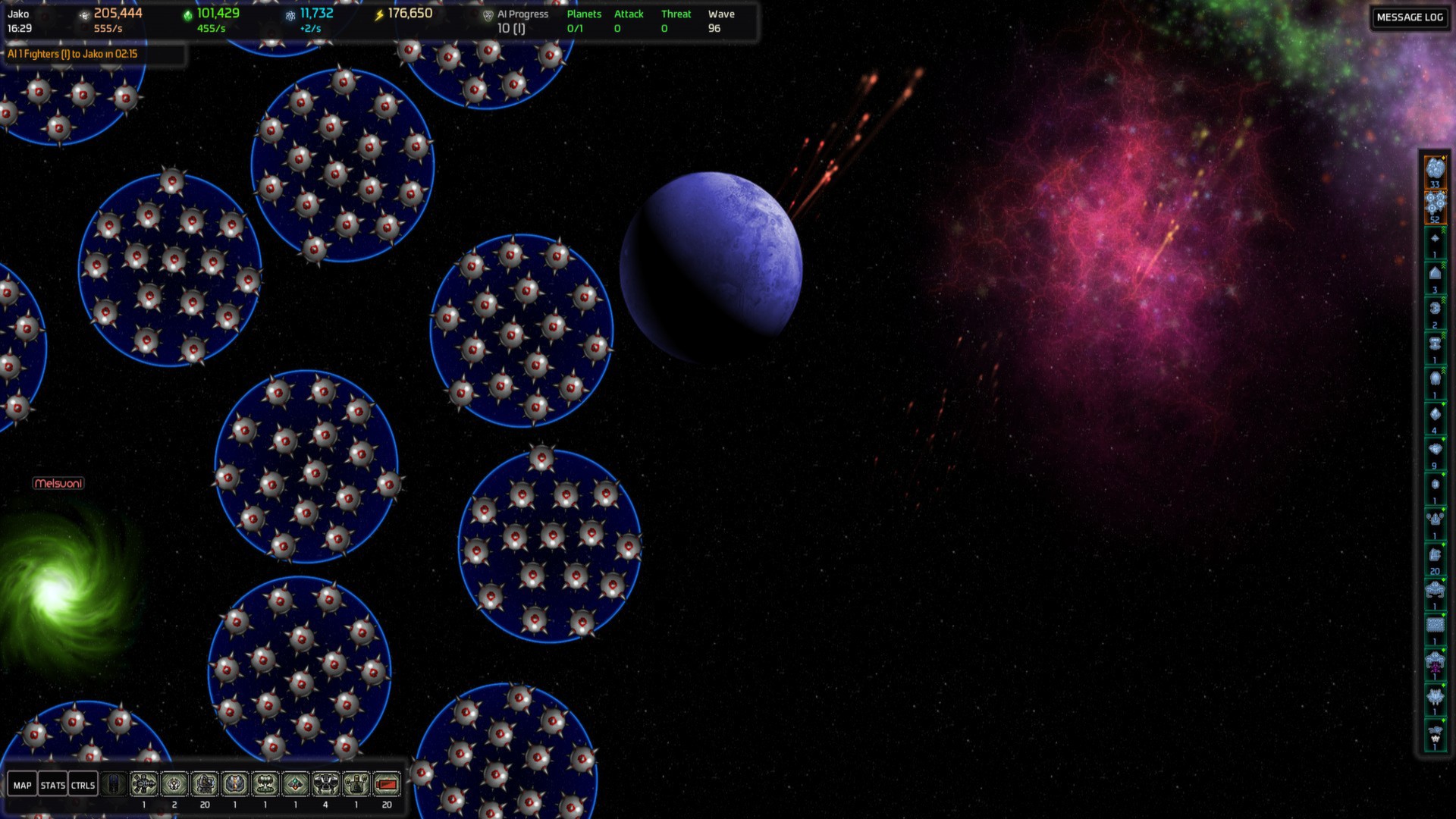
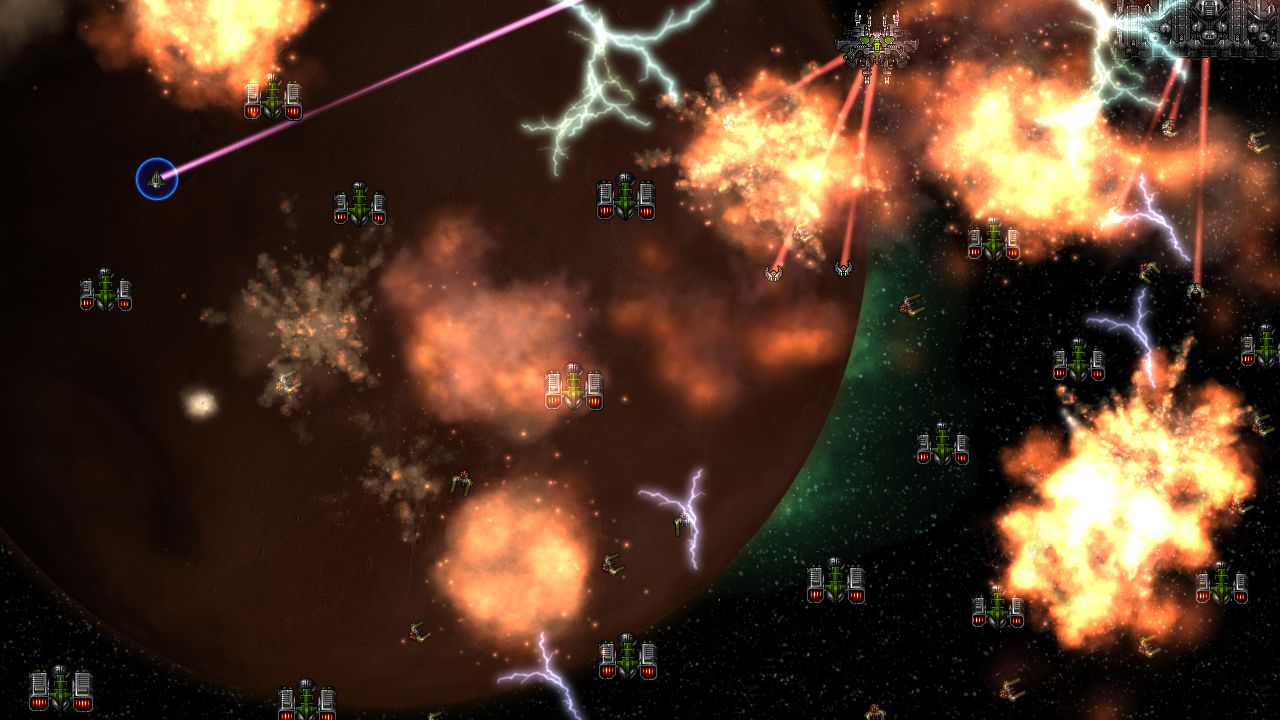
System requirements
These are the minimum specifications needed to play the game. For the best experience, we recommend that you verify them.
Windows
- OS *: Windows XP SP2 or later
- Processor: 1.6Ghz CPU (2.4 Ghz recommended, Dual Core strongly recommended for Host)
- Memory: 2 GB RAM
- Graphics: Graphics card must support 1024x1024 textures (most 32MB and up graphics cards do), 1024x768 or greater (32 bit color recommended)
- Hard Drive: 300MB
- Multiplayer: Broadband Internet Connection or LAN required for multiplayer.
MacOS
- OS: Mac OSX Intel CPU and "Snow Leopard" 10.6 or later
- Processor: 1.6Ghz CPU (2.4 Ghz recommended, Dual Core strongly recommended for Host)
- Memory: 2 GB RAM
- Graphics: Graphics card must support 1024x1024 textures (most 32MB and up graphics cards do), 1024x768 or greater (32 bit color recommended)
- Hard Drive: 300MB
- Multiplayer: Broadband Internet Connection or LAN required for multiplayer.
Linux
- OS: Ubuntu 10.10 or later, although other unsupported distros may very well work
- Processor: 1.6Ghz CPU (2.4 Ghz recommended, Dual Core strongly recommended for Host)
- Memory: 2 GB RAM
- Graphics: Graphics card must support 1024x1024 textures (most 32MB and up graphics cards do), 1024x768 or greater (32 bit color recommended)
- Hard Drive: 300MB
- Multiplayer: Broadband Internet Connection or LAN required for multiplayer.
Steam Price & Best Deals
User reviews & Ratings
Explore reviews from Steam users sharing their experiences and what they love about the game.
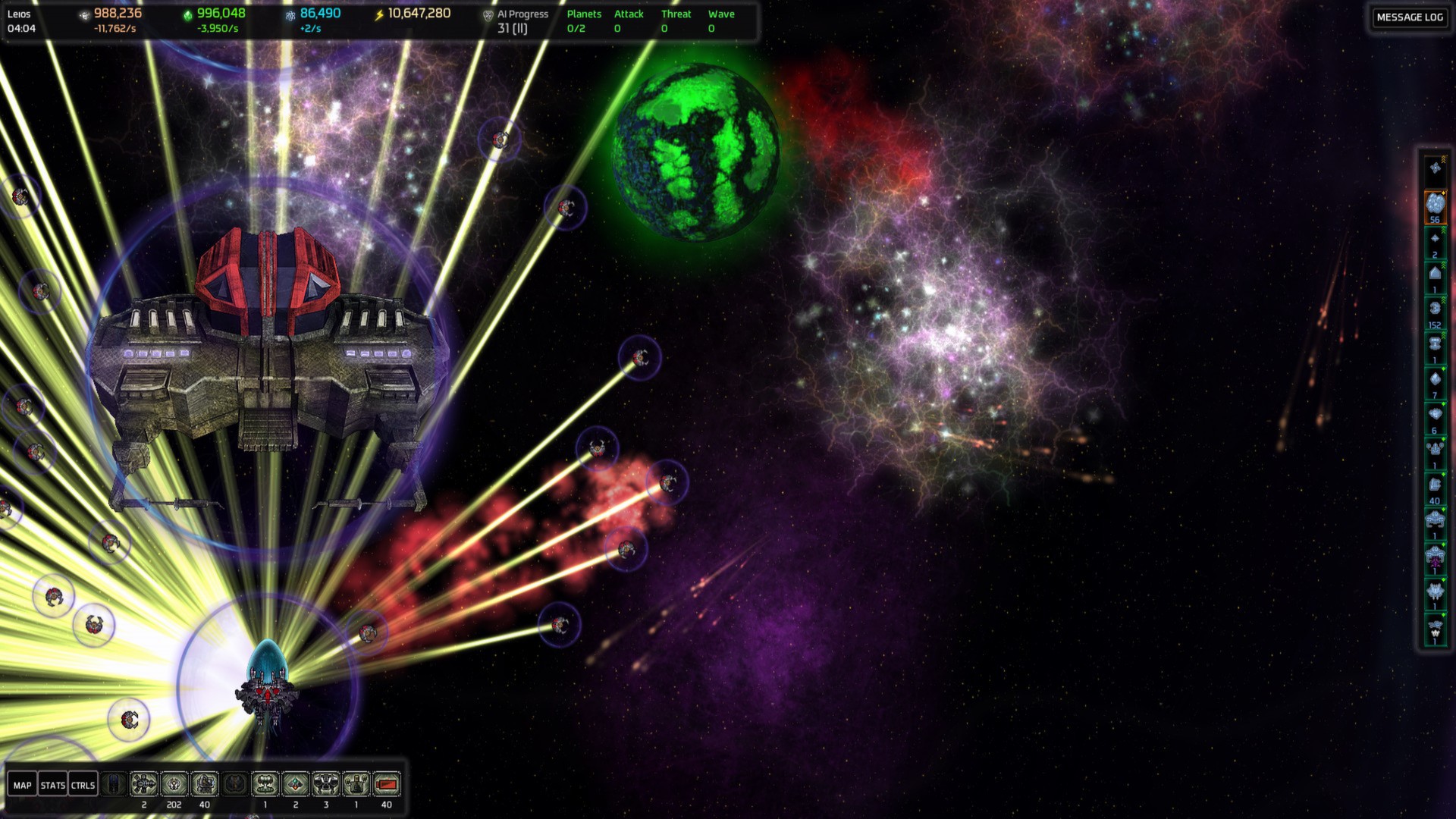
There’s so much stuff crammed into this game and its DLC, and with procedural generation determining how each campaign shapes up and a strict rule against PvP, the game is able to tailor an experience that doesn’t run into the repetitiveness of many RTS or grand strategy games. On my first ever match, I had amassed a decent fleet and was about to attempt capture of my first AI planet. As they flew to the wormhole, an indestructible megaship flew out of it and instantly vaporised my entire swarm. On my second playthrough, my ships kept getting tractor beamed into enemy territory, and eventually, when the AI decided to attack my home base, there was nothing but my flimsy turrets to defend myself. On my third playthrough, I got too confident, and I flew my fleet into an enemy system. The AI instantly mounted individual strike forces on every single one of my powerplants across several planets, shutting down my forcefields and leaving my home base defenceless. In all three instances, I lost. All of this might seem tedious to play against, but going into it with the assumption that you will die a lot leads to some of the most exciting ‘wait what’ moments I’ve had in the genre, and you’ll have a lot of fun doing it.
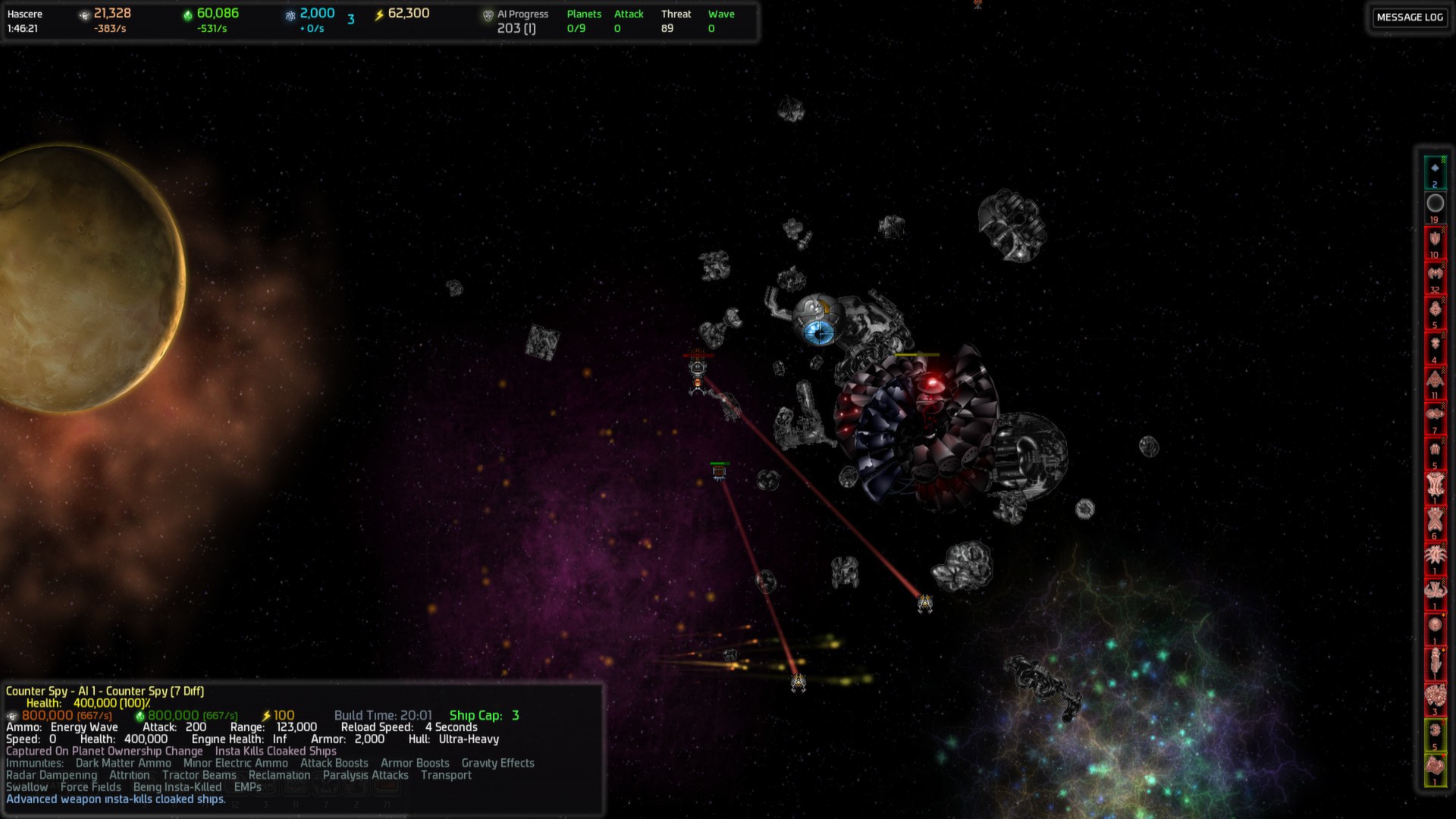
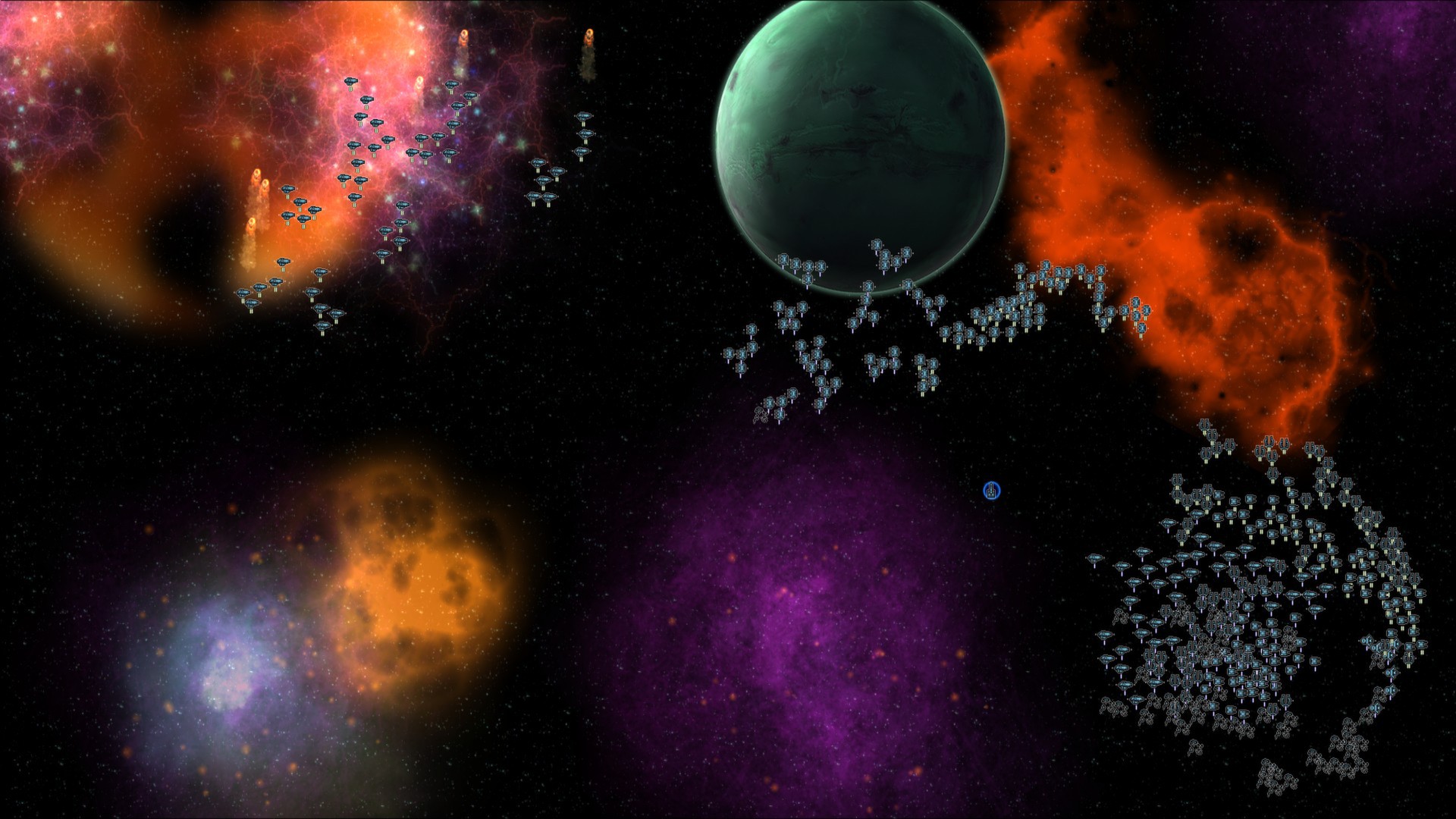
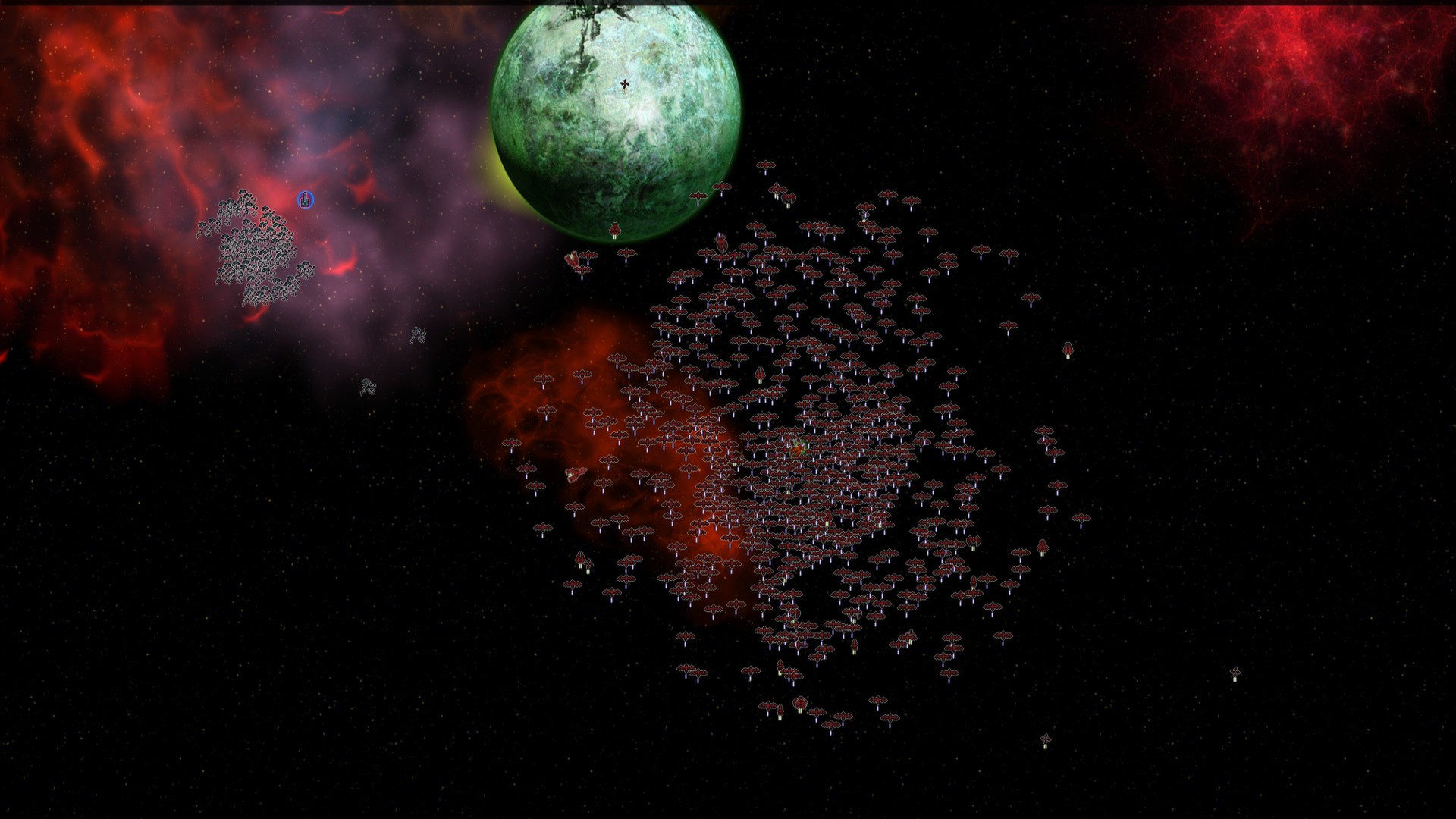
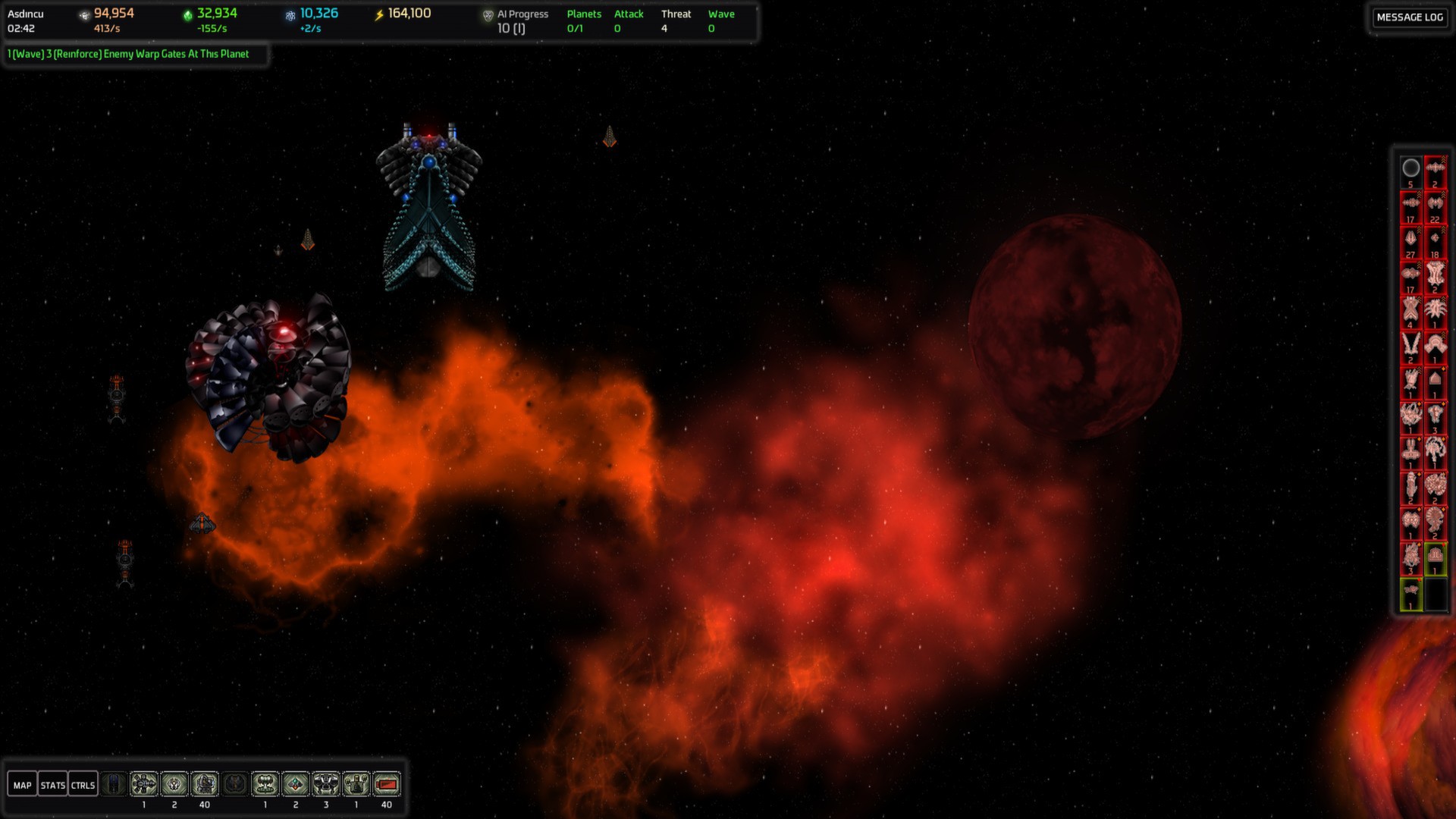
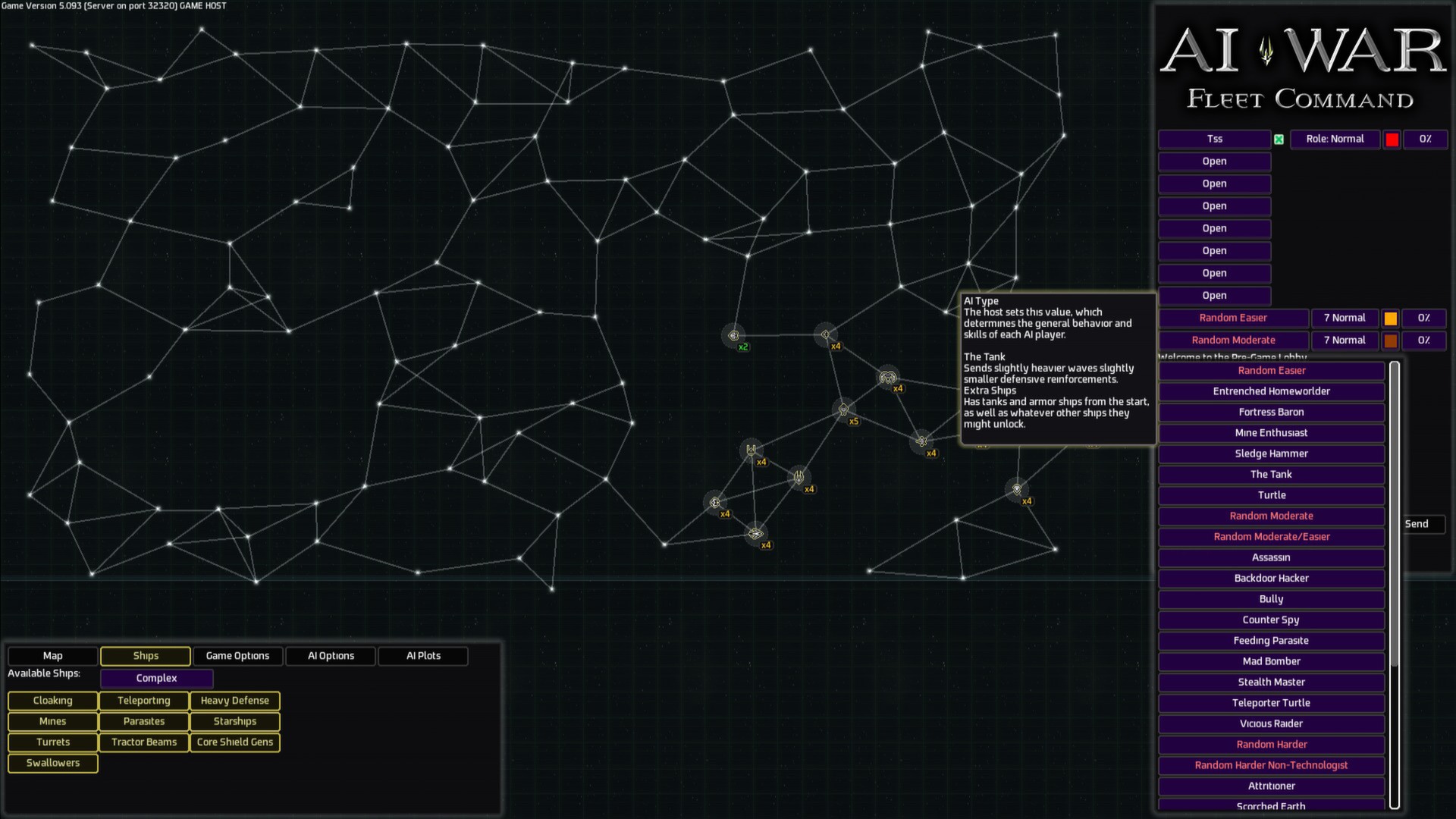
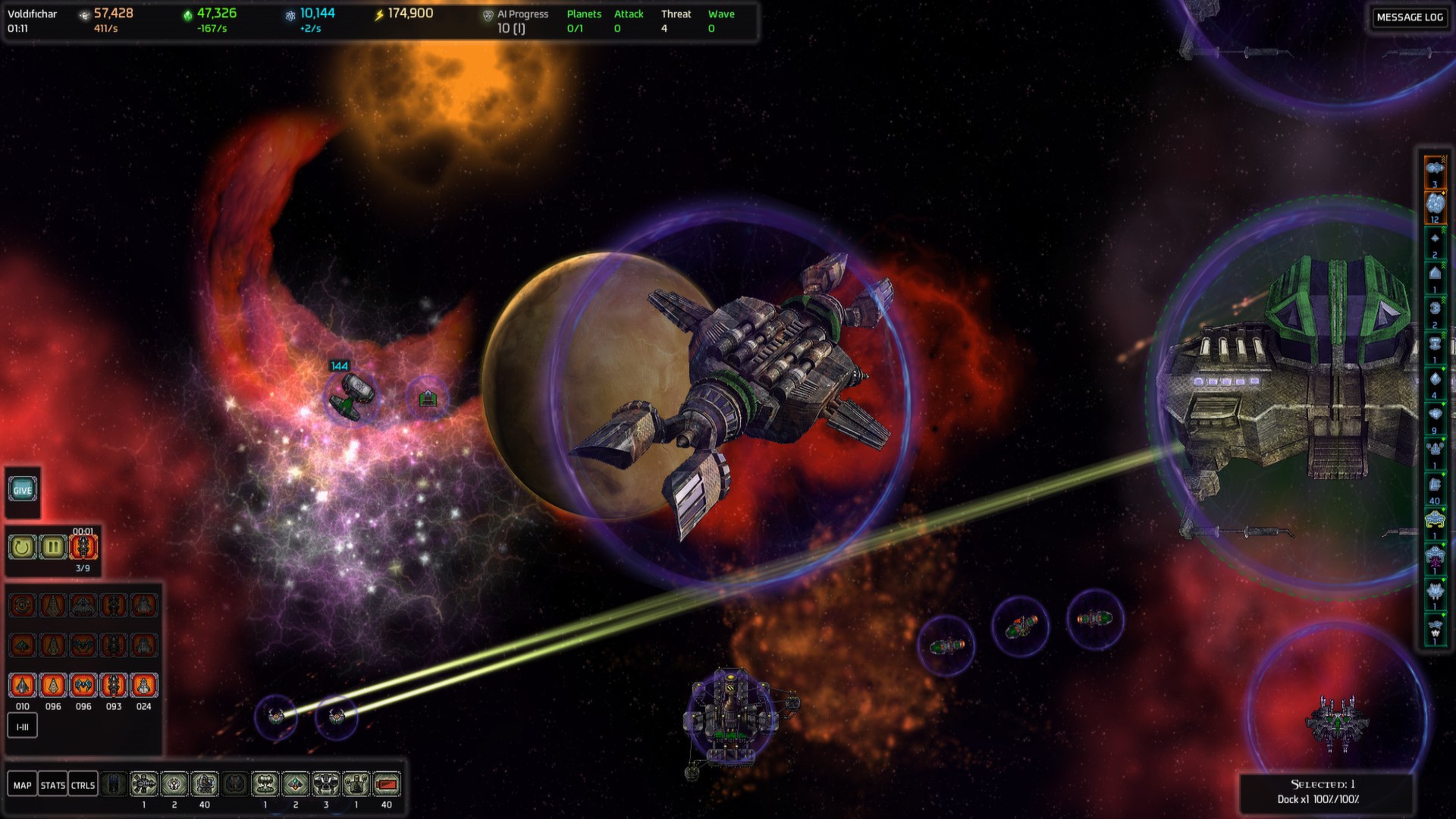
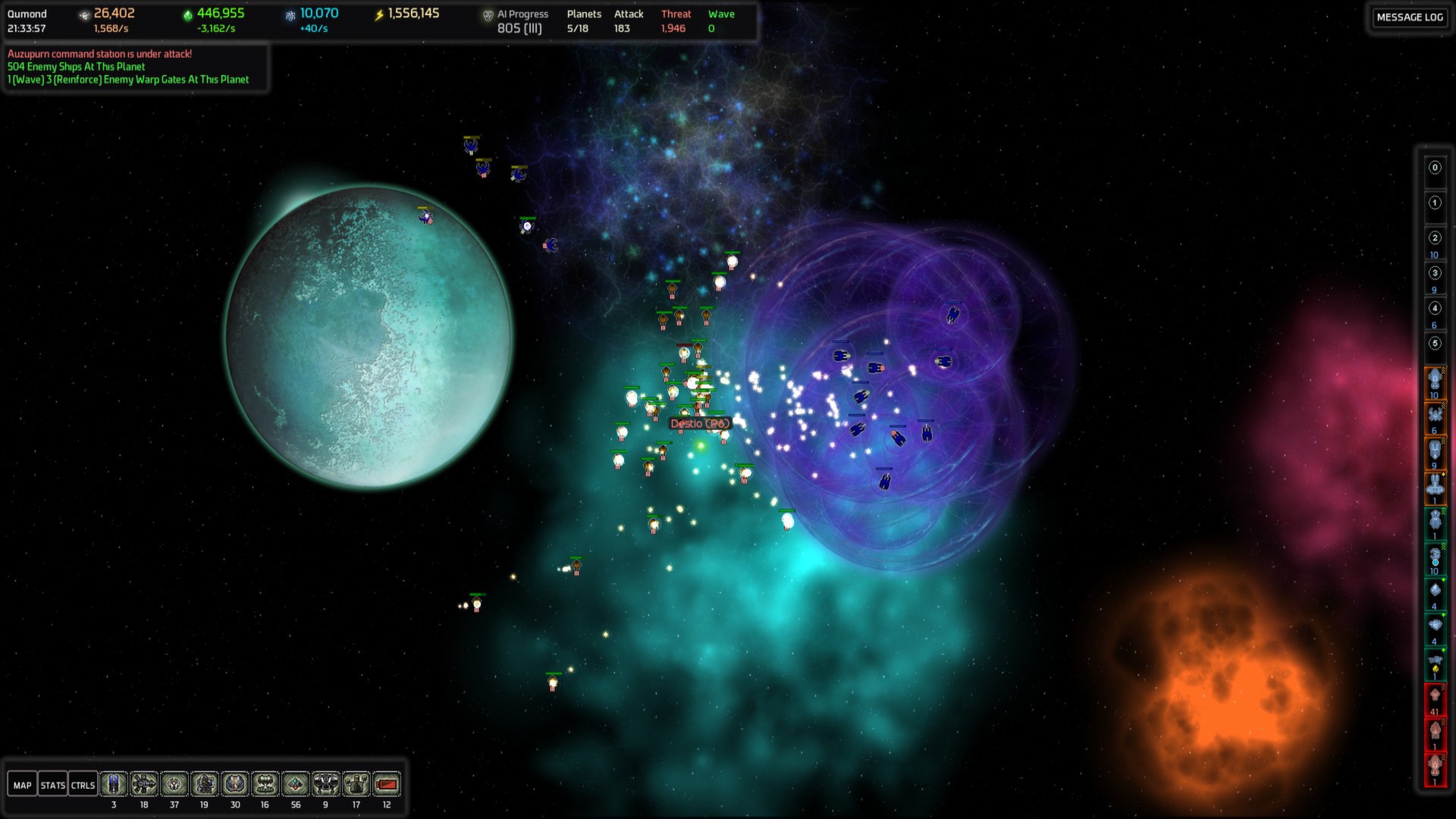
AI War is like no other strategy game. In an RTS or 4X, you basically always fight opponents which are of about equal strength to you. In AI War, you fight a massively strong opponent. This opponent already owns basically the entire galaxy. But the AI does not perceive you as a strong threat, which is why it doesn't just attack you with everything. Apparently it is fighting something in a different universe, after having defeated you. You are fighting small scale guerilla warfare. There is no culture or diplomacy or trade(not with the AI on any level at least. I have the feeling there is a merchant or something?) The universe is full of gravity wells. The AI owns all of them. They are filled with static defences, and important strategic assets. You may destroy static defences and they will not be rebuilt. Strategic assets will also not be rebuilt. But when you destroy a strategic asset it makes the AI gets a little angry. So this threat(anger) meter of the AI is present on your HUD, and is one of the main things that determines what you do in the game. Taking a whole gravity well to make your base means that you will destroy the local strategic assets and annoy the AI. Destroying only static defence that defends the path you want to take through does not annoy the AI. This means that you don't spend your time taking all available territory, like basically every other strategy game. I don't know that there is another Strategy game in which owning territory comes with a downside other than them requiring you to defend it based on the resource cost of loss of assets. You take important territory, and cut paths through the other bits. Static defence has range, or detection ability, so if you leave a static defence that is in a gravity well you go through, but is too far away from the wormhole you want to go through, then it can't actually do anything, as you can manoeuvre around it. Ships are a different matter. Killing them doesn't increase your threat level to the AI, but they have their own set of mechanics to deal with. I am not fully familiar with all the mechanics. But, in a general sense, it is fine to destroy ships, but it does mean that this will tend to cause a retaliation strike, which you have to defend against, if you engage them and let them escape. Ships you lose on an AI planet gets converted into material that builds new ships of about equal value that they will send against you later. Though when ships take large scale direct action against you, at certain intervals either because of something you specifically did or just every so often, you will be warned about it in advance. Your own gravity wells can be filled with your own static defences, which you will need in the incoming waves that operate somewhat like a tower defence. You and the AI have basically the same set of ships. And ship combat is based around large scale numbers, rather than individual ship control or usage of active abilities. A in, you bring 146 of a specific type of ship, or just a big bunch of 700 ships of all the types. You don't take 2 of your catapults, put them in siege mode, bring down the enemy gate, activate the speed boost on your 6 close range fighters to get into the gate. You can have a a starting fleet of like 400 ships in the first minutes of the game. And the number of your ships can go from 400 to 0 to 400 in a very short period of time. There are very few resources to manage. The main resources are mined forever in that the resource source never dries up. It's all about massive scale, and constant output of high amounts of ships. This is where the Total Annihilation or Supreme Commander comparison makes sense. The tactics are about massive numbers, not small scale highly specialised units with a range of active abilities. Also, you can have coop with lots of people vs the AI.
Similar games
View all
Sins of a Solar Empire II
Battle for galactic dominance in this real-time 4X strategy game with unrivaled scale! You’ll explore, expand, exploit, and exterminate through military force, diplomacy, trade, culture, influence, and other underhanded tactics.
Nexus - The Jupiter Incident
Ambitious megacorporations monopolize the conquest of space and the colonization of the solar system. At the very edge of the solar system, the companies make a discovery that will shift the technological advantage and upset the balance. And so a new conflict is born: "The Jupiter Incident."
Star Ruler 2
Massive scale 4X-RTS set in space. Control hundreds of planets, manipulate galactic politics, research numerous advanced technologies, and command thousands of units and hundreds of planets in your quest for galactic dominance.
Battlefleet Gothic: Armada (Classic)
Battlefleet Gothic: Armada is the RTS videogame adaptation of Games Workshop’s classic tabletop game, pitting the Chaos, Imperium, Eldar, and Orks against each other in visceral space-battles.
Planets Under Attack
Play as humans or robots in a brand new sci-fi strategy adventure! Travel into the far reaches of space, through cleverly designed star constellations and variable game modes, conquering enemy planets using 15 combinable technologies.

War, the Game
'War, the Game' is a RTS for pc in realistic present day setting.The controls are intuitive, the game rules are simple and transparent.The game focuses on strategy and the use of ones brain to complete the scenarios.The map is a spherical version of earth. That's new.
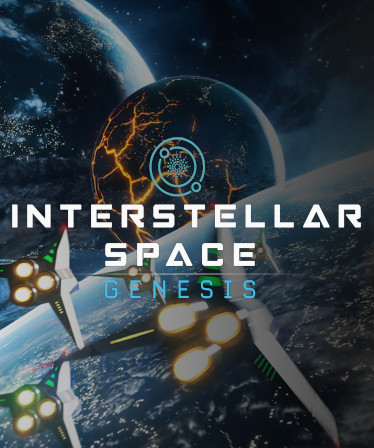
Interstellar Space: Genesis
Interstellar Space: Genesis is a turn-based space 4X strategy game in which you attempt to build a thriving galactic empire. Discover mysteries among the stars, colonize worlds, and engage enemies in tactical turn-based combat on your journey to becoming the ruler of the galaxy!
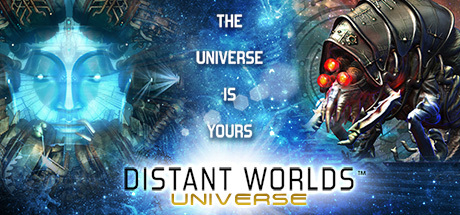
Distant Worlds: Universe
Distant Worlds is a vast, pausable real-time 4X space strategy game. Experience the full depth and detail of turn-based strategy, but with the simplicity and ease of real-time, and on the scale of a massively-multiplayer online game.

Particle Fleet: Emergence
Build and design your own fleets and stand opposed to the Particulate in this physics/strategy/RTS/fleet hybrid. Build partially destructible and self repairing ships that interact with enemies less controlled by some scripted logic and more driven by a real time massive physics particle simulation.

Imperium Galactica II
Reintroducing a classic from the golden era of gaming, the original empire building space RTS, Imperium Galactica 2 is back and looking better than ever with new high-res textures and vivid colors.
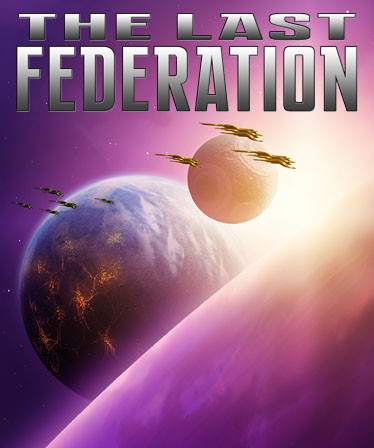
The Last Federation
From the creators of AI War: Fleet Command comes an all-new grand strategy title with turn-based tactical combat, set in a deep simulation of an entire solar system and its billions of inhabitants. You are the last of a murdered race, determined to unify or destroy the 8 others.
Frequently Asked Questions
AI War: Fleet Command is currently priced at 9.75€ on Steam.
No, AI War: Fleet Command is currently not on sale. You can purchase it for 9.75€ on Steam.
Yes, AI War: Fleet Command received 1,307 positive votes out of a total of 1,582 achieving a rating of 7.91.
😊
AI War: Fleet Command was developed and published by Arcen Games.
Yes, AI War: Fleet Command is playable and fully supported on Windows.
Yes, AI War: Fleet Command is playable and fully supported on MacOS.
Yes, AI War: Fleet Command is playable and fully supported on Linux.
Yes, AI War: Fleet Command is playable on Steam Deck, though it might require a few minor tweaks. Make sure to check the Steam store page and community feedback on ProtonDB for exact compatibility details.
Yes, AI War: Fleet Command is playable on Steam Machine, though it might require a few minor tweaks. Make sure to check the Steam store page and community feedback on ProtonDB for exact compatibility details.
No, AI War: Fleet Command does not support VR.
AI War: Fleet Command offers both single-player and multi-player modes.
AI War: Fleet Command includes Co-op mode where you can team up with friends.
Yes, there are 6 DLCs available for AI War: Fleet Command. Explore additional content available for AI War: Fleet Command on Steam.
No, AI War: Fleet Command does not support mods via Steam Workshop.
No, AI War: Fleet Command does not support Steam Remote Play.
Yes, AI War: Fleet Command is enabled for Steam Family Sharing. This means you can share the game with authorized users from your Steam Library, allowing them to play it on their own accounts. For more details on how the feature works, you can read the original Steam Family Sharing announcement or visit the Steam Family Sharing user guide and FAQ page.
You can find solutions or submit a support ticket by visiting the Steam Support page for AI War: Fleet Command.
Data sources
The information presented on this page is sourced from reliable APIs to ensure accuracy and relevance. We utilize the Steam API to gather data on game details, including titles, descriptions, prices, and user reviews. This allows us to provide you with the most up-to-date information directly from the Steam platform.
Additionally, we incorporate data from the SteamSpy API, which offers insights into game sales and player statistics. This helps us present a comprehensive view of each game's popularity and performance within the gaming community.
Last Updates| Steam data | 23 September 2026 04:29 UTC |
|---|---|
| SteamSpy data | 14 October 2026 19:46 UTC |
| Steam price | 24 October 2026 19:04 UTC |
| Steam reviews | 21 October 2026 22:01 UTC |
If you'd like to dive deeper into the details about AI War: Fleet Command, we invite you to check out a few dedicated websites that offer extensive information and insights. These platforms provide valuable data, analysis, and user-generated reports to enhance your understanding of the game and its performance.
- SteamDB - A comprehensive database of everything on Steam about AI War: Fleet Command
- SteamCharts - Analysis of AI War: Fleet Command concurrent players on Steam
- ProtonDB - Crowdsourced reports on Linux and Steam Deck AI War: Fleet Command compatibility

Game modes
Multiplayer
Features
Online players
3
Developer
Arcen Games
Publisher
Arcen Games
Release
21 Oct 2009
Platforms
Clicking and buying through these links helps us earn a commission to maintain our services.